
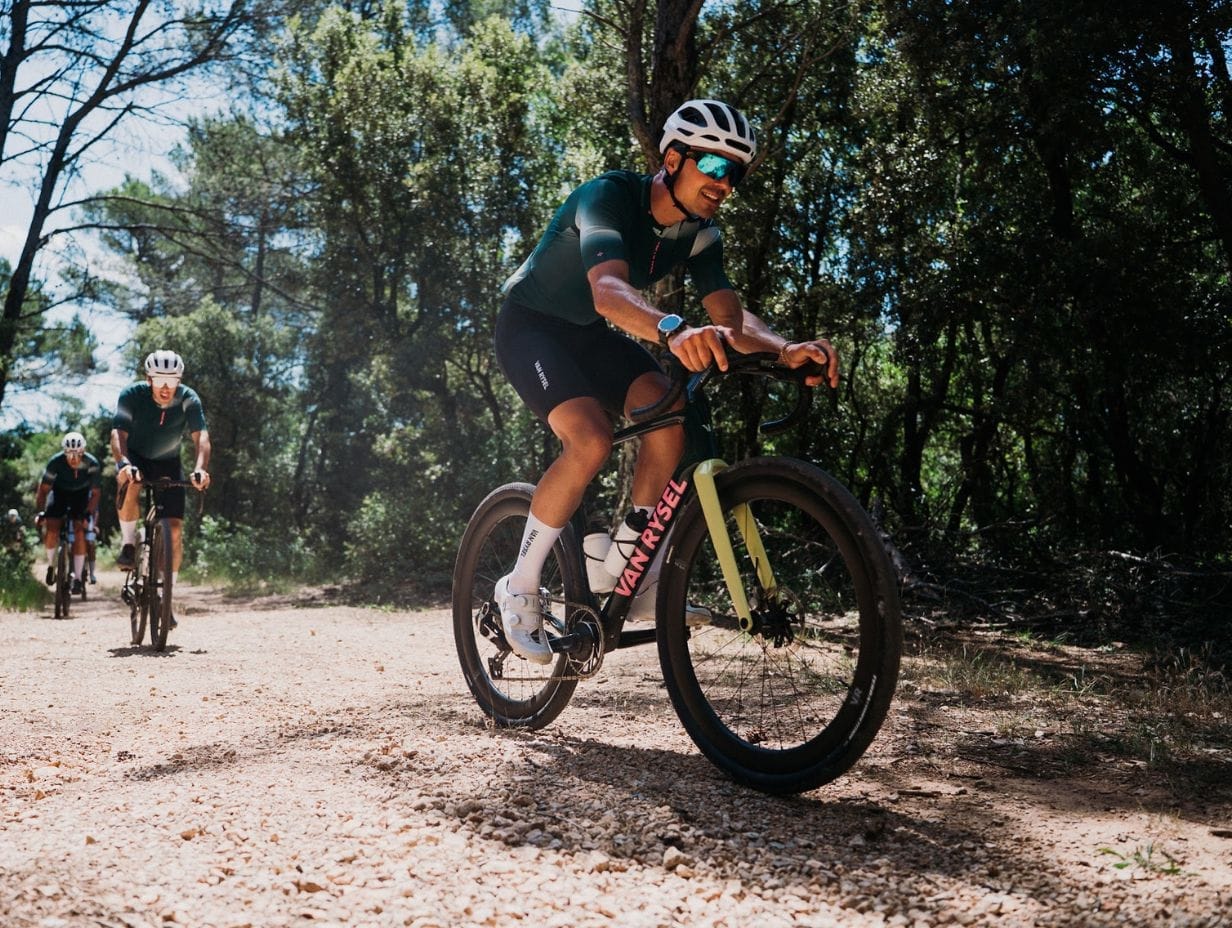

Van Rysel had already staked a strong claim on the road. What it was still missing was a true bike to enter the mid to high end of gravel, and especially this very specific gravel race segment: fast, lively, increasingly close to the road, yet obliged to survive rough tracks.
The RCR-G slots in precisely there. Not as an adventure gravel repurposed for competition, but as a race bike designed to go fast on tarmac, tracks and smooth trails. I was able to try it on the same trip as the brand’s endurance gravel, exclusively for France. And with my fairly pronounced taste for racy bikes, this one had my full attention.
Strengths:
- Extremely aggressive spec-to-price ratio
- Fast, light and very lively handling
- Natural position for riders coming from the road
Could be better
- Internal rim width too narrow
A price point that is hard to beat
Let’s start with the obvious: the price.
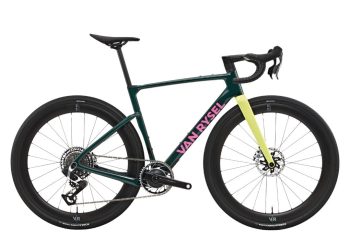
The Van Rysel RCR-G is offered in three builds: 3 199 € with SRAM Rival AXS, 4 199 € with SRAM Force AXS and 6 599 € with SRAM Red AXS. All three versions share the same high-modulus carbon frame, with electronic SRAM XPLR AXS groupsets only.
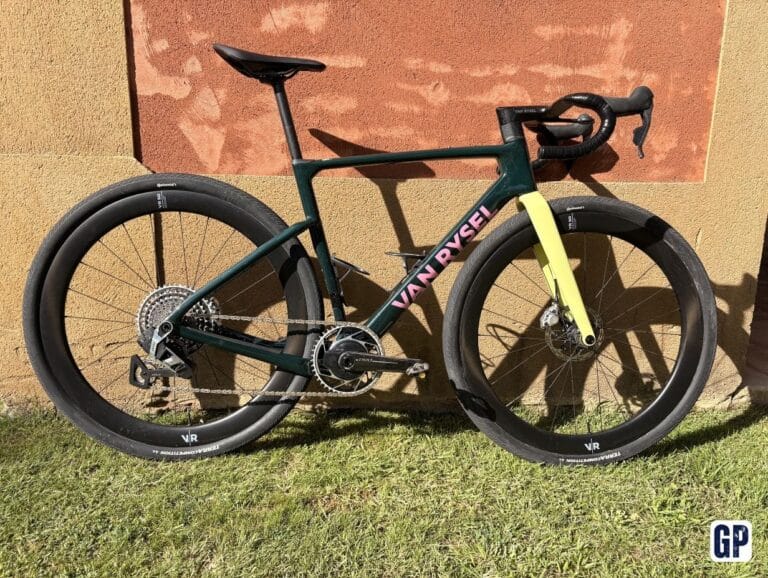
The top build tested here is particularly aggressive. For 6 599 €, you get a SRAM Red XPLR AXS 13-speed drivetrain, Van Rysel 50 mm carbon wheels, a one-piece carbon cockpit and a claimed weight of 7.8 kg in size M. With some competitors, that figure is close to a frameset alone.
Price alone never makes a good bike. But when it’s paired with a serious frame, a clear design intent and convincing on-trail behaviour, it becomes hard to ignore.
A road RCR with gravel tyres? Not just that
Visually, the link to the RCR family is obvious. The RCR-G carries over that taut, fairly aero silhouette, with a highly integrated cockpit and a performance focus that doesn’t try to hide.
Van Rysel cites CFD work, virtual prototyping and wind tunnel testing, with a gain of 8.6 watts compared with the previous GCR gravel platform. Take that number for what it is: an interesting development data point, not a sensation you can isolate in the field. But it does tell you the bike’s intention.
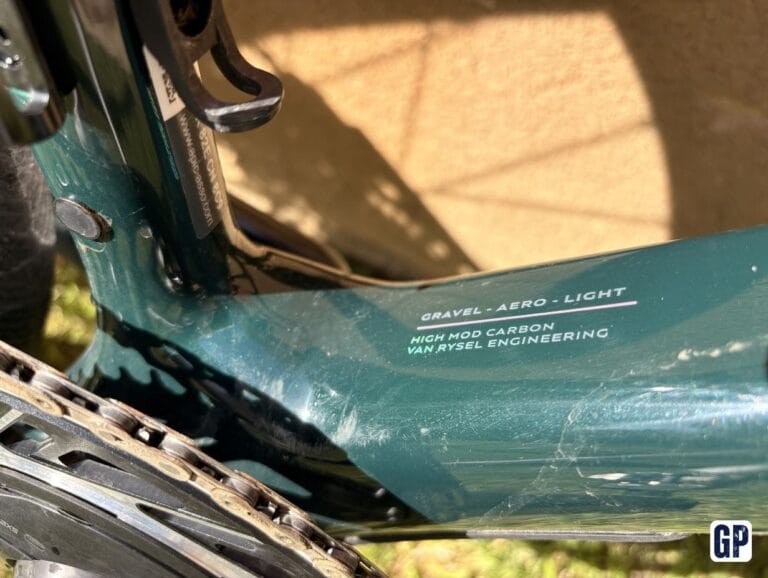
This isn’t a do-it-all gravel with a couple of race details tacked on. The RCR-G starts from a fast road base and adapts it to modern gravel: tyre clearance up to 50 mm, UDH compatibility, three bottle cage mounts, top tube mounts, protection under the down tube and on the chainstay.
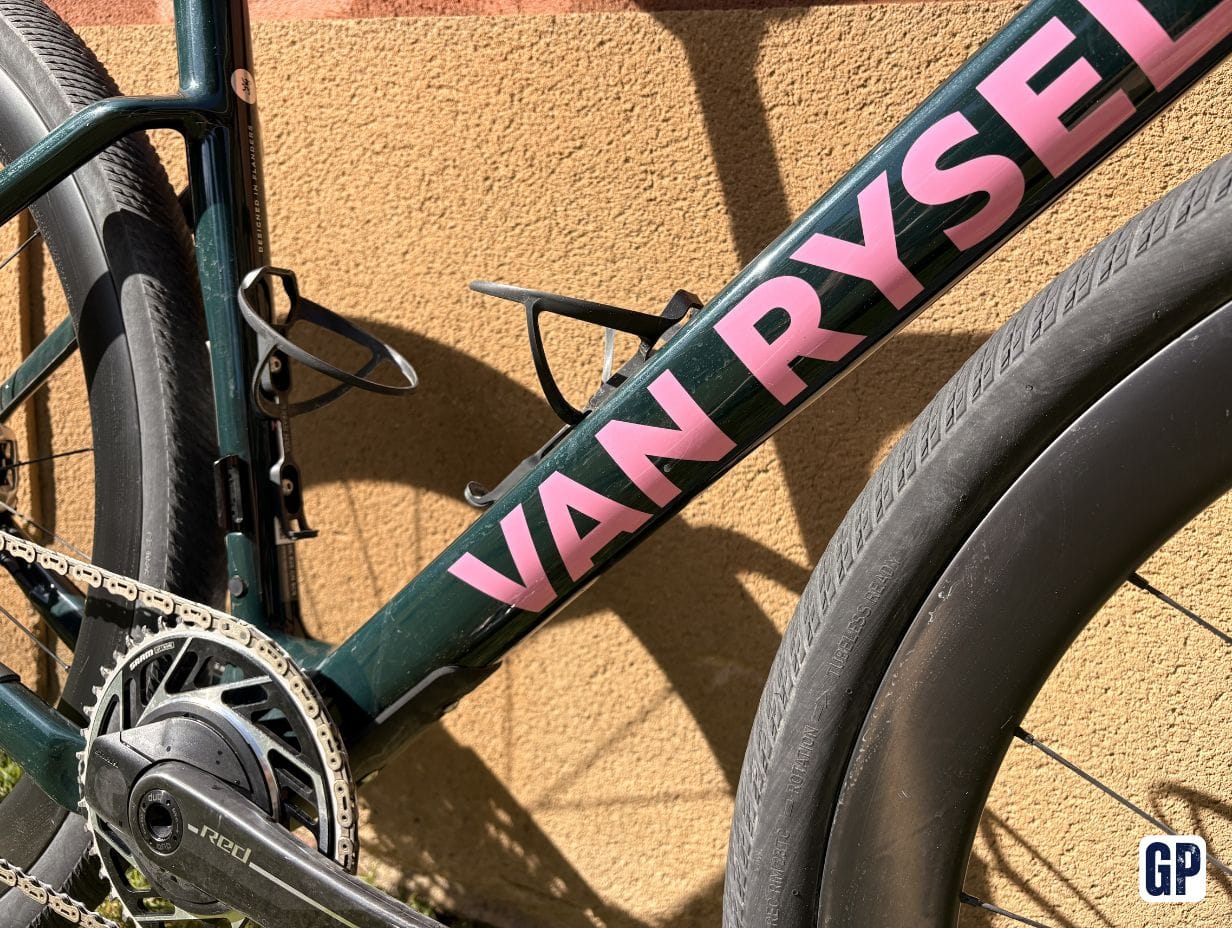
The frame is quoted at 885 g in size M unpainted, paired with a 415 g fork, which puts the bike in very serious territory. And on the trail, that lightness isn’t just a spec sheet line: it genuinely contributes to the bike’s snappy feel.
A very European geometry
The RCR-G makes a clear choice: European-style gravel. A relatively short wheelbase, a responsive bike, an efficient position, and road-like behaviour as soon as the terrain opens up.
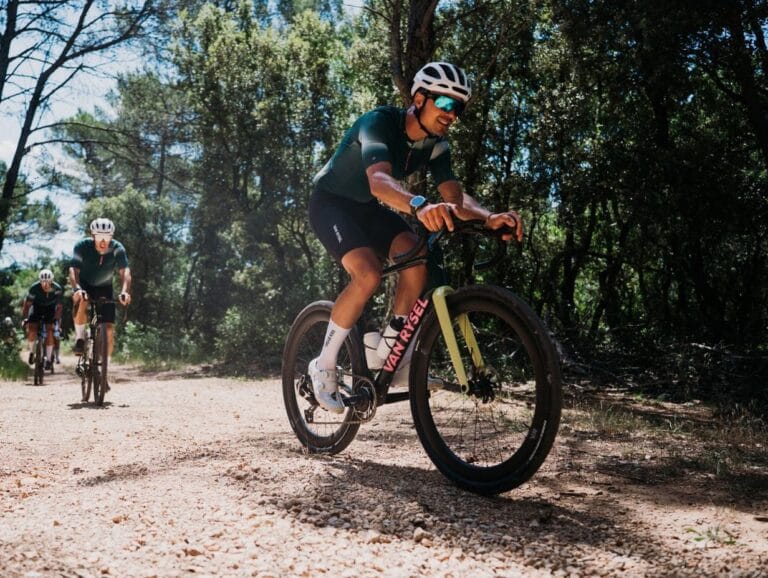
The first kilometres on tarmac leaving the press camp hotel quickly set the tone. I almost felt like I was on a road bike that accepts big tyres. And in this case, that’s not a criticism.
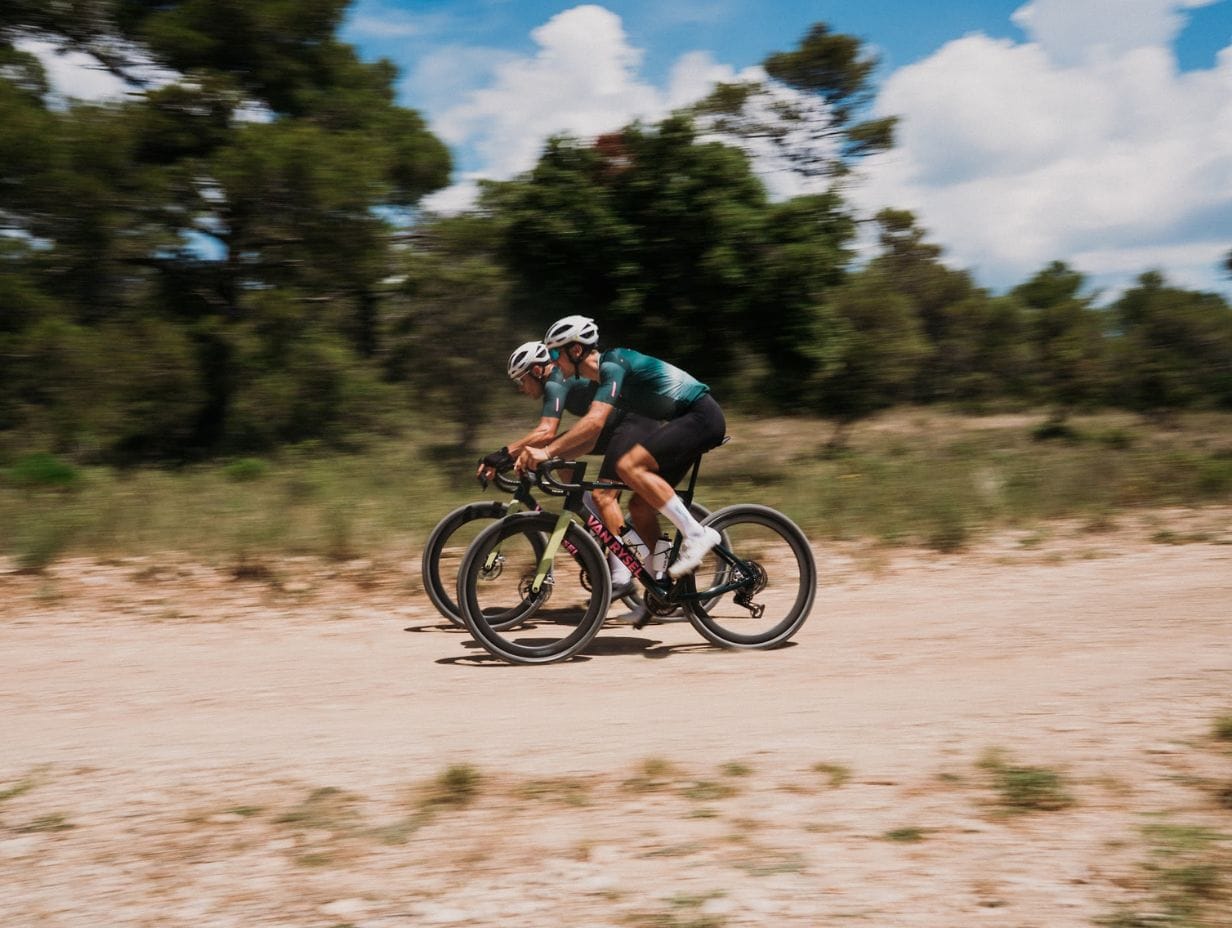
This closeness to road brings a lot of efficiency, real ease to accelerate and a pretty exhilarating sensation as you pick up speed. The bike responds quickly, without excessive inertia, with that feeling you can hold pace without fighting the machine.
50 mm clearance: sufficient, but already debated
Van Rysel quotes a maximum clearance of 50 mm. For a European gravel race bike, that’s enough. Many riders will run this bike in 45 mm, and that size already lets you go fast on a large share of today’s gravel courses.
But the market is moving fast. What seemed generous not long ago may look merely adequate tomorrow. I would have liked to be able to fit at least a 55 mm, as on some recent competitors like the Specialized Crux. Not because everyone needs it, but because gravel races are becoming more varied, sometimes more punishing, and the comfort accumulated over 200 or 300 km matters a lot.
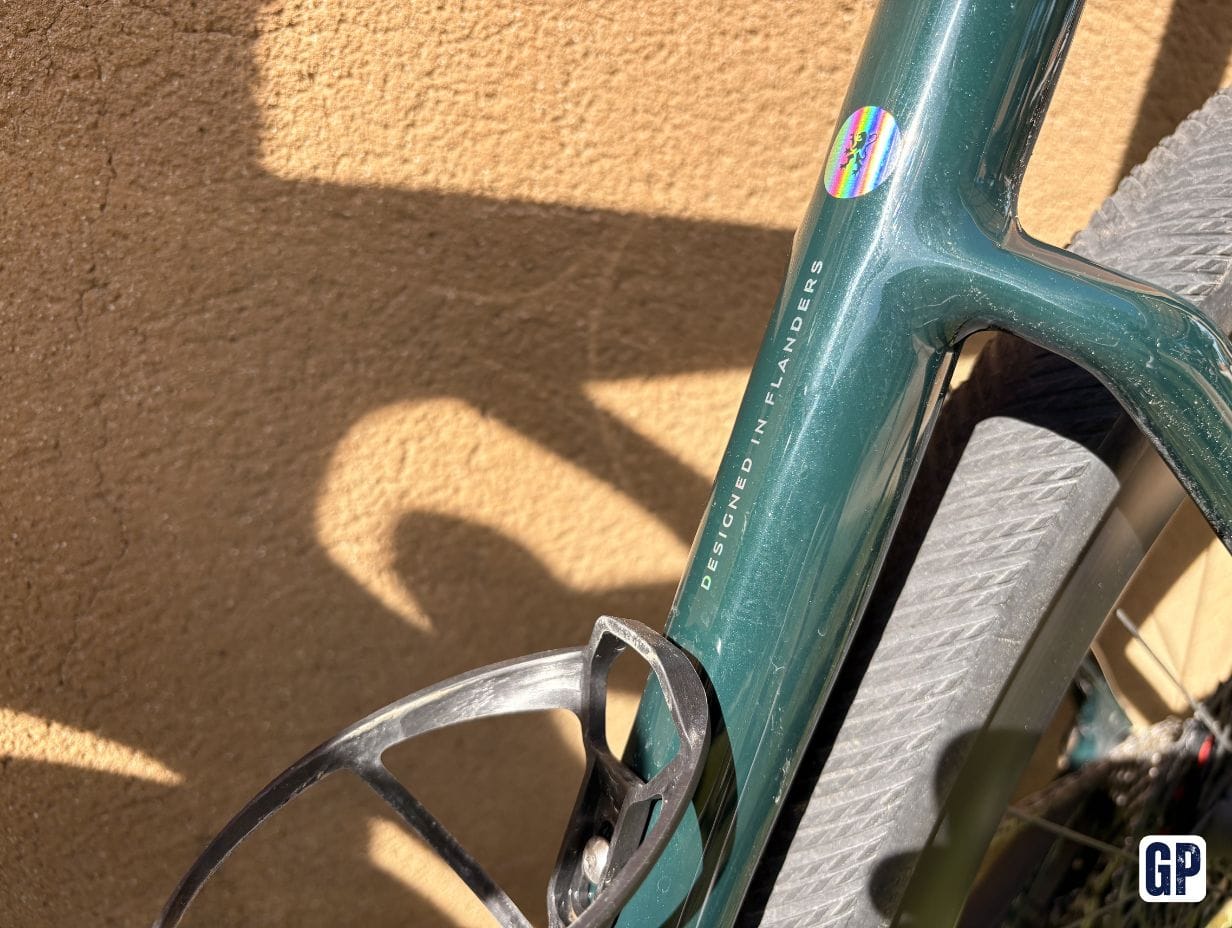
On a fast event in Europe, 50 mm doesn’t hold me back. On a stage race or very rough terrain, I’d have liked a bit more margin.
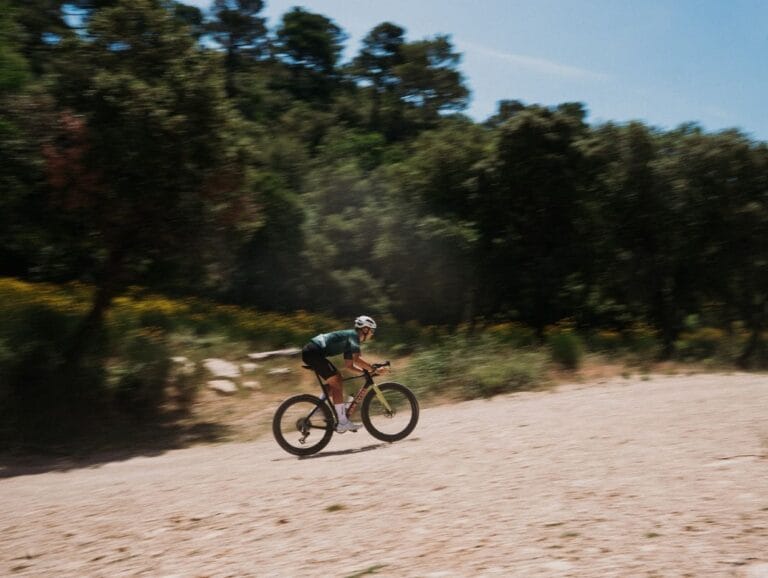
No internal storage: an understandable choice, but frustrating
The RCR-G doesn’t offer internal storage in the frame. I asked the product manager directly: the choice comes notably from the impact on the layup shape and the added weight.
I understand the argument. On such a performance-oriented bike, every opening, every reinforcement, every gram counts. But I still struggle to let this one go.
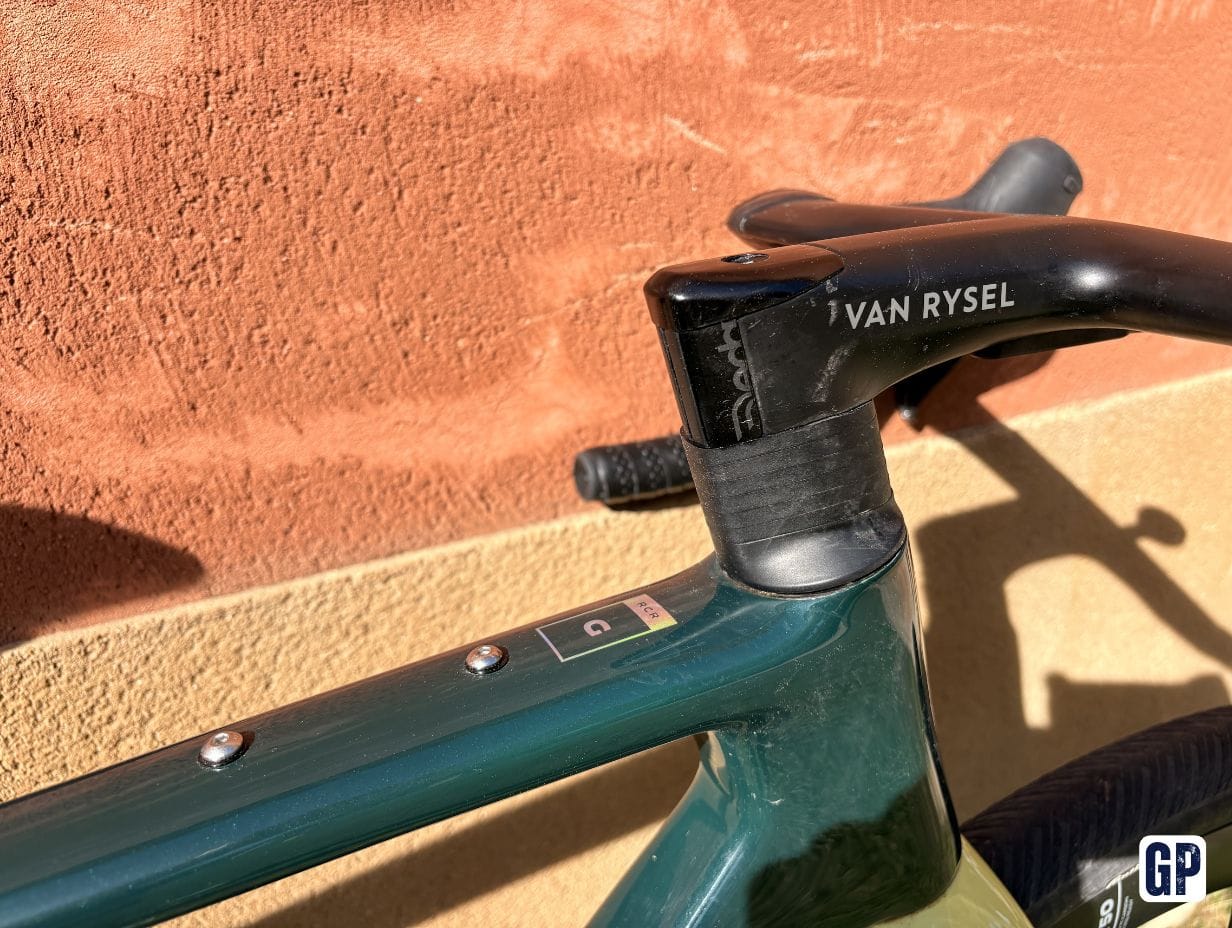
On a modern gravel race bike, especially when you’re targeting 200 or 300 km formats, autonomy becomes central. Being able to stash a tube, a tool, a cartridge or a small kit inside the frame really changes things. Failing that, Van Rysel could have pushed integration with a specific aerodynamic bag in the main triangle, as some brands are starting to do.
The top tube mounts partly compensate for this lack. But to me, integrated storage is becoming almost a true race feature, not just a gadget for light bikepacking.
Well-thought-out design details
It’s not all about big headlines. The RCR-G also shows some interesting practical choices.
The added protection under the down tube and on the chainstay is welcome, especially on a bike so exposed to debris. The asymmetric stays contribute to the frame’s overall architecture, and the round seatpost is worth highlighting.
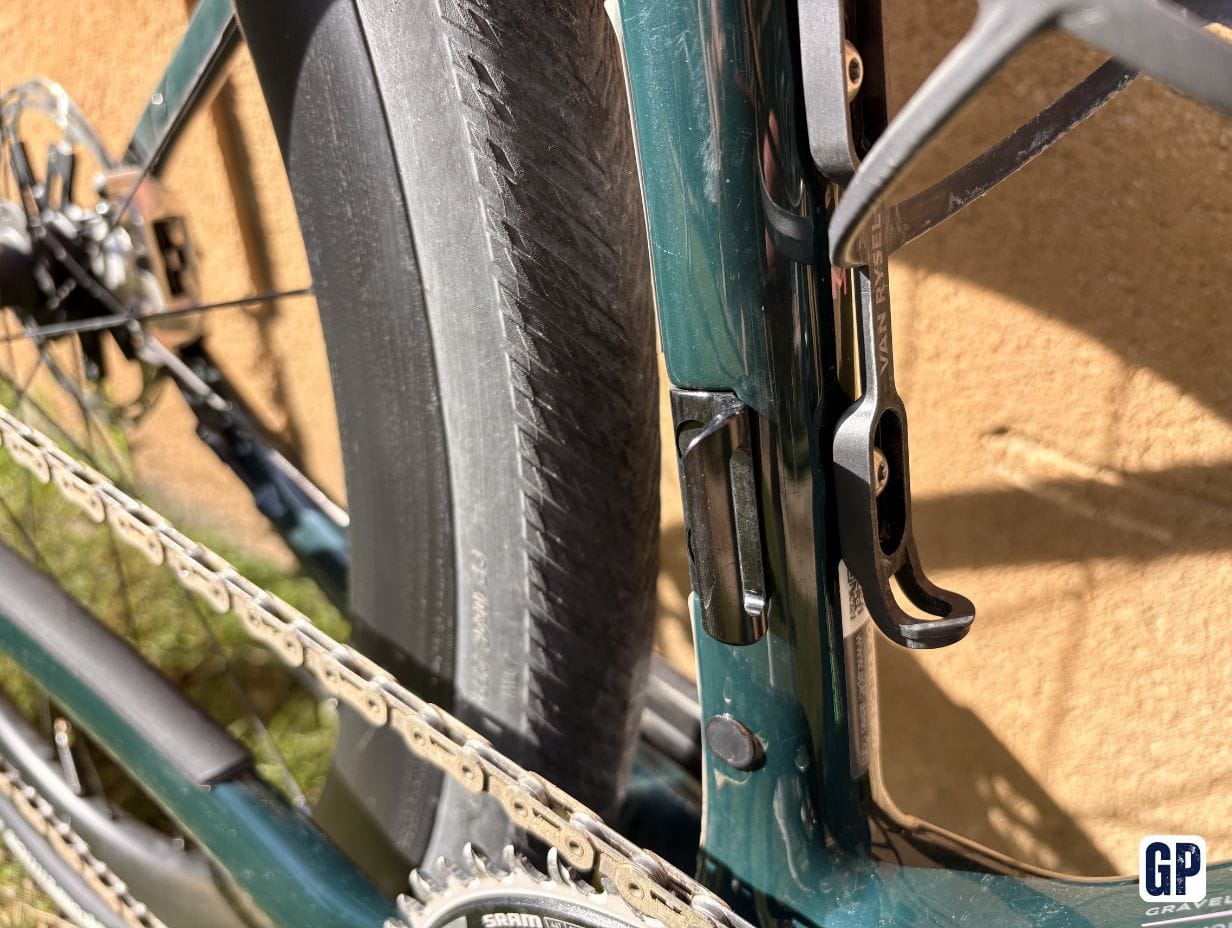
It probably isn’t the most radical choice for aerodynamics. But it simplifies maintenance and leaves the door open to a dropper seatpost if you want to push the bike harder. On a gravel race bike, that’s not absurd.
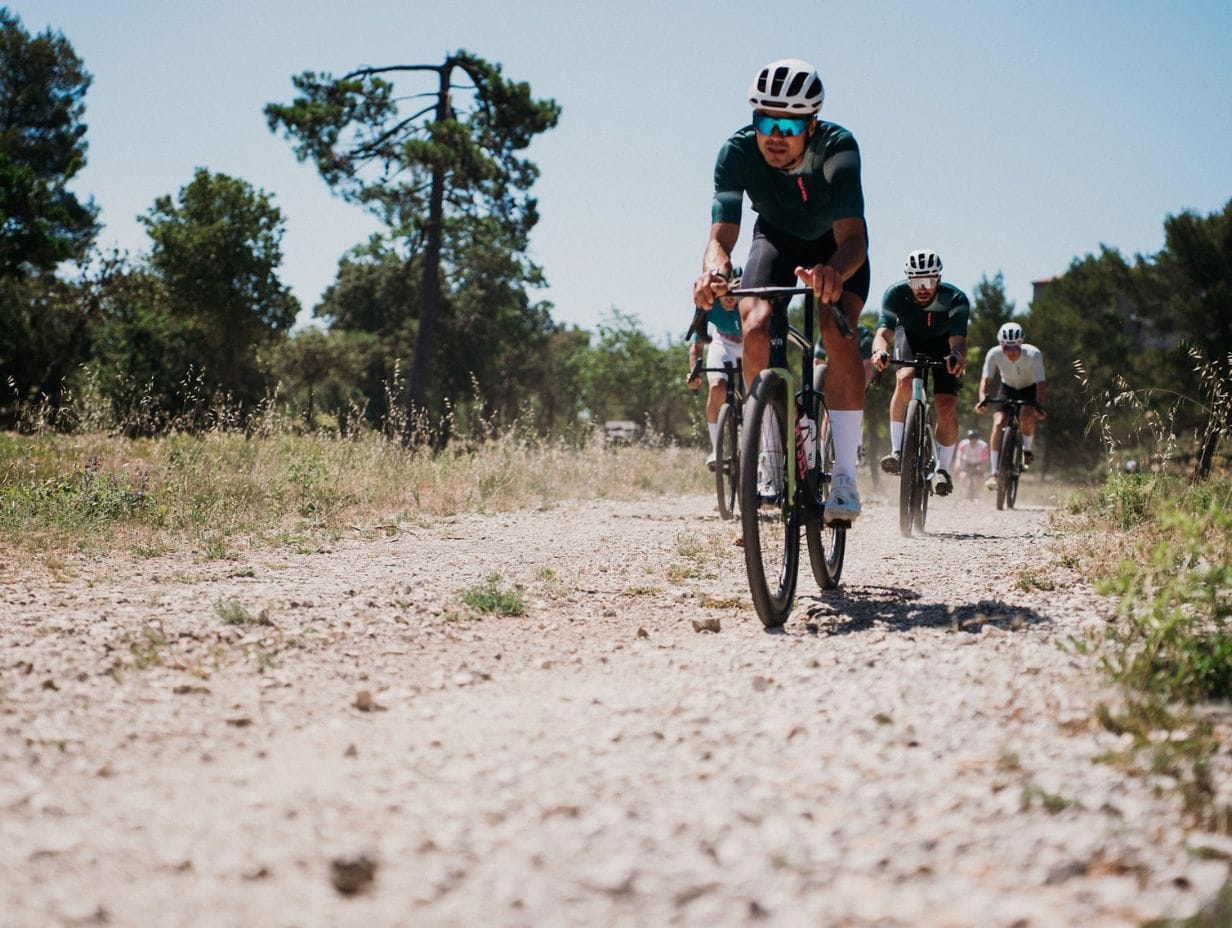
I also liked the cockpit. Even though it clearly comes from a road universe, its ergonomics work very well in gravel: hands on the tops, in the drops or on the hoods, the contact points remain natural. I really like what Deda offers for this type of cockpit, and the RCR-G confirms that impression.
A considered drivetrain, with a surprising line-up logic
The tested Red build gets a SRAM Red XPLR AXS 13-speed drivetrain with a 10-46 cassette and a 44-tooth chainring. It’s a coherent choice for fast riding, especially on a bike that likes to carry speed.
The range then steps down to 42 teeth on the Force version, then 40 teeth on the Rival. That choice gives me pause. Technically, it makes sense: riders targeted by the more accessible builds may need easier gearing. But it also creates a slightly odd shortcut: the more expensive the bike, the more it would be intended to be ridden hard.
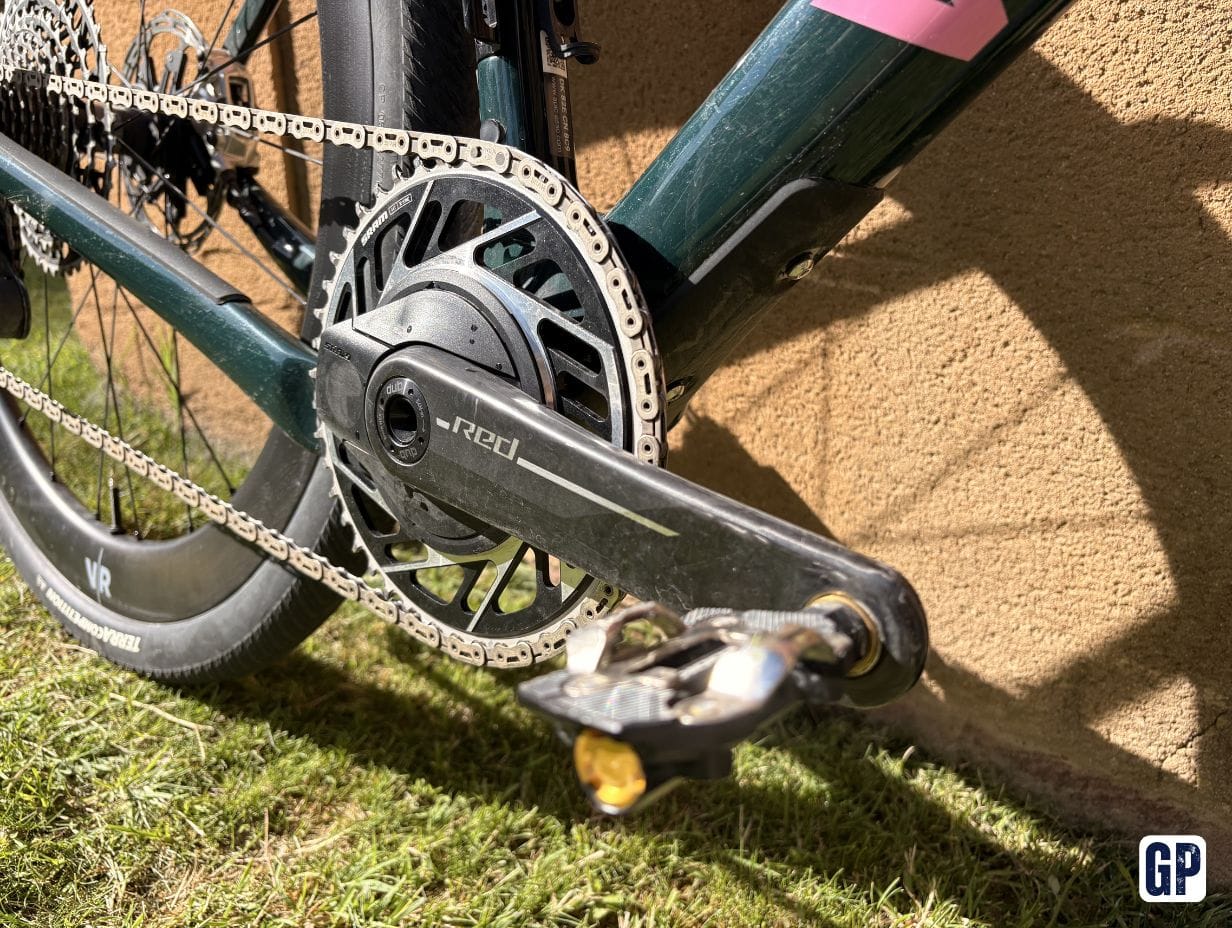
In reality, many very powerful riders might well choose a Force or Rival build for budget reasons. And conversely, a Red buyer doesn’t necessarily want to push a big gear everywhere.
Nothing blocking, but it’s a range detail worth checking before buying.
On the trail: fast, agile, less forgiving than the endurance model
The RCR-G quickly put me at ease with the position. No need to spend long minutes working out hand positions, how to weight the front or how to accelerate.
This bike is light, direct, very agile. It makes you want to attack, kick out of corners, and keep the pace as soon as the path flattens. On descents, it can even become frankly exhilarating if you like to pick up speed.
But it demands more attention than an endurance gravel. It corrects mistakes less. It forgives sloppy lines less. With my average technical level, I feel more confident on a more stable and more tolerant bike. The RCR-G, on the other hand, rewards clean riding more.
That doesn’t mean it’s limited to smooth paths. I went through sections more demanding than I would have spontaneously chosen with this type of bike. It doesn’t hold you back. You just have to accept that it asks a bit more from the rider.
Van Rysel carbon wheels: good, but not gravel enough
The Red build comes with the Van Rysel 50 mm carbon wheels. They’re stiff, rather comfortable, efficient, and they contribute to the bike’s very lively character.
The issue mainly comes from their internal width: 22 mm. For road use or relatively narrow tyres, that can work. For gravel with 45 mm tyres, and even more if you want to exploit the frame’s maximum clearance, it’s too limited.
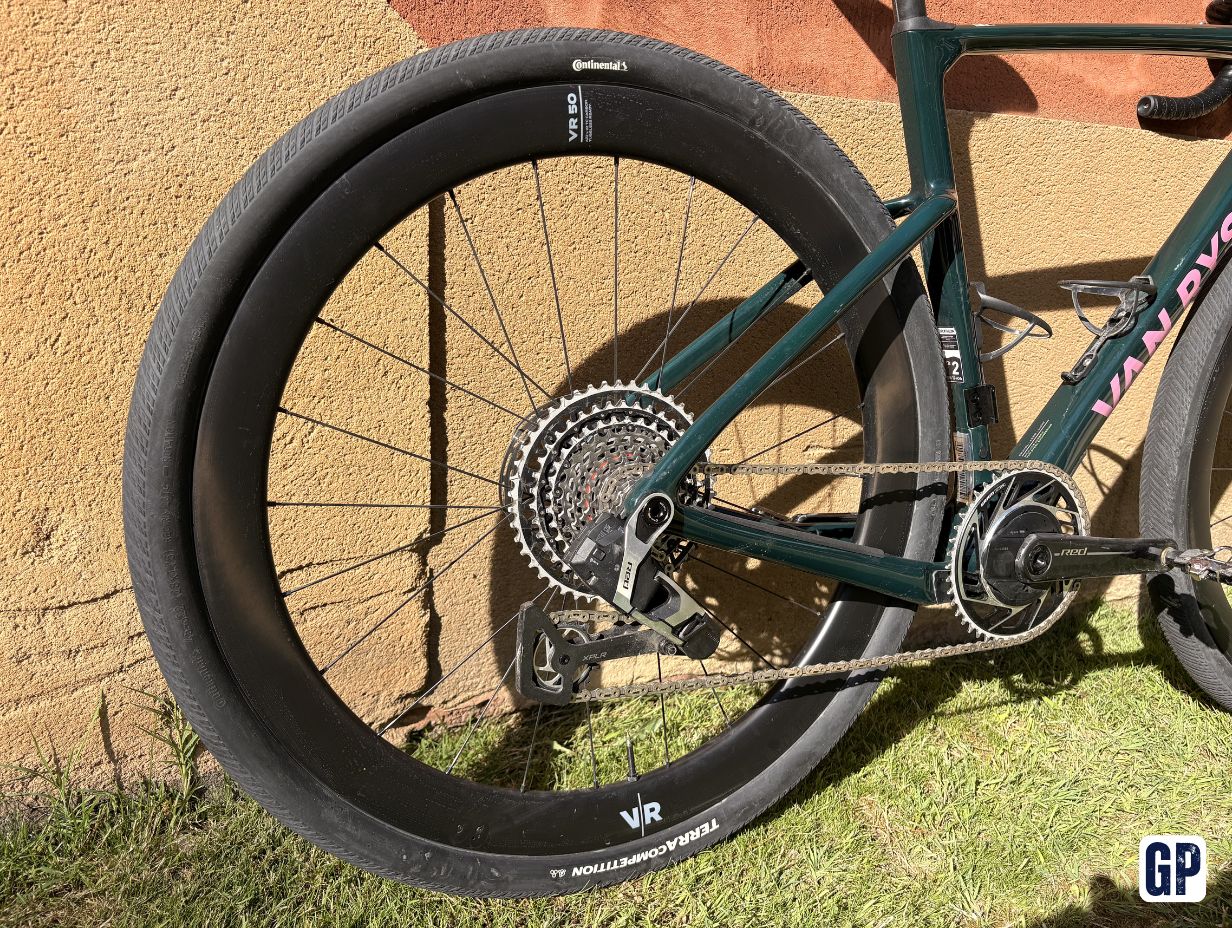
The tyre doesn’t take as optimal a shape as with a wider, modern gravel rim. Result: you lose some potential in comfort, grip and behaviour at low pressures. It’s probably the clearest weak point of the tested build.
Van Rysel knows it, since a new gravel-dedicated wheel model is in development. I understand the desire to stay with an in-house pair rather than source a third-party brand. But as it stands, these wheels are not yet as well adapted as the rest of the bike.
The stock tyres won’t always be the right ones
The RCR-G ships with Continental Terra Comp TLR in 45 mm. On paper, that’s an interesting size for this bike. In practice, the tread is quite fast-rolling.
At Le Castellet, in the south of France, it wasn’t necessarily the tyre I would have chosen by default. For a dry, fast, not very rough course, it can suit very well. As soon as the terrain becomes looser, rockier or more technical, you’ll need to adapt.
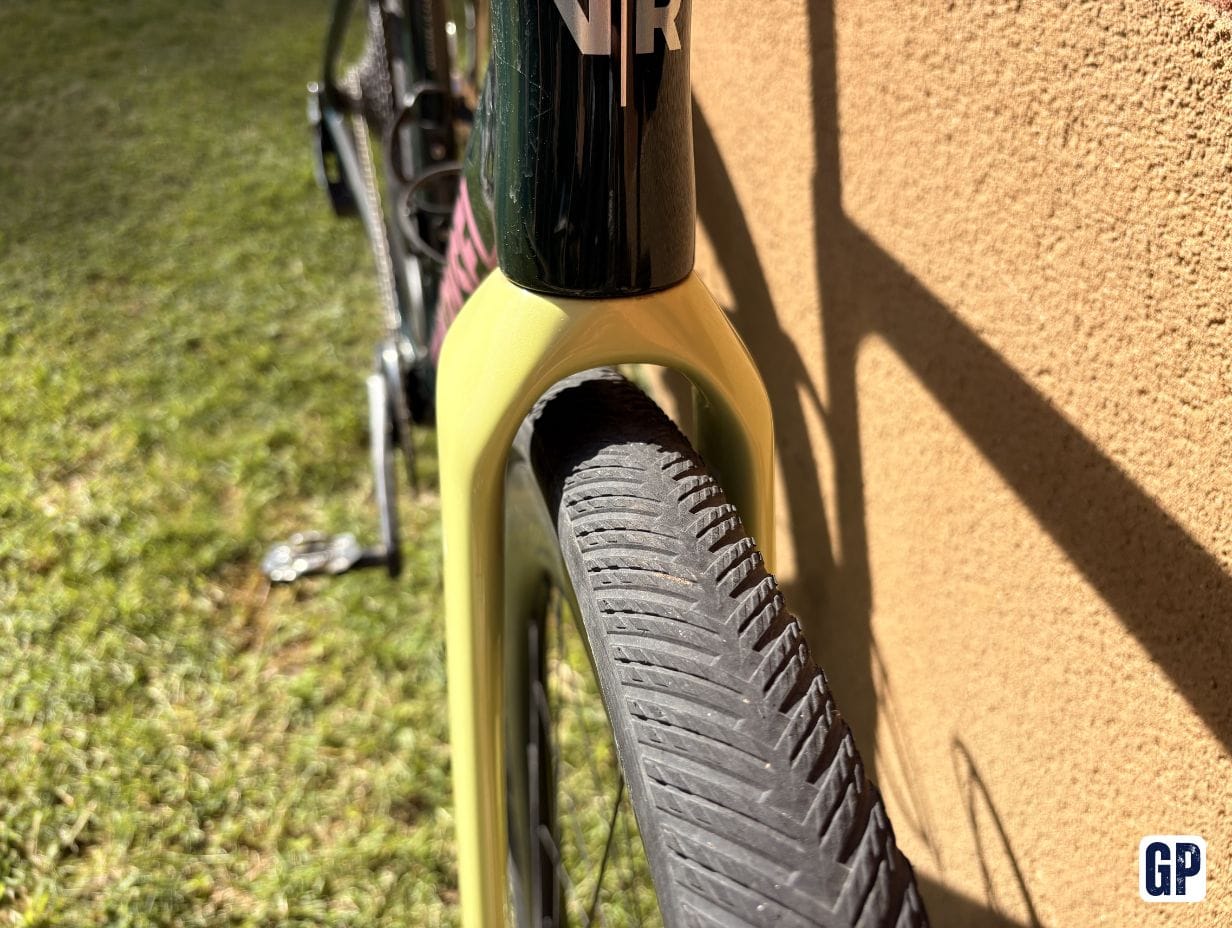
This isn’t a fault of the bike. It’s almost a given on a gravel race bike: the tyre transforms the behaviour. And on such a responsive frame, tyre choice becomes even more important.
A one-bike road-gravel option that feels almost obvious
This is perhaps one of the most interesting points about the RCR-G: it can appeal to those looking for a single bike to ride fast on road and in gravel.
Not a touring bike. Not a utility gravel. Not a bike designed to carry bags and disappear for three days. But a performance bike, light, lively, capable of a fast road ride on Saturday and a gravel race on Sunday.
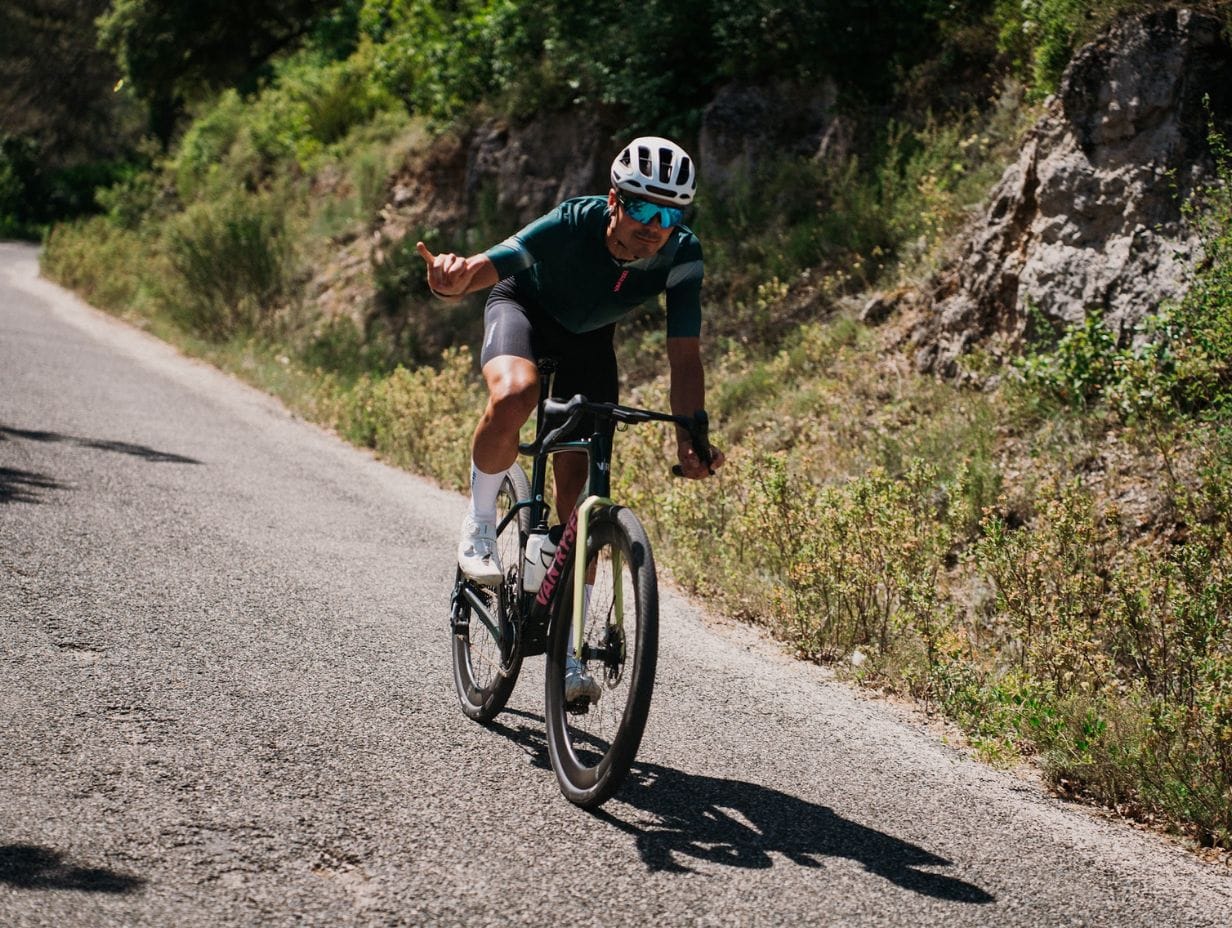
There’s real coherence in this dual reading. The frame, geometry, weight and cockpit create a bike that never feels sluggish on asphalt. And once on the tracks, the 50 mm clearance is enough to open up a wide range of uses.
My verdict on the Van Rysel RCR-G
The RCR-G is primarily aimed at riders who like to go fast. Those coming from road will find immediate touchpoints: efficient position, sharp steering, punchy acceleration, a feeling of efficiency.
It can also suit already experienced gravel riders, provided you’re looking for a race bike rather than a bike that reassures in all circumstances. If your priority is maximum comfort, stability in the rough or committed ultra-distance, the EDR-G will probably make more sense.
If you want a very high-performing bike, usable on the road, fast in gravel and incredibly well priced, the RCR-G becomes hard to ignore.
Van Rysel isn’t entering the gravel race market timidly. The brand arrives with a well-resolved, very competitive bike, not perfect in its spec choices, but already strong enough to shake up many established benchmarks.