
Van Rysel had not yet really made its mark on the mid to high-end carbon gravel segment. With this new EDR-G, the Lille-based brand shifts up a gear.
Let me be clear from the outset: this is not a long-term test. It is a serious first ride, carried out on a route of around 60 km with more than 1,200 m of elevation gain, varied enough and well put together to understand what the bike is about.
Strengths:
- Extremely aggressive spec-to-price ratio
- Stable, confidence-inspiring behaviour on descents
- Comfortable position consistent with an endurance focus
- Integrated storage supplied with a complete kit
Could be better
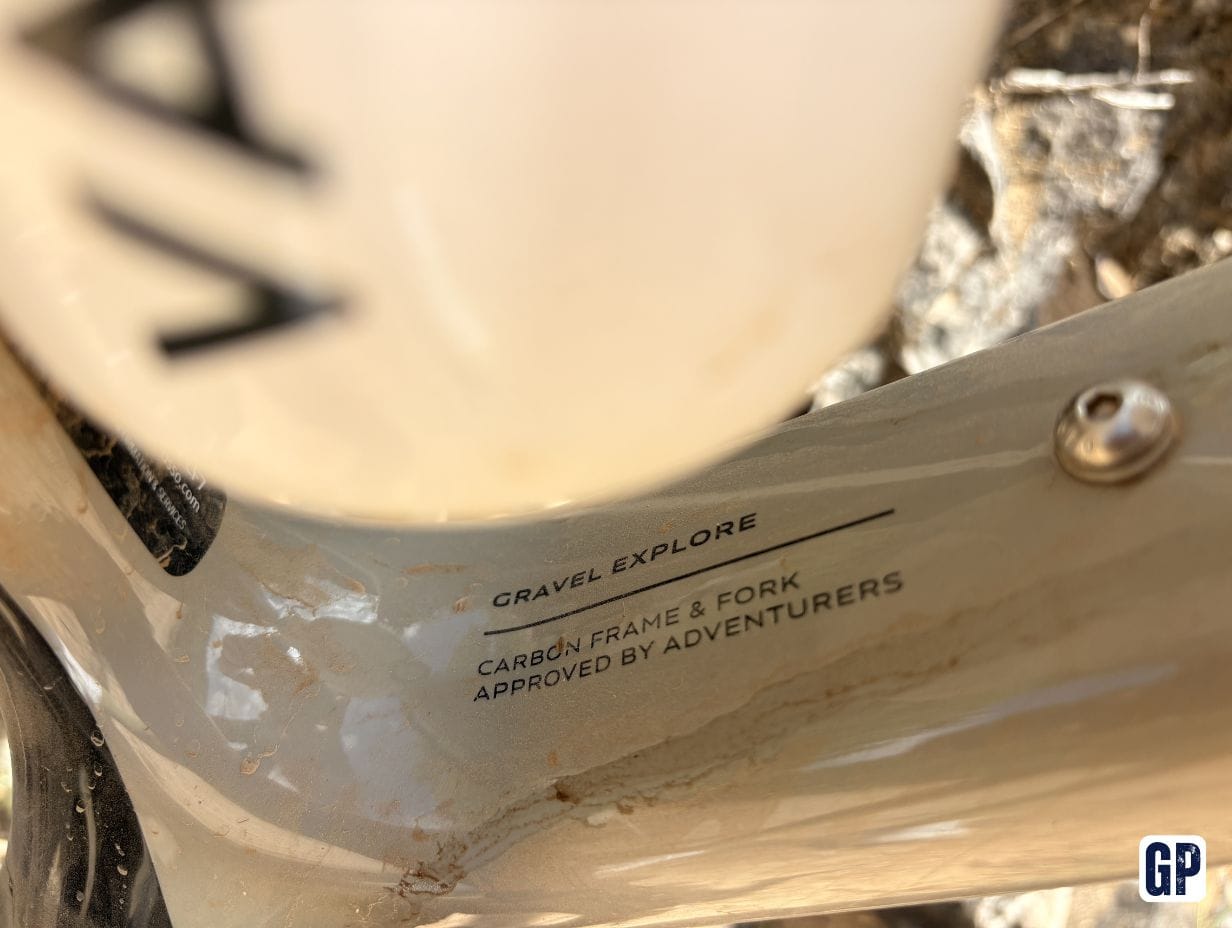
- Frame protection could be improved
And that brief is fairly clear: an endurance gravel bike, versatile and comfortable, capable of going long without becoming soft or sluggish.
A modern spec sheet, but not extravagant
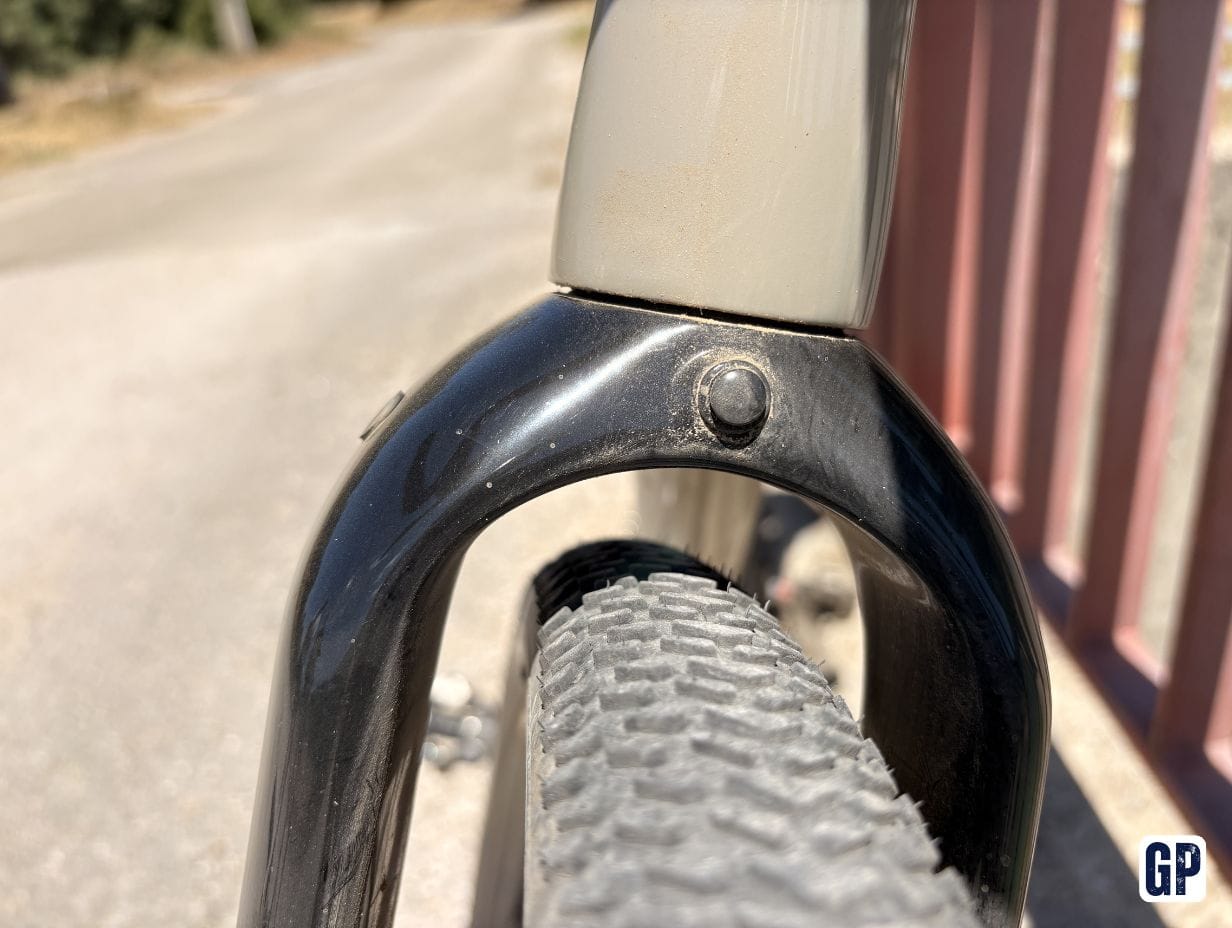
On paper, the EDR-G ticks many of the modern gravel boxes. Carbon frame and fork, tyre clearance up to 50 mm, numerous mounting points, Deda Gera handlebar with 24° flare, integrated storage in the frame, Schwalbe G-One R tyres in 45 mm depending on the version.
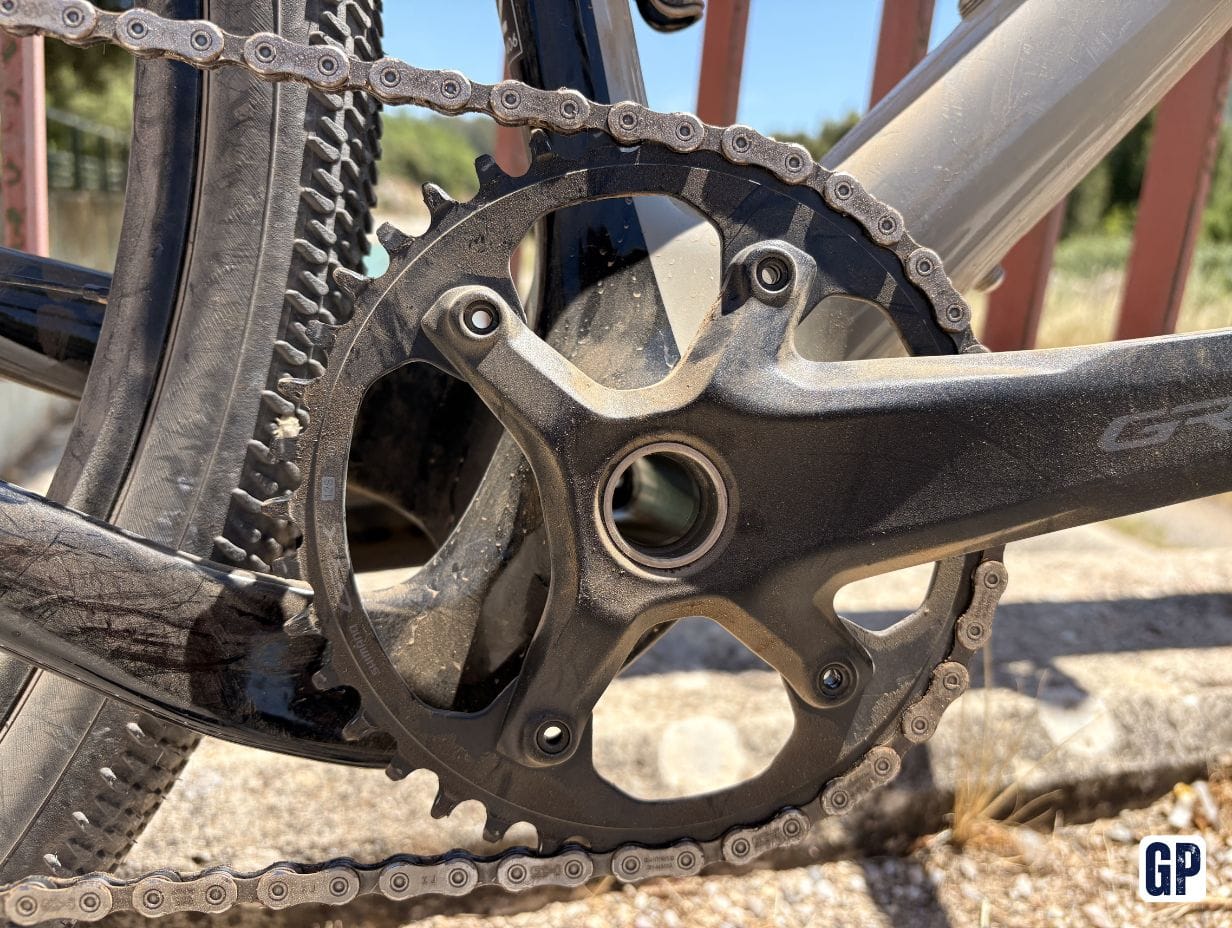
The range revolves around three main builds: a Shimano GRX 610 12-speed version at €2,199, a SRAM Force XPLR AXS build with VR32 carbon wheelset at €3,199, and a suspension version with a RockShox Rudy XPLR 40 mm fork at €3,499.
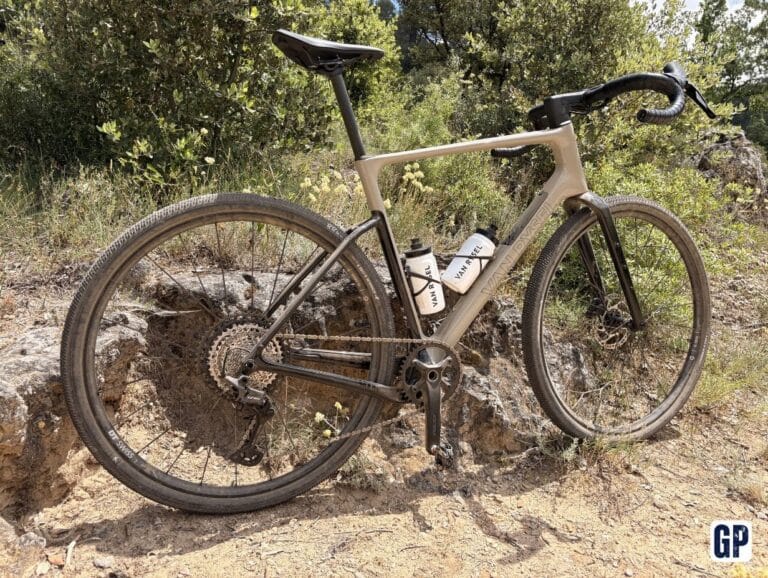
What stands out is not just the equipment. It is the spec-to-price ratio. A Force AXS groupset, carbon wheelset, a carbon seatpost, a carbon frame and serious tyres for a little over €3,000: today, very few brands can match that.
One can always debate component choices, weight, availability or brand image. But in a market where prices have sometimes lost all contact with how riders actually perceive value, this Van Rysel lands as a fairly brutal reminder. Price does not explain everything, but it always ends up mattering.
An endurance geometry that is more reassuring than radical
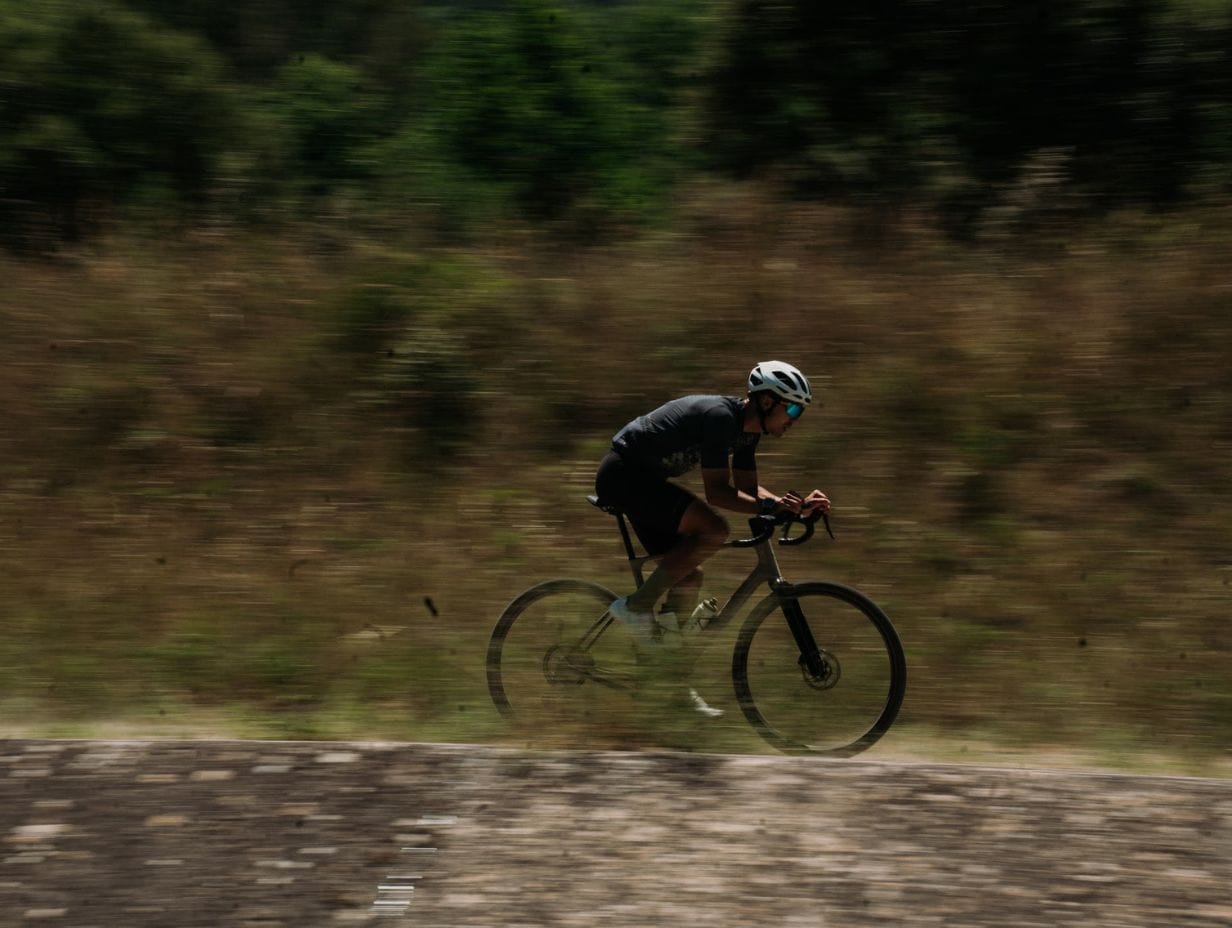
The position surprised me. I felt a little more upright than on some recent gravel bikes, even though the measurements remain in line with the segment. The 57 cm top tube paired with a 90 mm stem gives a fairly natural position, neither too compact nor overtly racy.
That also sums up this bike well. The EDR-G does not try to copy a gravel race bike like the RCR-G. It keeps a true endurance logic: you should be able to ride for a long time, change position, absorb the terrain and stay fresh.
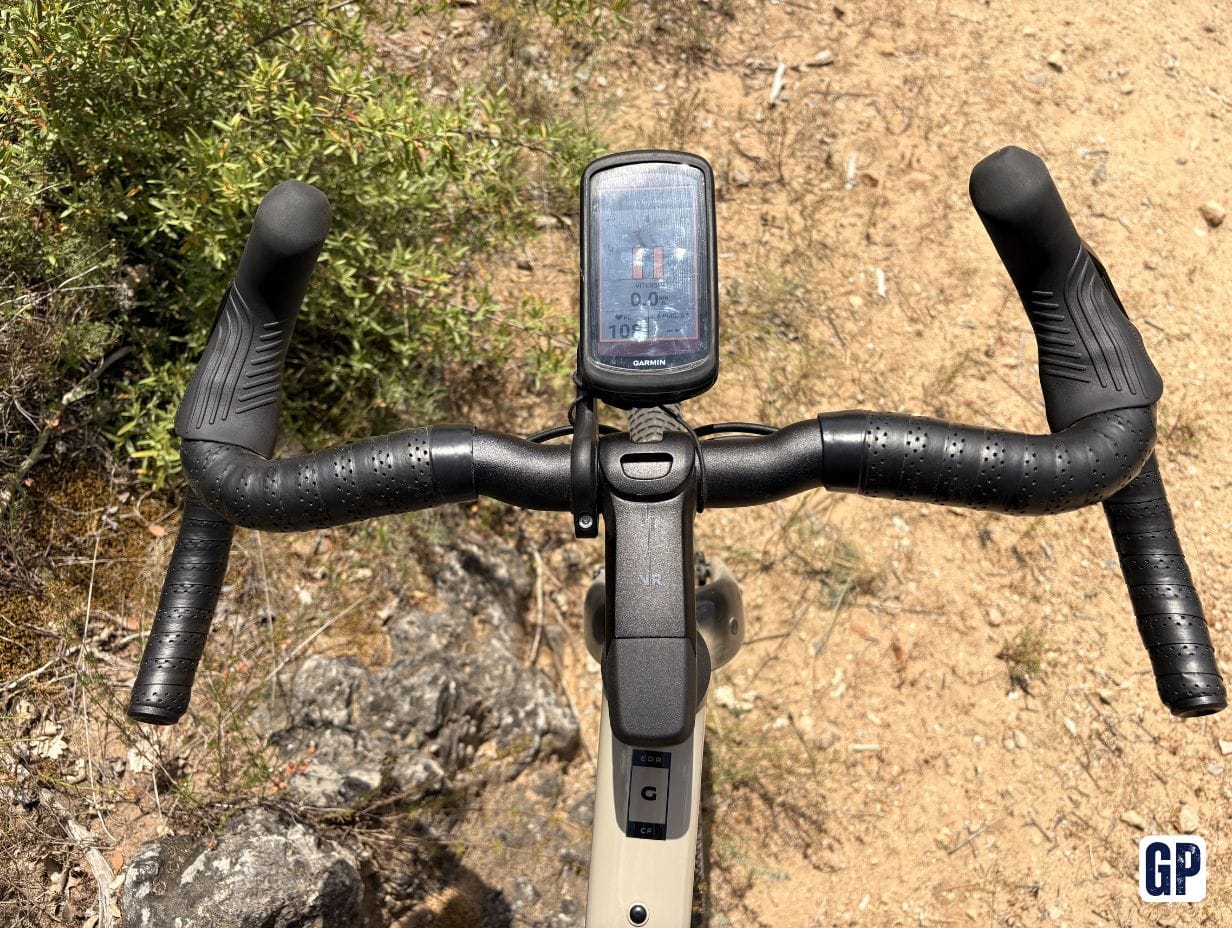
The Deda Gera handlebar contributes to that impression. It is shallow, nicely flared, with several genuinely usable hand positions.
Integrated storage: the detail that changes how you perceive the bike
Van Rysel borrows here the idea of integrated storage already seen on some bikes in the endurance range. The compartment sits fairly high in the frame, but it remains practical to use and easy to access.
Above all, the brand does not just supply an empty hatch. The bike arrives with an internal pouch, a multitool, an inner tube, tyre levers and a mini pump. In other words, the base kit is already there.
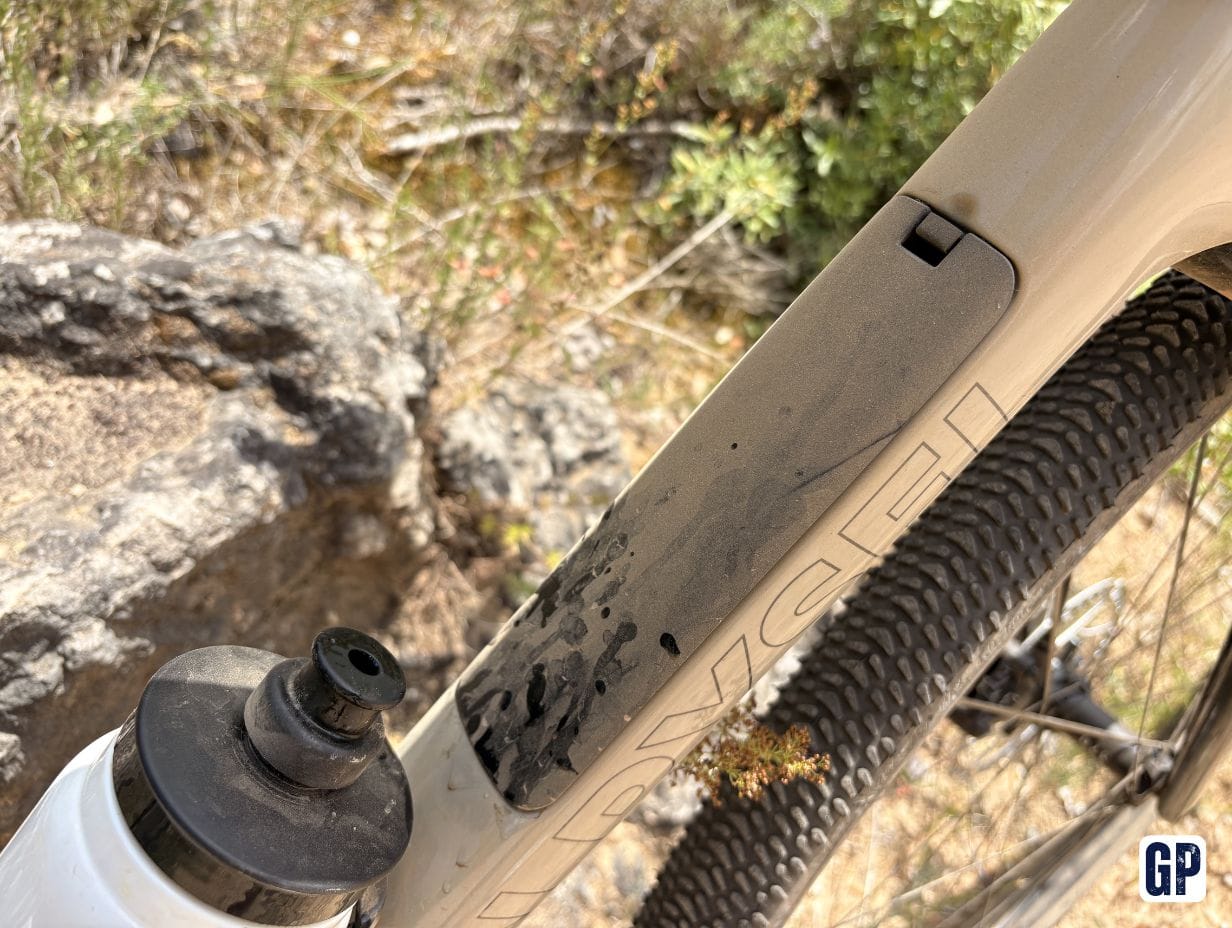
It sounds obvious, but it matters when buying. Many brands now offer integrated storage while leaving the rider to fill it themselves. Here, Van Rysel supplies a coherent, ready-to-use system that genuinely lets you skip a small saddle bag.
The industrial cost of such a pack is probably not huge. The perception, however, is very strong. When you pick up the bike, you feel that someone has thought through the complete use, not just the frame.
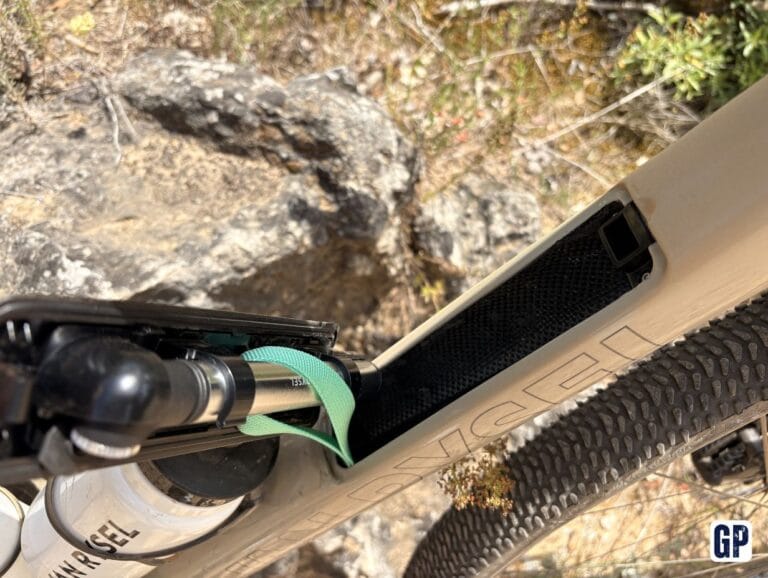
The bike has mounting points on the top tube, under the down tube and on the fork. This aligns with its adventure / long-distance positioning.
On the test bikes, however, I did not find a proper silicone protector under the down tube, only an adhesive guard. Same comment on the chainstays, where the absence of dedicated protection seems odd on a gravel bike.
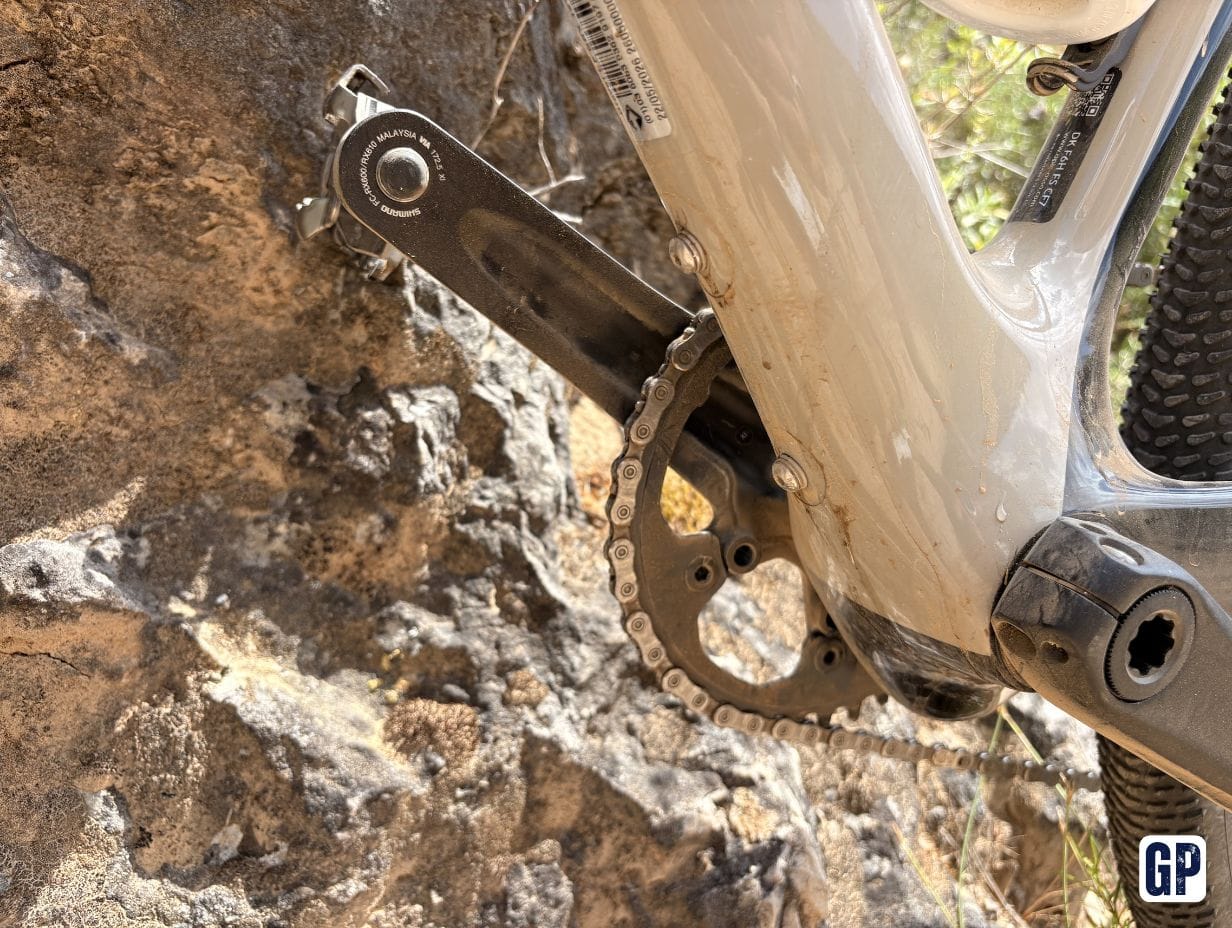
All the more surprising given that the brand’s RCR-G does come with some more advanced protection.
On the trail: stable, composed, never treacherous
The ride began straight away with a steep, technical climb. Not exactly the kind of terrain where a bike can cheat for long.
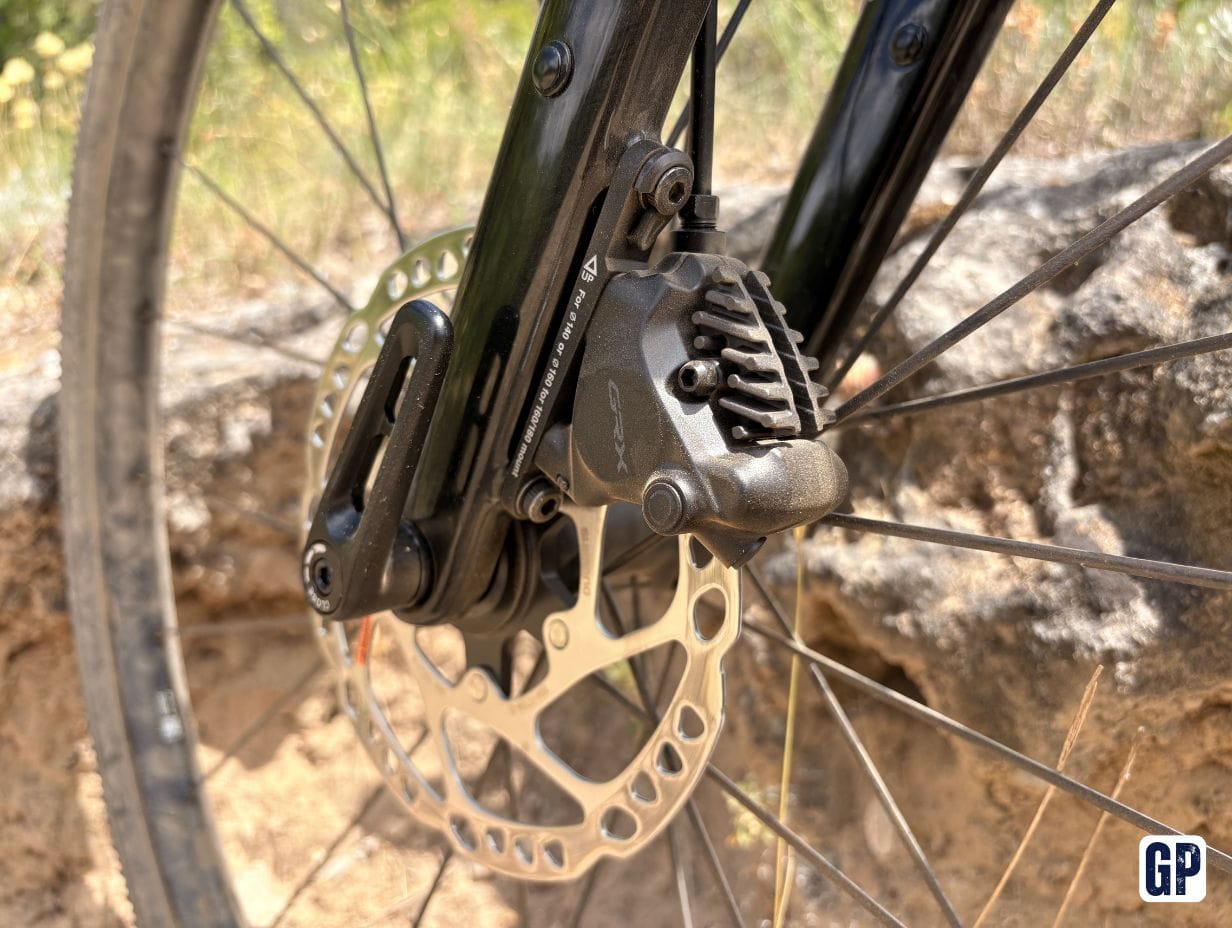
I rode the version with mechanical Shimano GRX and DT Swiss aluminium wheels. The groupset raises no particular comments: shifts are crisp, braking is good, and the whole suits an endurance gravel bike perfectly.
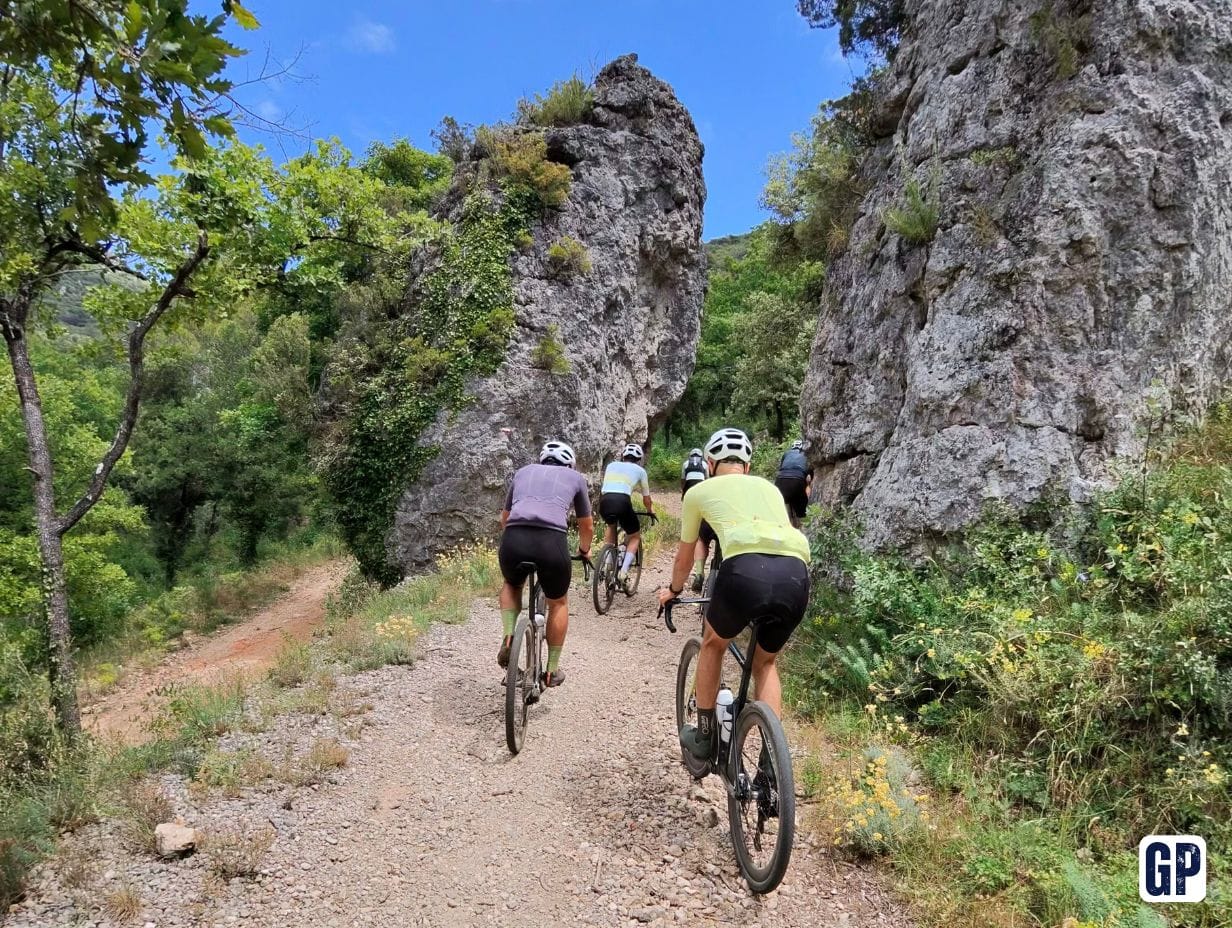
The aluminium wheelset, however, does not deliver the most dynamic feel. It does not turn the bike into a nervy machine. But even in this less flattering setup than the Force AXS build with a carbon wheelset, the frame still has a degree of snap.
When you press on the pedals, the bottom bracket responds. Not with the dry twitchiness of a pure race gravel bike, but with something more measured and controlled. This is probably where the EDR-G finds its balance: lively enough to keep things interesting, sensible enough not to tire you needlessly.
A lively front end, but real stability on descents
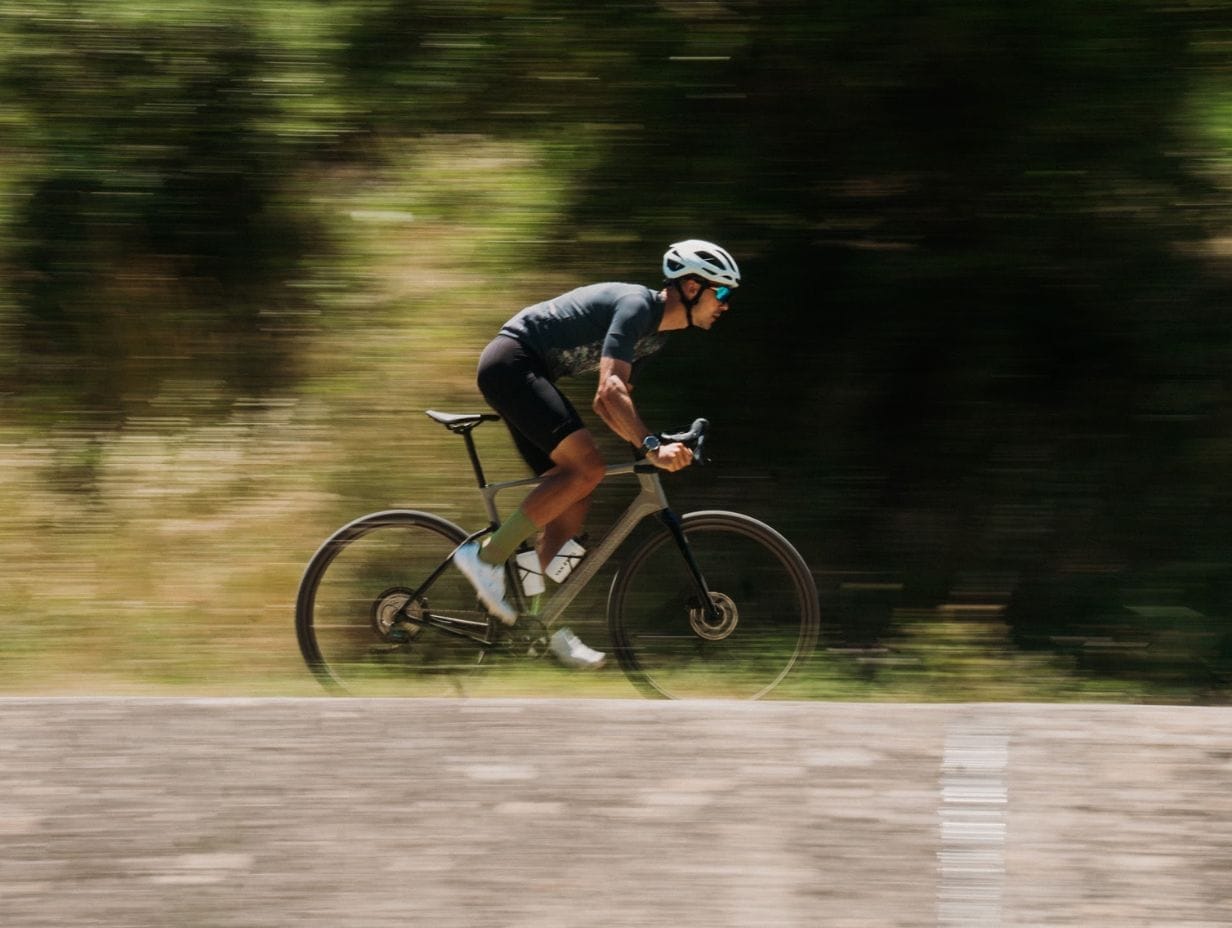
On descents, the EDR-G left me with a very composed impression. The front end is lively enough to place your line precisely, without feeling like an unstable or overly short bike.
The relatively long wheelbase inspires confidence when the gradient steepens or the surface gets rougher. The bike never put me in trouble, even on sections where you had to pick your line quickly.
Many all-round gravel bikes fall into two extremes: either too road-biased and twitchy as soon as the terrain degrades, or too heavy when changing direction. Here, Van Rysel seems to have found a rather fair compromise.
Comfort as the true backbone
Van Rysel’s message around the EDR-G rests on a simple idea: being comfortable lets you stay efficient for longer. Said like that, nothing revolutionary. But on the bike, the idea holds up.
The ride was not very long, but it was demanding: around 60 km, more than 1,200 m of climbing, varied terrain, a few technical passages. I finished feeling particularly fresh, without notable muscle pain or the sense of having fought the bike.
It is not definitive proof of comfort over 200 or 300 km. For that, we will need a real long-term test. But this first ride already confirms one thing: the EDR-G is not a stiff carbon gravel bike disguised as an adventure bike.
It damps vibrations well, it is easy to handle, and it makes you want to extend the ride rather than head home.
A versatile gravel bike, not a gravel race bike
It is also worth positioning this bike properly. The EDR-G does not target the same rider as a pure competition gravel bike that is light, aggressive and very focused on outright performance. Nor does it try to become a mini-MTB.
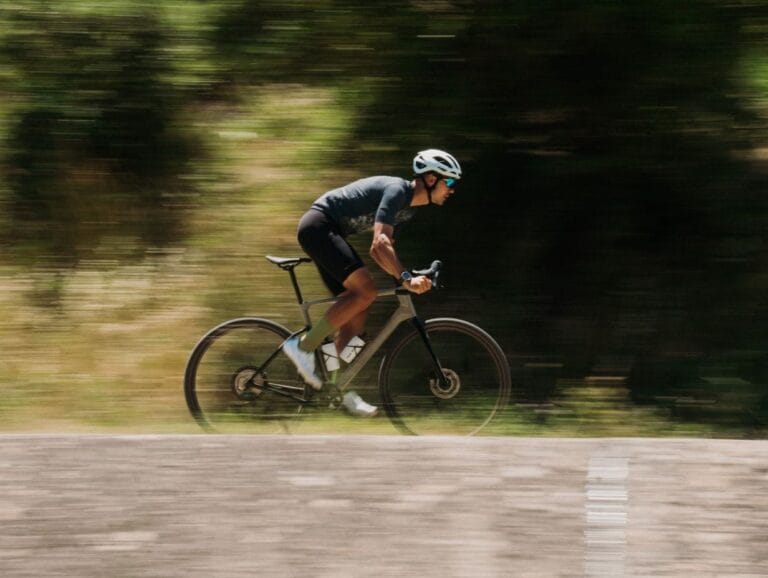
Its natural terrain is long-distance gravel, mixed rides, day-long adventures, routes with elevation, fast-rolling sections and rougher tracks. In short: the core of gravel riding for many cyclists.
That said, it is exactly the kind of base I would enjoy turning into a gravel race bike if that is your goal. If you do not want an ultra-rigid frame and still want a competitive, well-equipped bike, then a more dynamic set of carbon wheels and a one-piece cockpit could turn this gravel bike into an ideal machine for events like The Traka.
Price, the argument that can change everything
We can circle around it for a long time, but the main argument for this bike will remain its price. At €2,199 for the GRX carbon build, the offer is already strong. At €3,199 for Force AXS with carbon wheels, it becomes frankly hard to ignore.
With comparable equipment, many brands will ask for much more. Sometimes almost double. And if you add the integrated kit, the 50 mm tyre clearance, the mounting points and the overall coherence of the build, the Van Rysel EDR-G becomes one of the most aggressive bikes on the market.
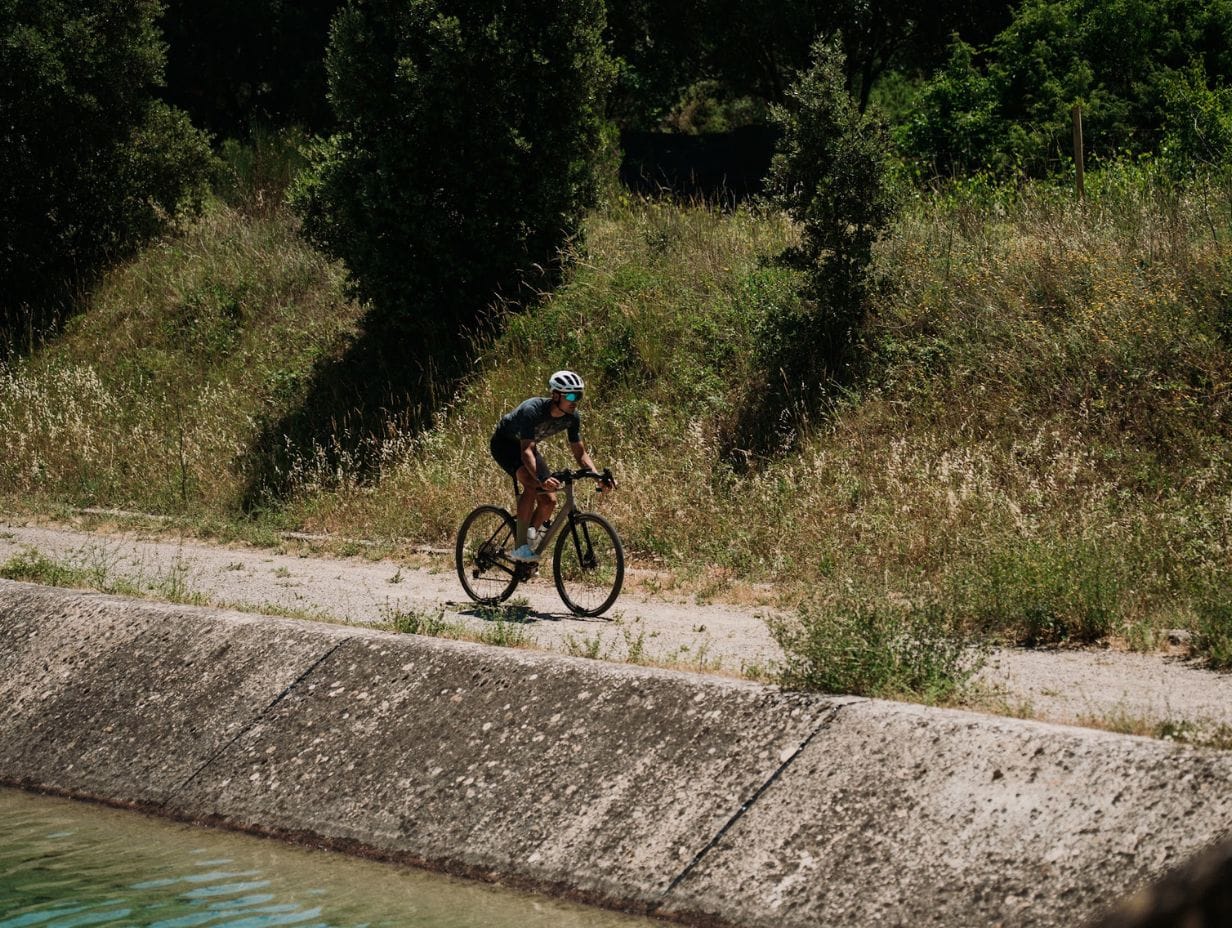
That is not just good news for Van Rysel. It also puts pressure on the rest of the industry. Until now, the Lille-based brand had done little to worry the established players in mid to high-end carbon gravel. With this EDR-G, that is no longer the case.
What this first ride already tells us
It will need to be confirmed in a proper long-term test: loaded behaviour, durability of the protection, comfort after several hours, bag fitment, the real interest of the suspension version…
But this first outing already gives a fairly clear reading. Van Rysel is not releasing a simple well-priced carbon gravel bike. The brand proposes a coherent, well thought-out bike, comfortable, composed on the trail and sold at a price that could hurt the competition.
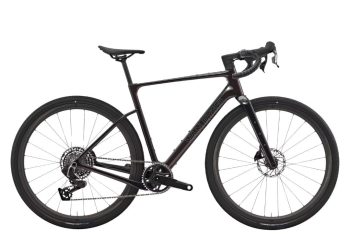
The EDR-G is not perfect. The press-fit bottom bracket may make a few people wince, the frame protection deserves better, and the version with DT Swiss aluminium wheels does not have the snap of the carbon build. But the whole package holds together.
And when the price is right, the proposition is coherent and the bike rides true, it becomes hard to imagine this Van Rysel not finding its audience.