De Rosa is relaunching the Merak with a completely redesigned fifth generation. The name is anything but new: it spans more than twenty-five years at the Italian brand, from aluminium and hydroformed tubes to alu-carbon hybrids and, eventually, full carbon.
The 2026 model isn’t trying to replay the past. De Rosa describes a complete race road bike that’s lighter, more stable and more precise, with a visual identity dubbed retrofuturistic. The term’s a bit loaded, but the project itself is worth a closer look.
🚀 In brief:
New De Rosa Merak 2026 with a claimed 700 g frame and 280 g fork
Versatile race road bike, lighter yet presented as more stable
Official clearance up to 34 mm, UDH standard and a T47 85.5 mm bottom bracket
A lighter Merak, but not positioned as a pure climber
The headline numbers will do the rounds quickly: 700 g for the frame and 280 g for the fork. De Rosa also quotes a complete bike between 6.9 and 7.1 kg, depending on build, wheelset and groupset choices.
The brand, however, stresses an important point: this Merak isn’t designed around the scales alone. The bike obviously wants to stay efficient uphill, but De Rosa positions it more as a light, versatile race bike, able to accelerate, descend fast, hold a high pace and handle varied terrain without being boxed into a single category.
That’s a healthy line to take. Many lightweight bikes become hard to pin down as soon as they also try to tick aero, comfort, stiffness and stability. Here, De Rosa embraces a search for balance, with more generous sections on the fork and rear triangle so that lightness doesn’t turn into excessive twitchiness.
A taut silhouette, a more muscular rear
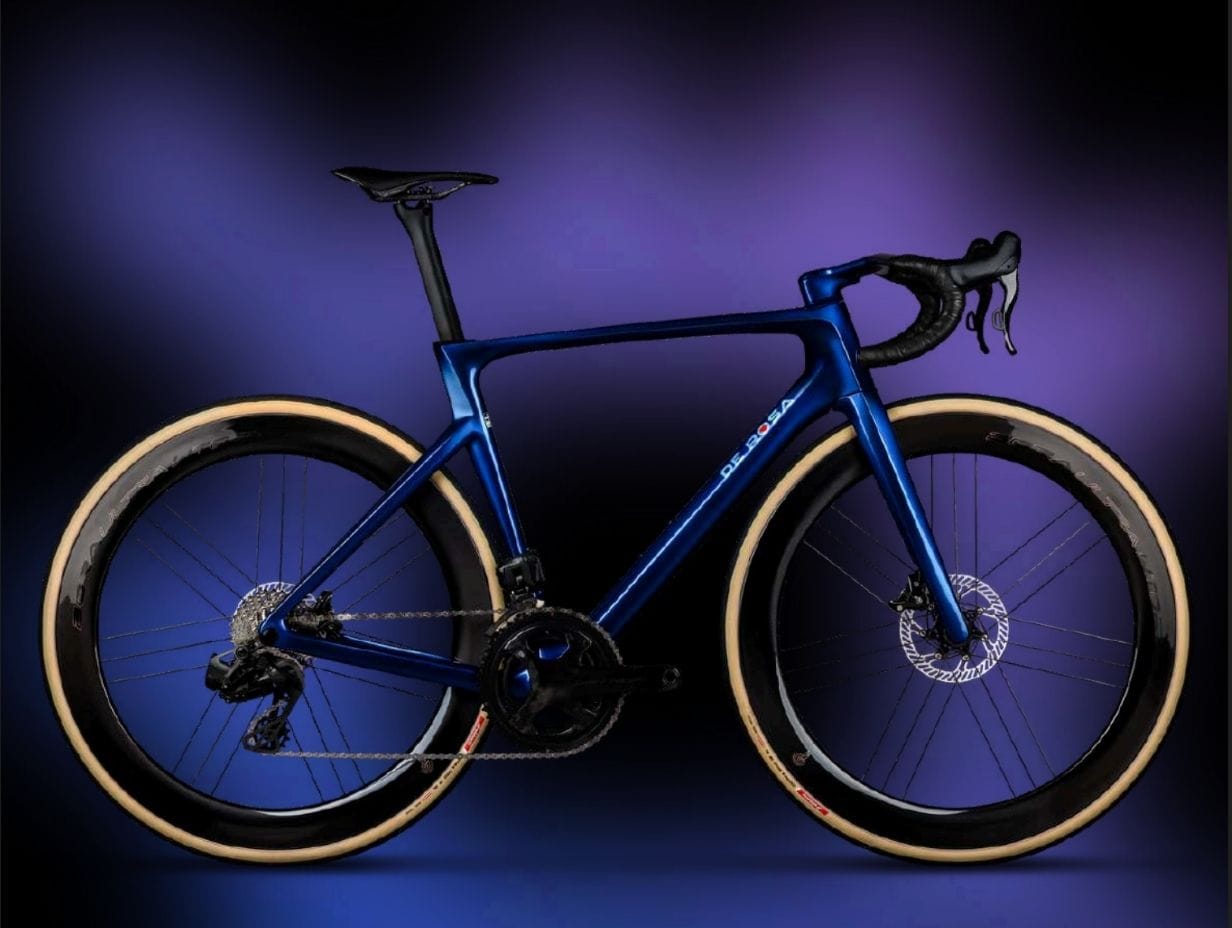
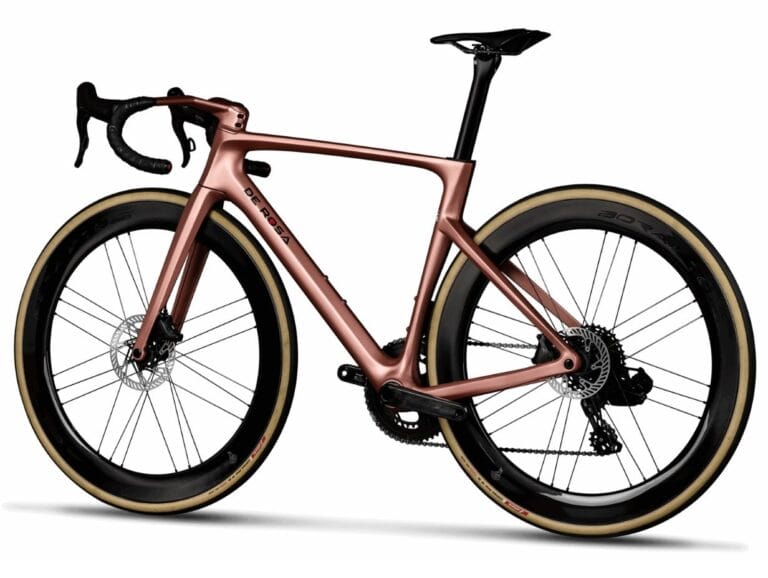
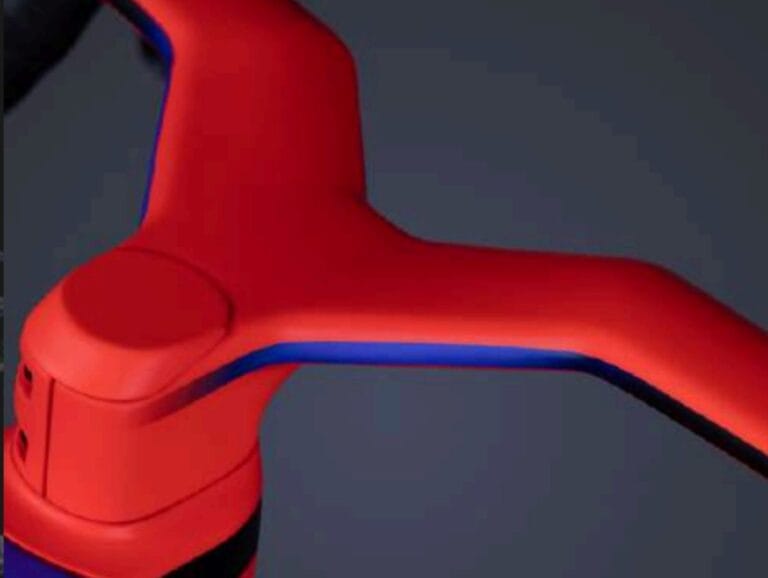
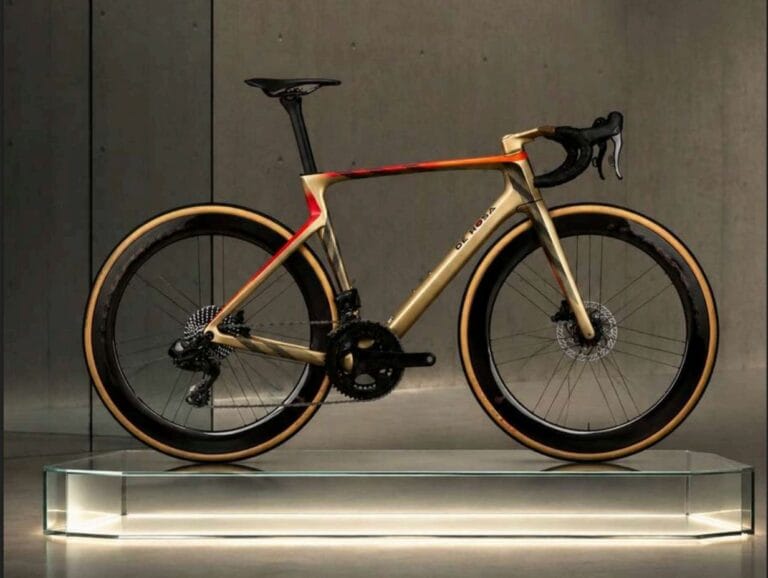
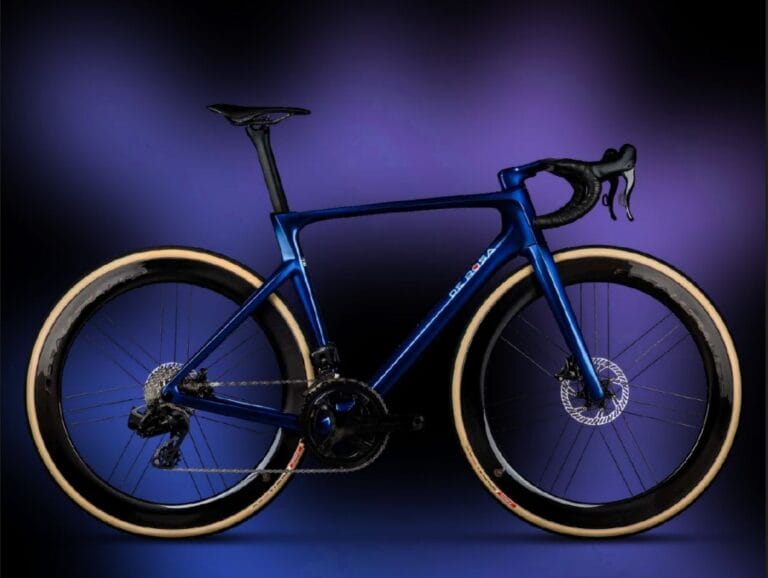
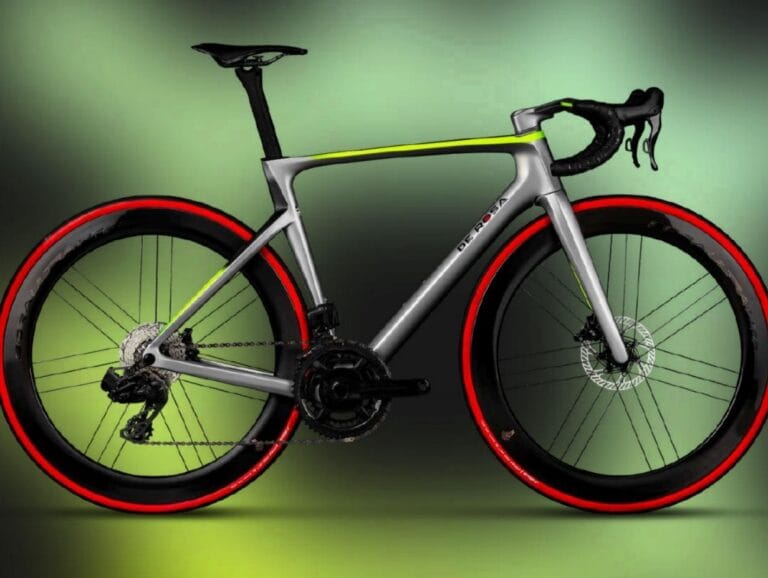
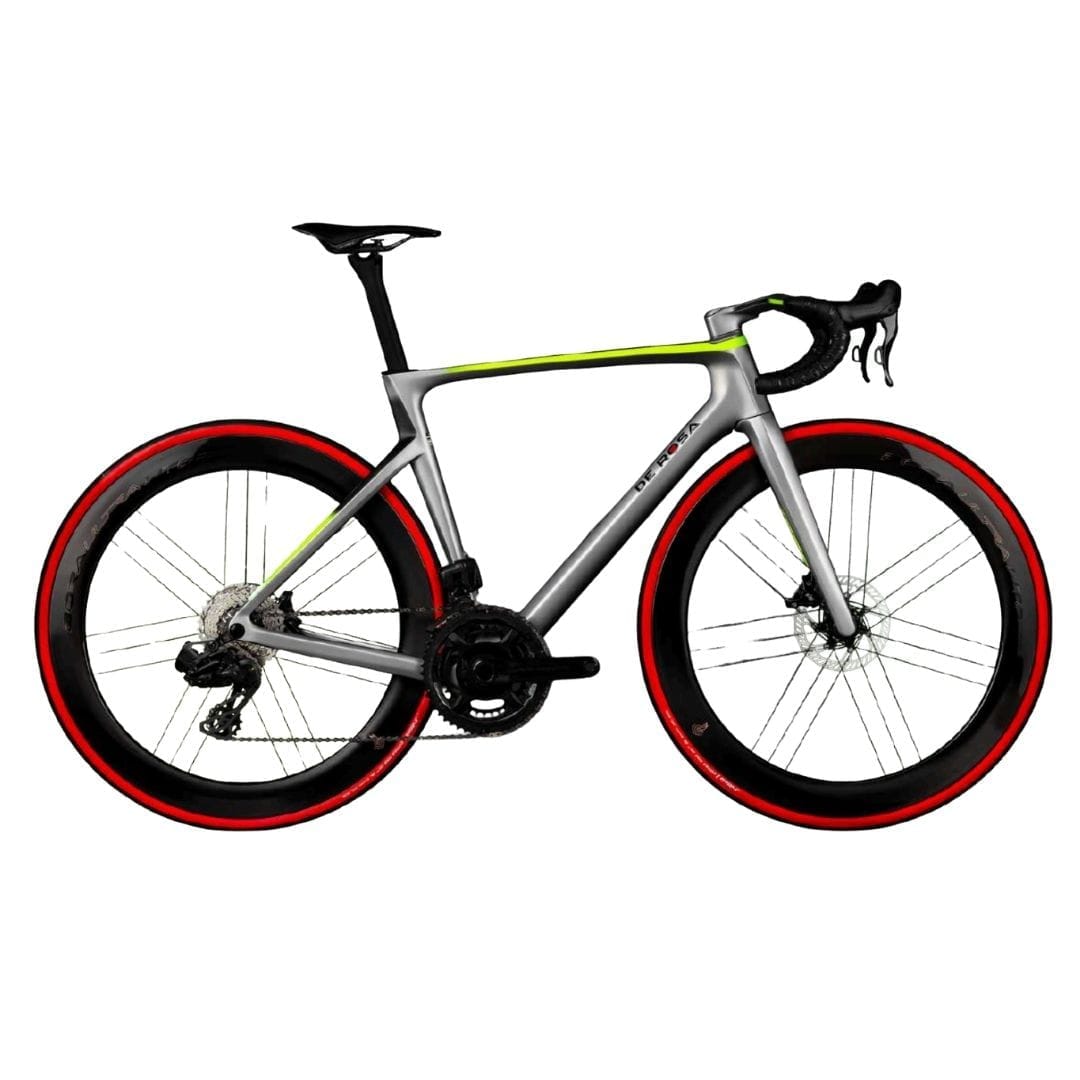
The new Merak keeps a fairly clean profile: taut top tube, compact front end, tidy lines. Viewed side-on, the bike looks almost minimalist. The reading changes when you look from the rear, with more pronounced volumes around the rear triangle and the fork.
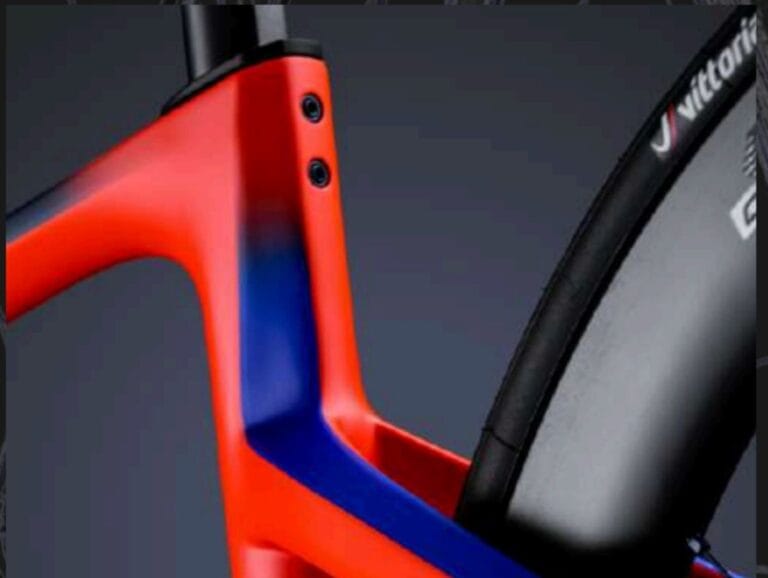
This is one of the most interesting technical points in the dossier provided by De Rosa. The brand isn’t just selling a shape: it explains that this more substantial architecture contributes to control, especially as speed rises and on descents.
We’ll obviously need real photos, then a test, to judge the bike’s actual presence. For now, the absence of official shots and the reliance on 3D visuals leave a slightly unfinished feel. On a machine so tied to image, proportions and detail, that’s a pity.
34 mm tyre clearance: a modern road choice, not endurance
The Merak officially accepts tyres up to 34 mm. This has become a very important figure on modern road bikes: not just for comfort, but also for traction, safety on descents and the ability to adapt the bike to imperfect road surfaces.
De Rosa remains cautious: the actual width will depend on the rim and tyre used, and builds close to the limit should be checked. That’s the right reflex, especially with modern tyres that sometimes come up wider than expected.
This clearance doesn’t turn the Merak into an endurance bike. De Rosa also reminds us that the geometry remains race-oriented. Comfort can be tuned via tyre choice, but those seeking a very upright position or a more forgiving long-distance platform will need to look elsewhere in the range.
UDH, T47 and dedicated seatpost
On the standards front, the Merak adopts a UDH hanger, a T47 85.5 mm bottom bracket, a 1-1/2” to 1-1/2” headset and a dedicated De Rosa seatpost.
The seatpost is offered with zero offset as standard, with 12 mm and 25 mm options.
Eight sizes and three aesthetic takes
The new Merak will be offered in eight sizes, from 42.5 to 56.5. Stack and reach values progress in small increments, which bodes well for precise size choices for riders between sizes.
De Rosa emphasises a classic but crucial point here: on a race bike, size isn’t chosen only from rider height. The target position, flexibility, torso length and cockpit matter enormously.
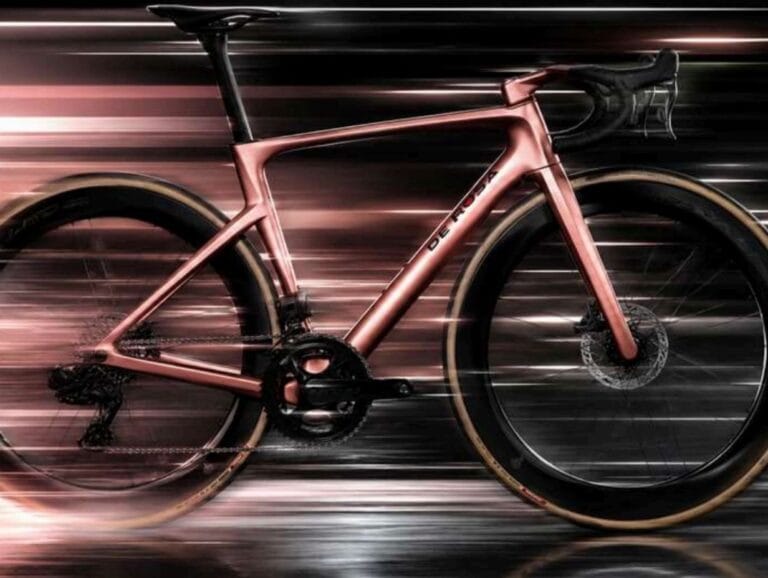
Aesthetically, the technical project stays the same, but three graphic themes will be offered: Classic, Dynamic and Race. Classic goes for restraint, Dynamic uses more visible longitudinal lines, Race pushes the competition identity further.
The brand also announces colour and graphic customisation possibilities, without detailing the exact limits of the programme here.
The heart disappears from the head tube
This is probably the strongest symbolic detail: De Rosa removes the famous heart from the head tube. The brand identity doesn’t disappear, but it moves. The brand says it wants to give more presence to the frame’s proportions, design and surfaces.
This choice will surely divide opinion. At De Rosa, the heart isn’t a mere secondary logo: it’s an emotional, almost heritage marker. Removing it from the head tube means taking an aesthetic risk, especially on such a historically loaded model.
But it’s also what gives this new Merak a bit more definition. De Rosa isn’t content to repaint an existing bike with a nostalgic narrative. The bike looks at its history without trying to copy it.
A name that carries historical weight
Merak isn’t a name randomly stuck on a carbon frame. In 2000, Romāns Vainšteins became road world champion in Plouay on a Merak. The same year, Francesco Casagrande won the Prato-Abetone stage on the Giro, finished second overall and took the mountains classification.
The model then remained associated with De Rosa professional teams, notably with Pietro Caucchioli, winner of two stages of the 2001 Giro and third at the 2002 Giro.
This past doesn’t tell us how the new bike rides. But it does explain why De Rosa seems to treat the Merak as more than a simple product platform. It’s a bike with racing pedigree, and the Italian brand has clearly chosen not to weigh it down with folklore.
Our view
The new De Rosa Merak ticks several very current boxes: very light frame, 34 mm tyre clearance, UDH, T47, clean integration, race positioning but not over-specialised. The narrative is handled quite well: it’s neither a pure climbing bike, nor a radical aero, nor a disguised endurance bike.
Two caveats remain important at this stage. First, no price has been communicated in the available materials. At this level of product, that will inevitably be a central piece of data. Second, the lack of real official photos makes it harder to read the design, especially when part of the launch precisely leans on proportions, volumes and the disappearance of the heart up front.
What remains is the impression of a very De Rosa bike: elegant, steeped in history, but not a prisoner of its past. A modern Merak, probably very high-end, that you’d want to see in the flesh rather than as a 3D render.





Reviews
There are no reviews yet.