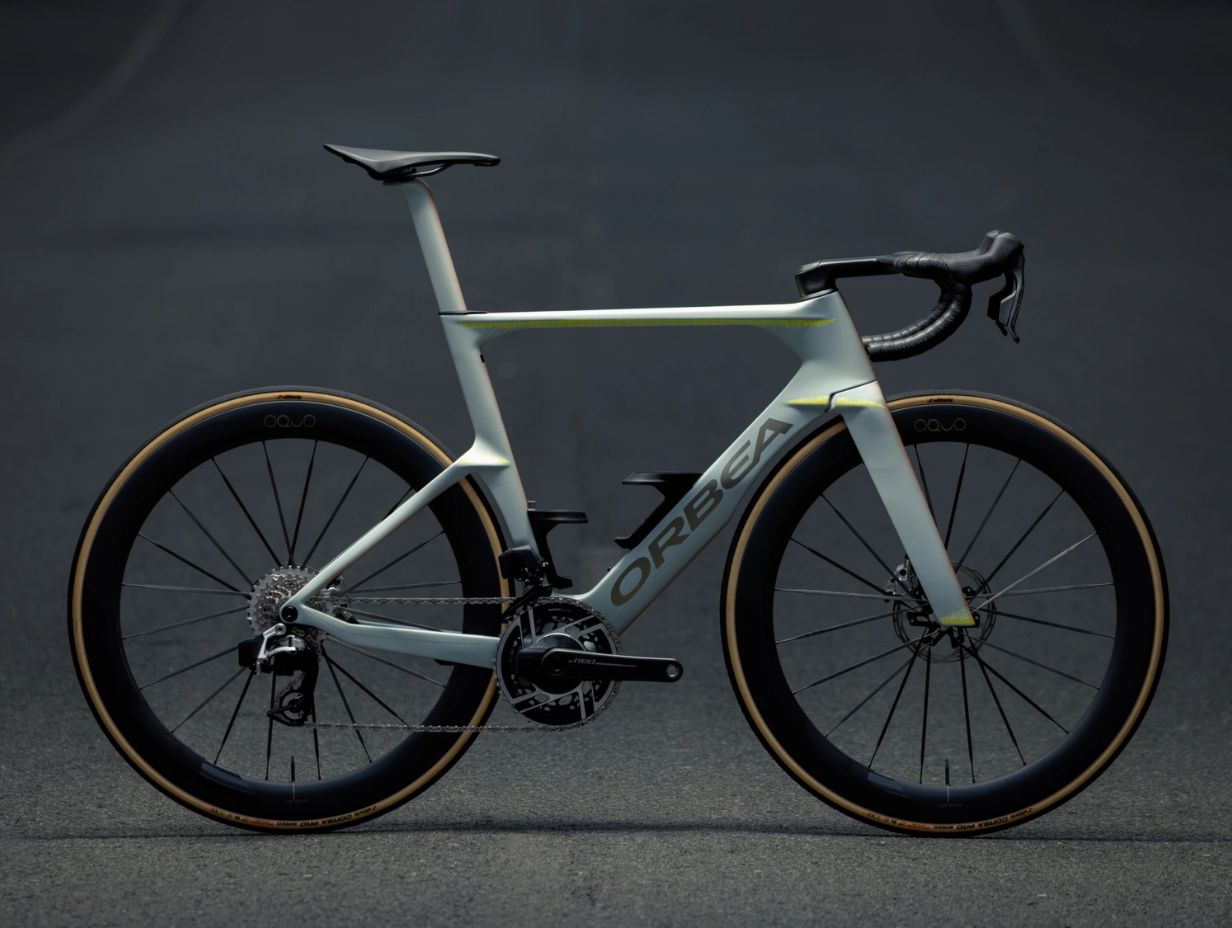
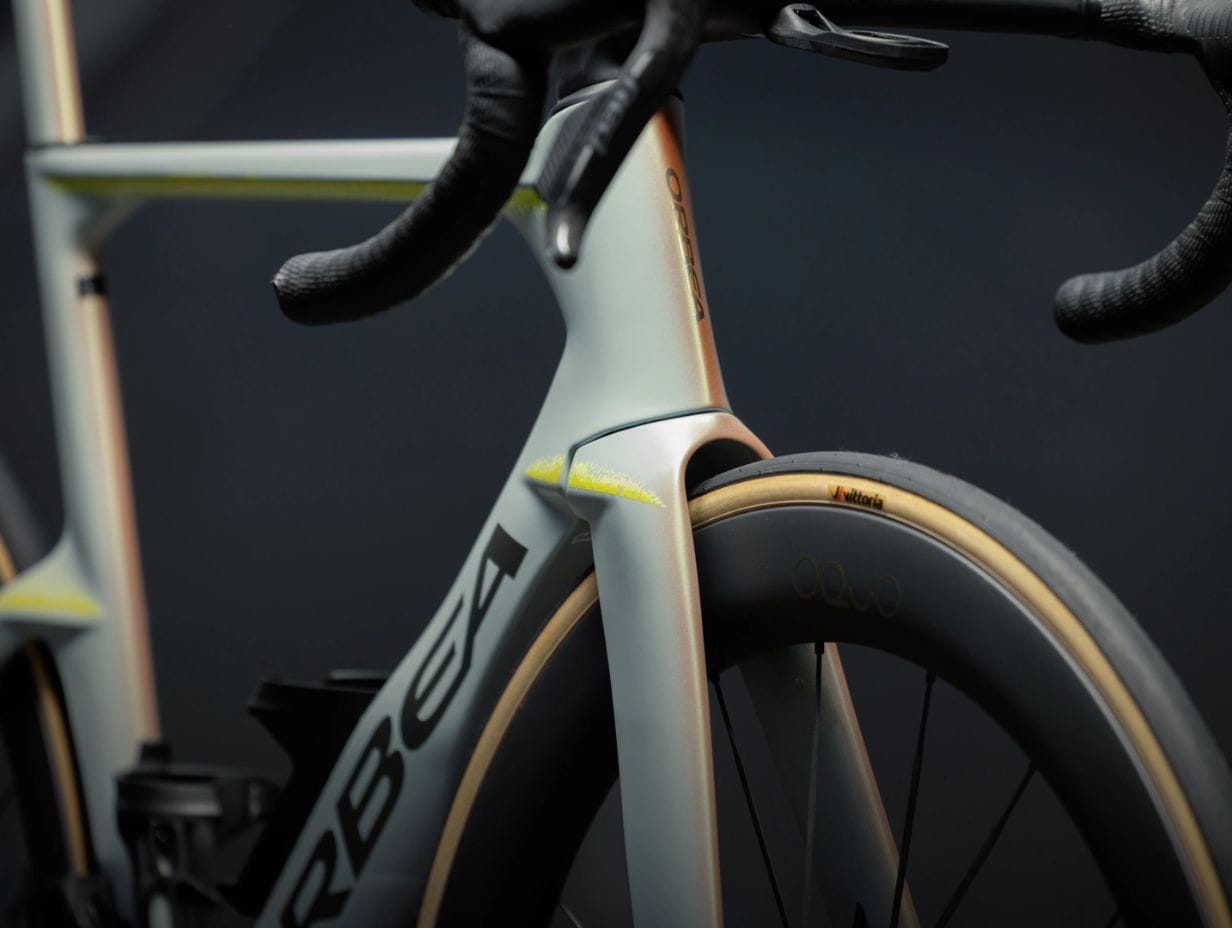
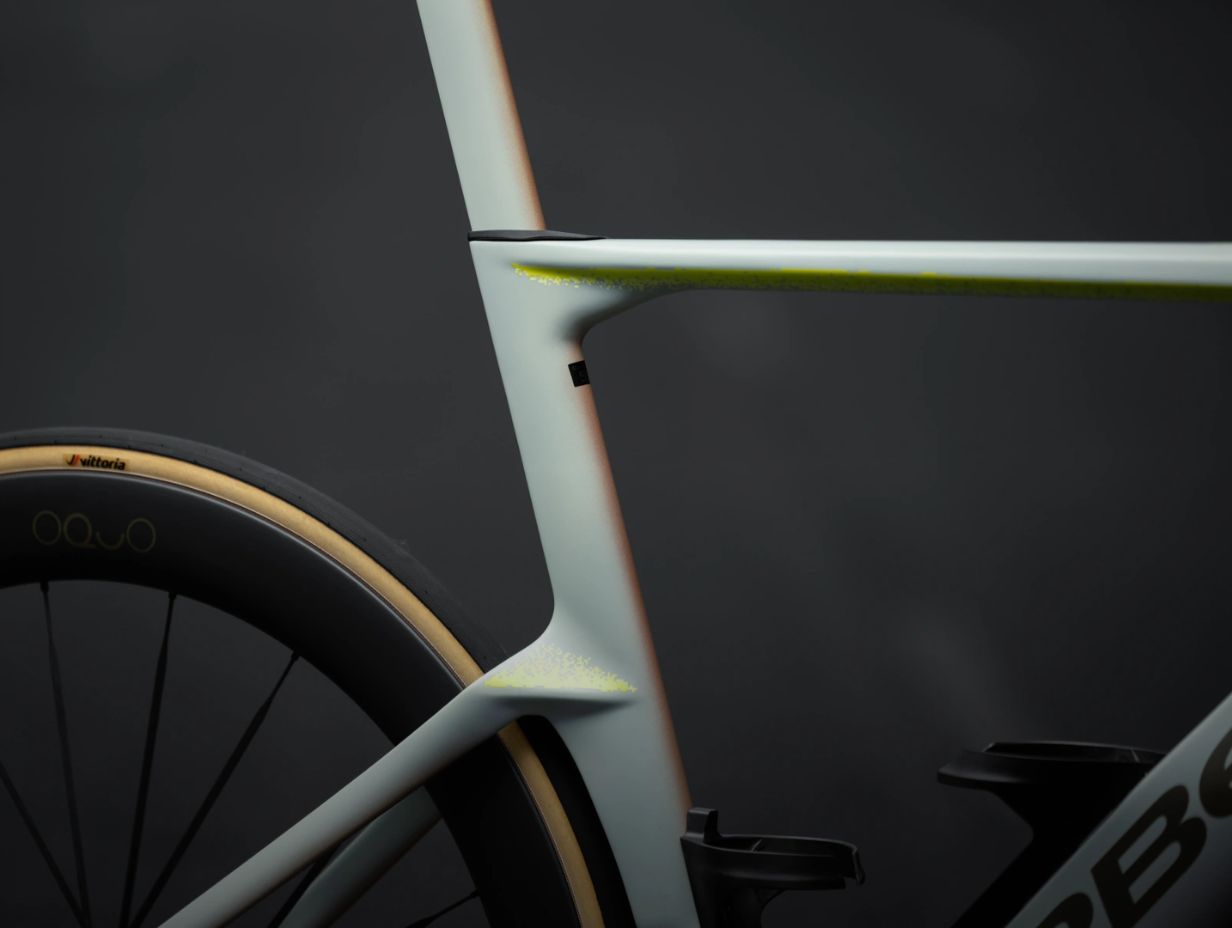
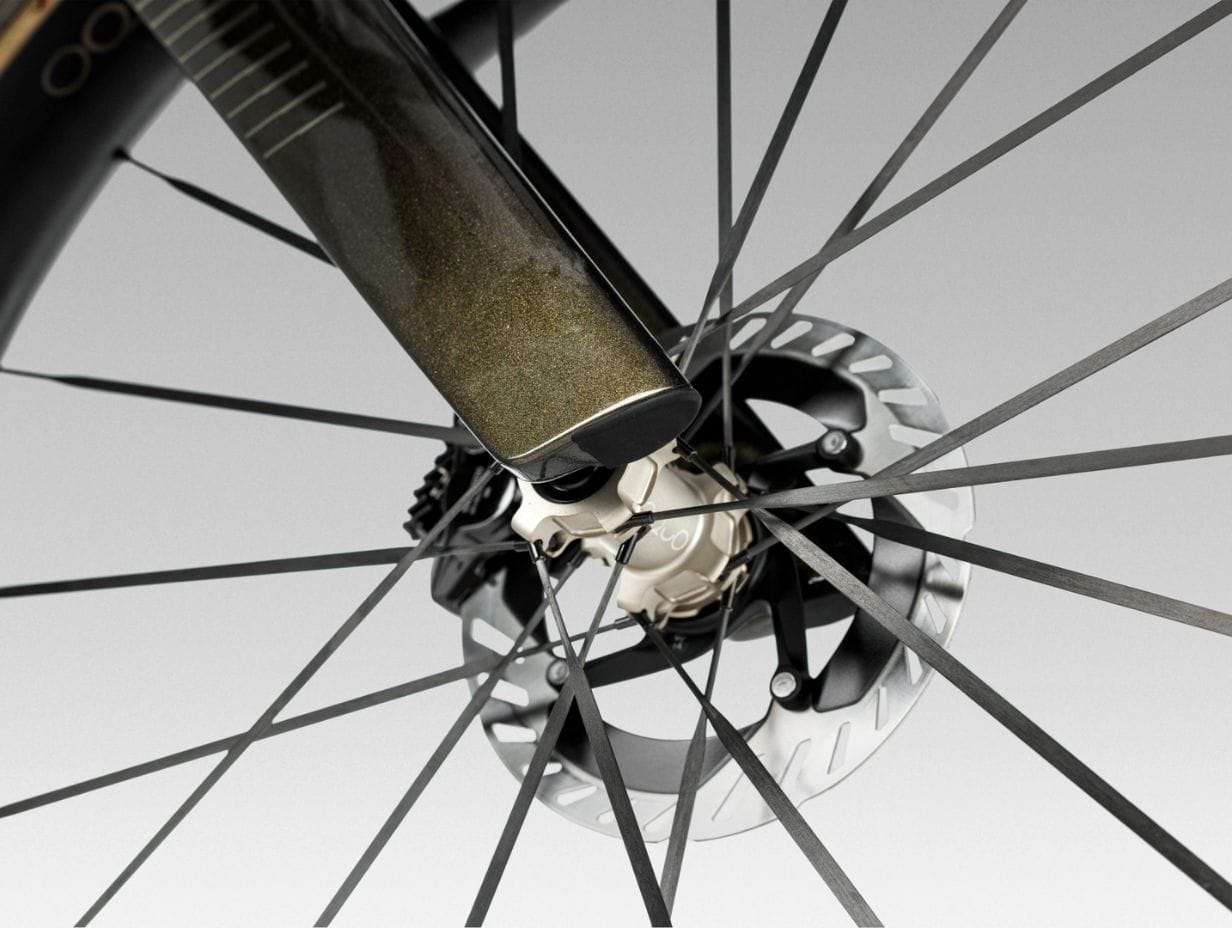
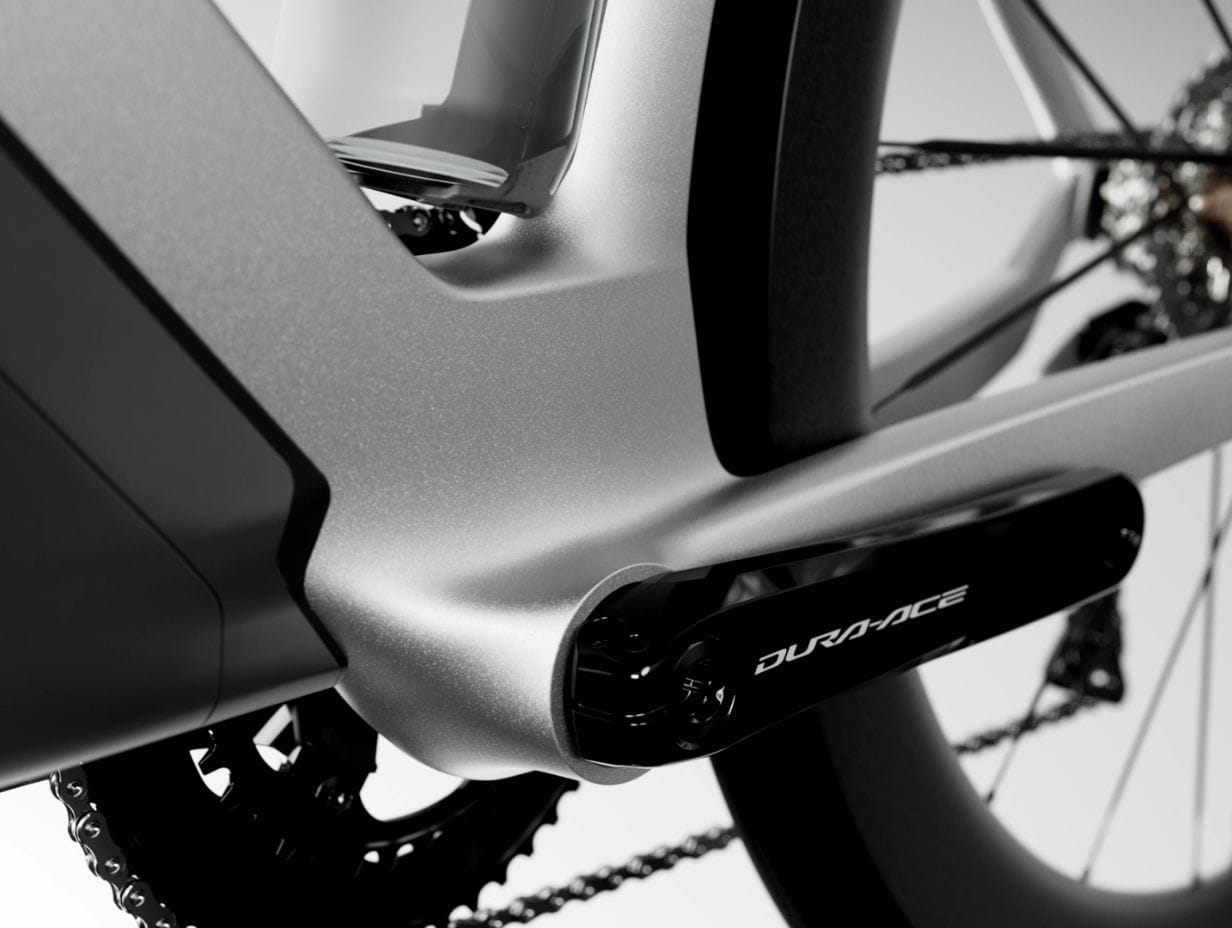
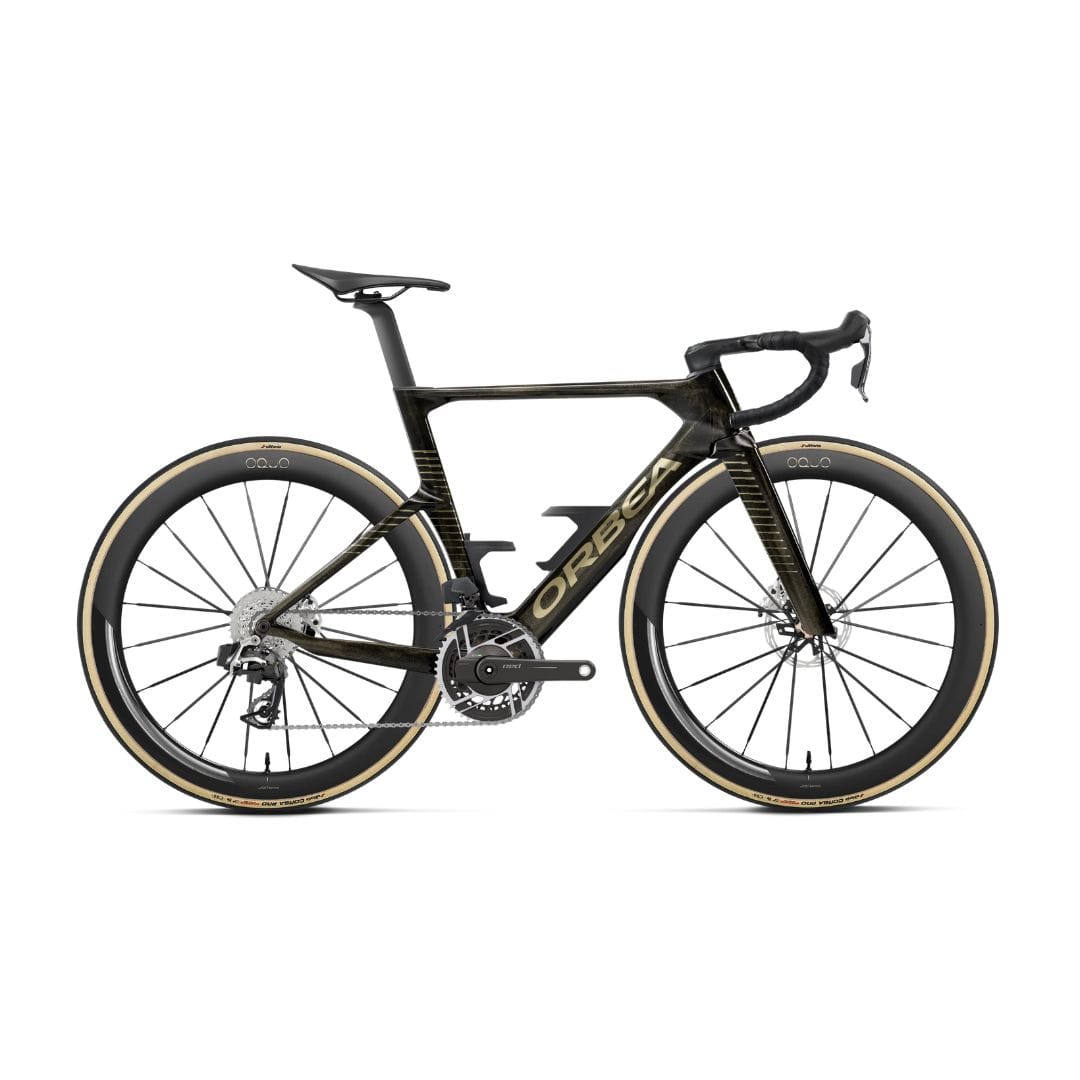
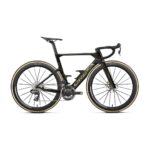
The new Orbea Orca Aero doesn’t try to blend into the bunch. Visually, that’s one of its main talking points: very taut lines, pronounced volumes, sharp edges, profiles shaped with speed in mind.
This bike stands apart from part of today’s, sometimes smoother, production. Here, some lines look almost carved with a chisel. If you like highly expressive aero bikes, there’s a good chance this Orca Aero will speak to you straight away.
🚀 In short:
The new Orbea Orca Aero claims a 21 W gain over the previous generation, according to Orbea.
The OMX frame features across all builds—a rare and interesting choice in this segment.
The bike accepts modern tyres, with stated clearance up to 37 mm.
Orbea announces an approach called Aero 360º, with work focused not only on the frame, but on the bike–rider system. The brand cites a 21 W gain over the previous generation. As always with this kind of figure, it should be read within the brand’s own protocol, but the intent is clear: this Orca Aero targets pure speed.
An aero bike, but built around modern tyres
The interesting point isn’t just aerodynamics. It’s also the leeway given to tyres.
Orbea says the bike is optimised for 29 to 35 mm tyres, with clearance up to 37 mm, while keeping a 5 mm safety margin. For a very aerodynamic road bike, that’s huge—and even more than the new Canyon Endurace CFR!
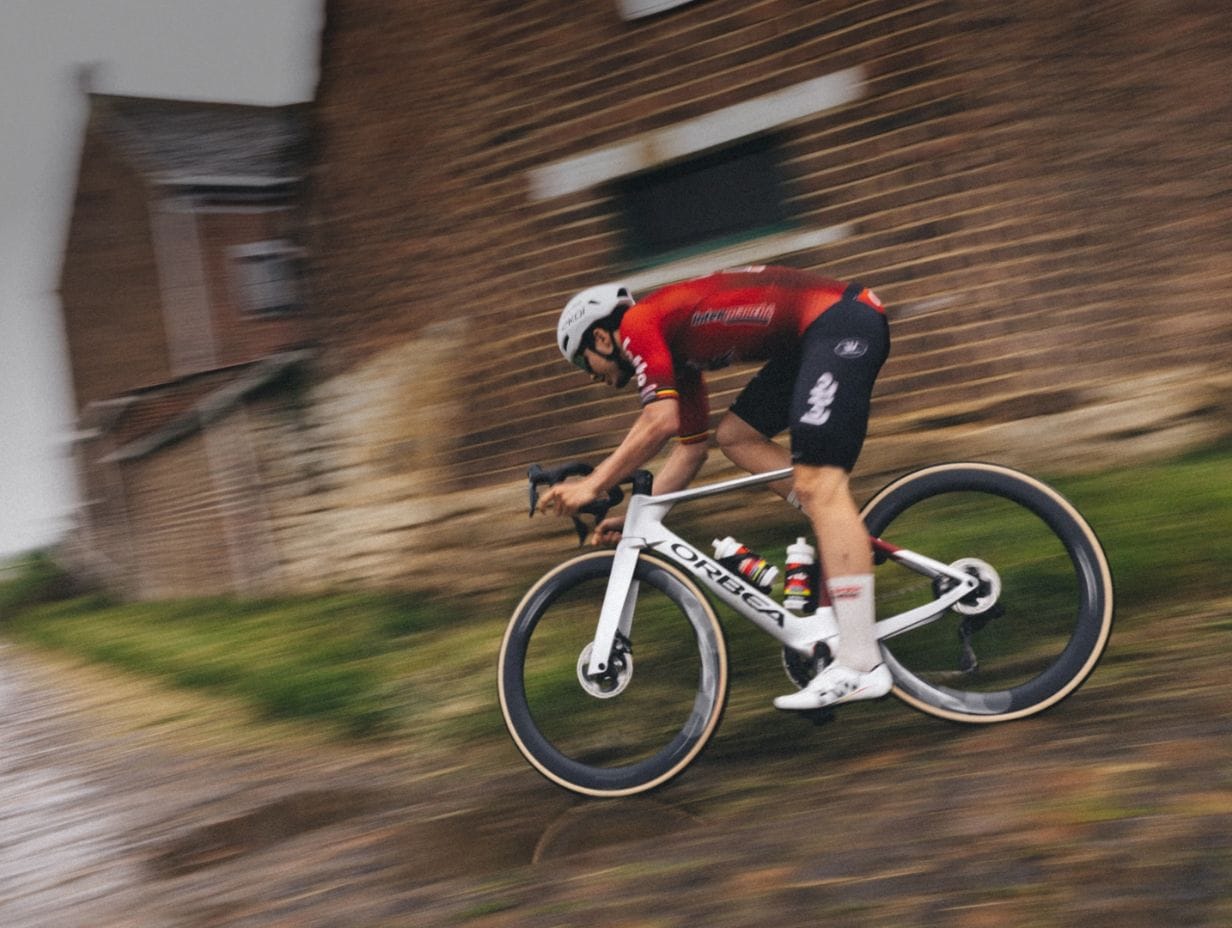
This evolution follows a now very clear trend on race bikes: going fast no longer relies solely on narrow sections and high pressures. On imperfect tarmac, cobbles or rough surfaces, wider tyres can improve real-world efficiency, comfort and control.
Orbea even mentions a 6 to 7 W gain at 40 km/h on cobbles or irregular surfaces with this logic. Again, take brand figures with the usual caution, but the technical choice makes sense.
OMX carbon on every build, a real plus
One detail deserves highlighting: whichever build you choose, the Orca Aero keeps Orbea’s highest-grade carbon, OMX.
That’s rare enough to note. Many brands strongly segment their ranges between premium frames and more accessible frames, even when the model name stays the same. Here, the buyer doesn’t step down on the frame platform based on the chosen build.
It’s a point we’ve already appreciated on other performance bikes, notably in our analysis of the Rose Backroad FF on the gravel race side. In a market where high-end bike prices are increasingly under scrutiny, this platform consistency is a real argument.
900 g for the frame, but Orbea isn’t chasing weight alone
The frame is quoted at 900 g, the fork at 410 g and the seatpost at 160 g. For an aero bike, those are serious numbers without descending into obsessive gram-counting.
Orbea mainly stresses stiffness-to-weight: overall stiffness is stated at 93 Nm/° with a 27.5% improvement over the previous generation. The goal isn’t to build the absolute lightest aero frame, but a platform that’s more efficient under load.
The brand also talks about size-specific stiffness. It’s an important point, often invisible on a product sheet but genuinely relevant: a small frame and a large frame don’t naturally behave the same way. Tuning stiffness helps deliver a more uniform response across the size range.
A speed-focused geometry with a lowered centre of gravity
Orbea highlights a lower centre of gravity, a bottom bracket among the lowest in its category and a race-oriented geometry. The message fits the intended use: hold a clean line at high speed, limit unwanted movements and keep the rider steadier.
The brand claims a 14 W gain at 50 km/h linked to better stability on the flat. This figure also needs to be viewed within its test protocol. But the idea behind it is interesting: aero isn’t only about the downtube or head tube shapes. A more stable bike can also help the rider hold position better and waste less energy.
Extensive integration, but not totally closed
On a modern aero bike, integration is expected. The Orca Aero ticks that box: OC SH-RA10 integrated cockpit, internal seatpost clamp, Di2 battery located above the bottom bracket, clean lines.
But the most interesting point lies elsewhere: Orbea has kept a certain practical logic.
Compatibility with the Service Box remains. On such a highly profiled bike, that’s quite rare. This box lets you carry repair essentials in an area integrated into the frame, with a dedicated pouch to organise the must-haves.
It’s not the kind of detail that wins a race on a spec sheet. But in real life, riding fast without having to completely sacrifice carrying a tube, a tool or a CO₂ cartridge is welcome.
The Orca Aero also gets the Spinblock system, with a 90° rotation limit to protect the frame and fork if the cockpit turns too far. Again, it’s discreet integration but useful—especially on a bike with a fully integrated cockpit. A bit more awkward, though, if you need to stow the bike in a car boot.
UDH compatibility and precise fit options: Orbea looks further ahead
UDH compatibility is another piece of good news. It simplifies hanger replacement and opens up more possibilities for current or future drivetrains.
Orbea also refines fit with two seatpost options, different setback ranges, a reversible clamp and a cockpit available in 13 combinations of handlebar width and stem length.
The Campagnolo Record build, a welcome rarity
Another point worth noting: Orbea offers a build with the Campagnolo Record groupset.
It has become rare enough to mention. The high-end road market is largely dominated by Shimano and SRAM, and accessible Campagnolo builds remain scarce among the big brands.
Our take on this Orbea
This Orca Aero is aimed first at riders who ride fast, often, and are after a performance-focused road bike. Not necessarily only racers, but clearly those who want a machine built to hold speed, sprint, push hard on the flat and stay stable when the pace rises.
It probably won’t be the most discreet bike, nor the most visually neutral. Its design is part of the choice. You also buy it because it has presence.
Its compatibility with wider tyres, the Service Box, UDH and the fit options give it a more modern versatility than some older aero bikes. It remains radical, but not caricatured.
On paper, Orbea delivers a coherent, modern aero bike that’s less closed than it looks.





Reviews
There are no reviews yet.