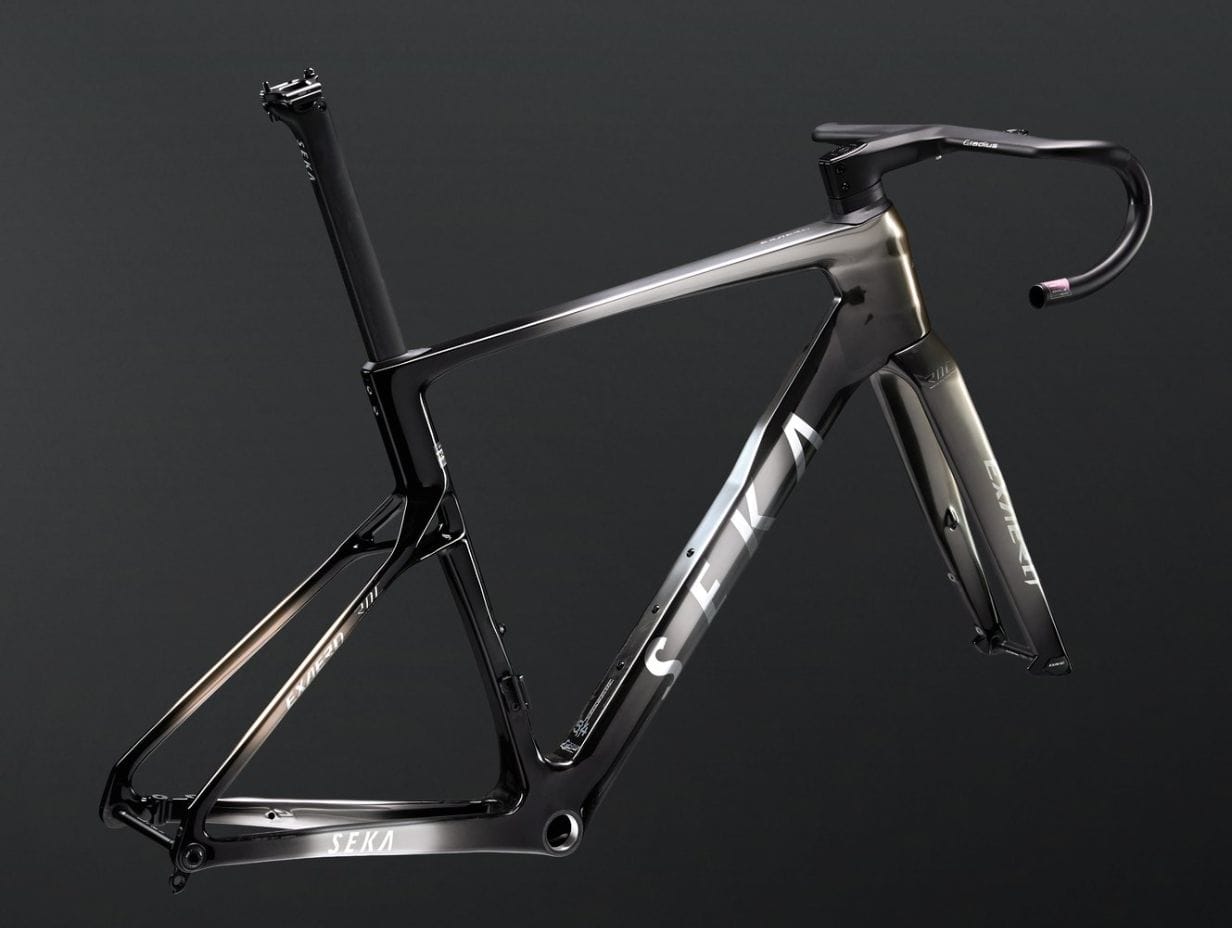
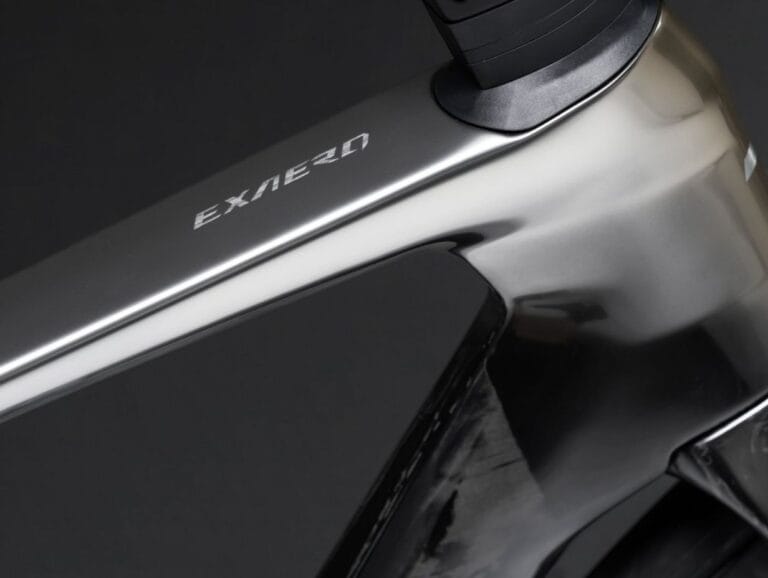
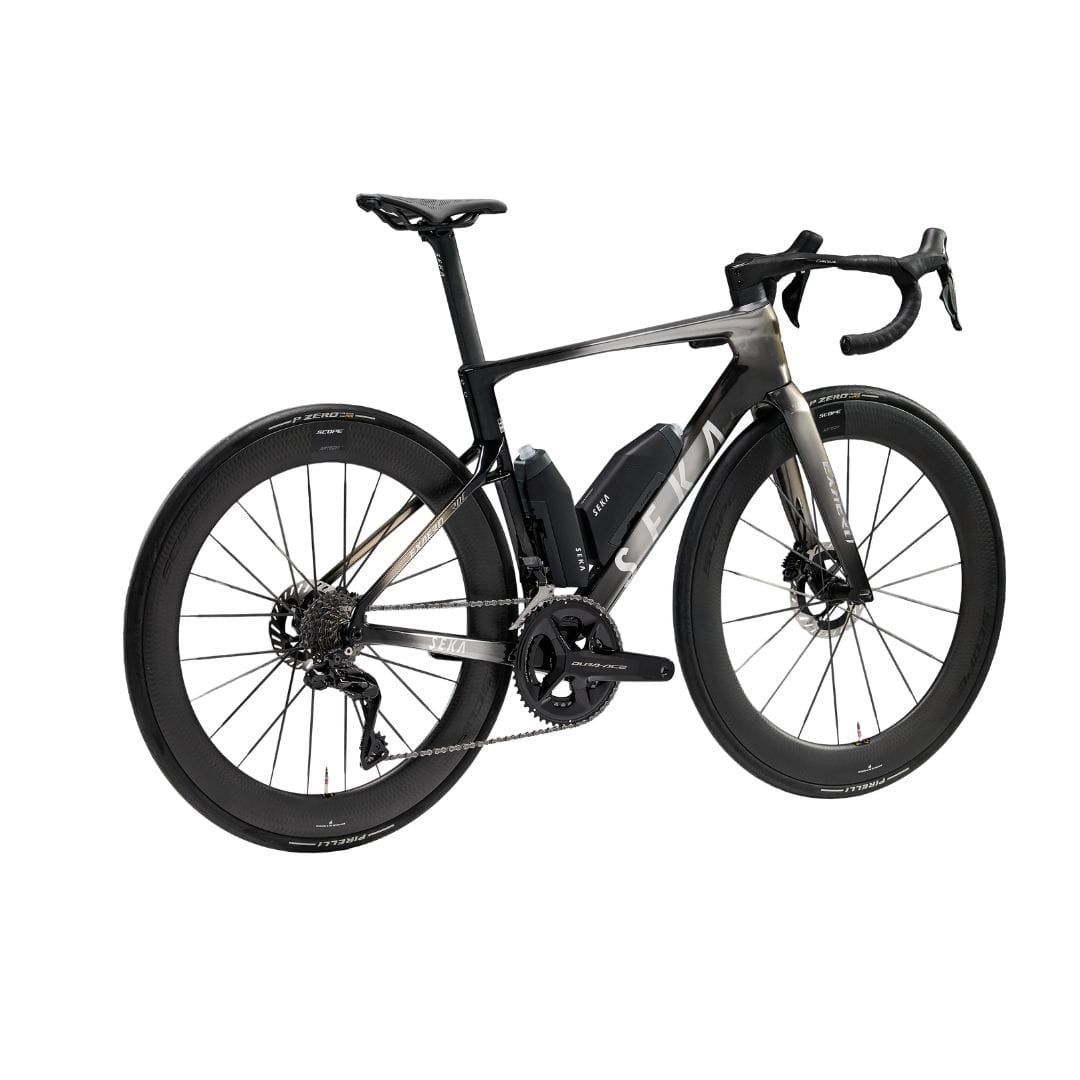
Seka returns to the road category with the ExAero, positioned as the aerodynamic counterpart to the Spear. The Asian brand isn’t simply unveiling a more sculpted frame – the whole concept is a complete system, where frame, fork, cockpit and dedicated bottles work together.
The timing is interesting. A few months after the ExAero GR on the gravel front, Seka applies a similar logic to pure road: reduce drag without sacrificing weight, stiffness or high-speed stability.
🚀 In short:
New aero road bike to complement the Spear
Frame claimed at 820 g in RDC and 935 g in Standard
Claimed aero gains with Gladius cockpit and MAG bottles
Claimed gains - but only in their exact configuration
Seka claims a 3.68 W gain at 45 km/h versus the Spear, in a precise setup: ExAero with the standard Gladius cockpit and dual MAG bottles, compared with a Spear running aero bottle cages and classic round bottles.
The brand also highlights an ExAero + Gladius ALTA + MAG configuration, given for a CdA reduction of 0.00992 m² and a gain of 11.63 W at 45 km/h compared to the Spear, at equivalent stack and reach.
These figures are interesting, but they shouldn’t be read as a universal gain. They depend on the configuration, size, cockpit, bottles and protocol. Seka says it worked with AeroCoach over three phases of wind tunnel testing, but the full white paper is still listed as coming soon at the time of writing.
MAG is not just a matching bottle
The most visible detail is probably the ExAero MAG system. Seka presents it as an aerodynamic component in its own right, positioned in an area where the flow coming off the front wheel interacts with the down tube and the seat tube.
The dual MAG system is claimed to save 5.49 W at 45 km/h versus two classic round bottles 74 mm in diameter. Again, the figure is tied to a specific configuration.
Important point: the MAG system is sold separately and is not included with the frameset. This is a nuance worth noting, because part of the aero benefit communicated by Seka relies on this integration.
A light frame for an aero bike, but not minimalist
Seka claims 820 g for the ExAero RDC frame and 935 g for the Standard version, in an unpainted size 54, with a tolerance of ±35 g. These weights exclude paint and hardware.
For an aero bike, that’s low. But the brand emphasises the compromise: keep effective load-bearing sections rather than slimming the tubes at all costs. The argument is logical enough: a smaller frontal area isn’t enough if the frame loses stiffness or forces you to add material elsewhere.
Seka also states a frontal area increase of around 4.13%, but a lower overall CdA. In other words: the bike isn’t necessarily visually slimmer, but it aims to better organise the air around the frame-fork-cockpit ensemble.
As for stiffness, the brand claims +21.2% at the front, +7.6% at the rear and torsional stiffness rising from 367 to 416, or +13.4% compared to the Spear. Without on-road testing, it’s impossible to translate these numbers into real feel. But the intention is clear: make a more direct bike, not just a slipperier one.
Wind Eye aims for comfort without breaking the profile
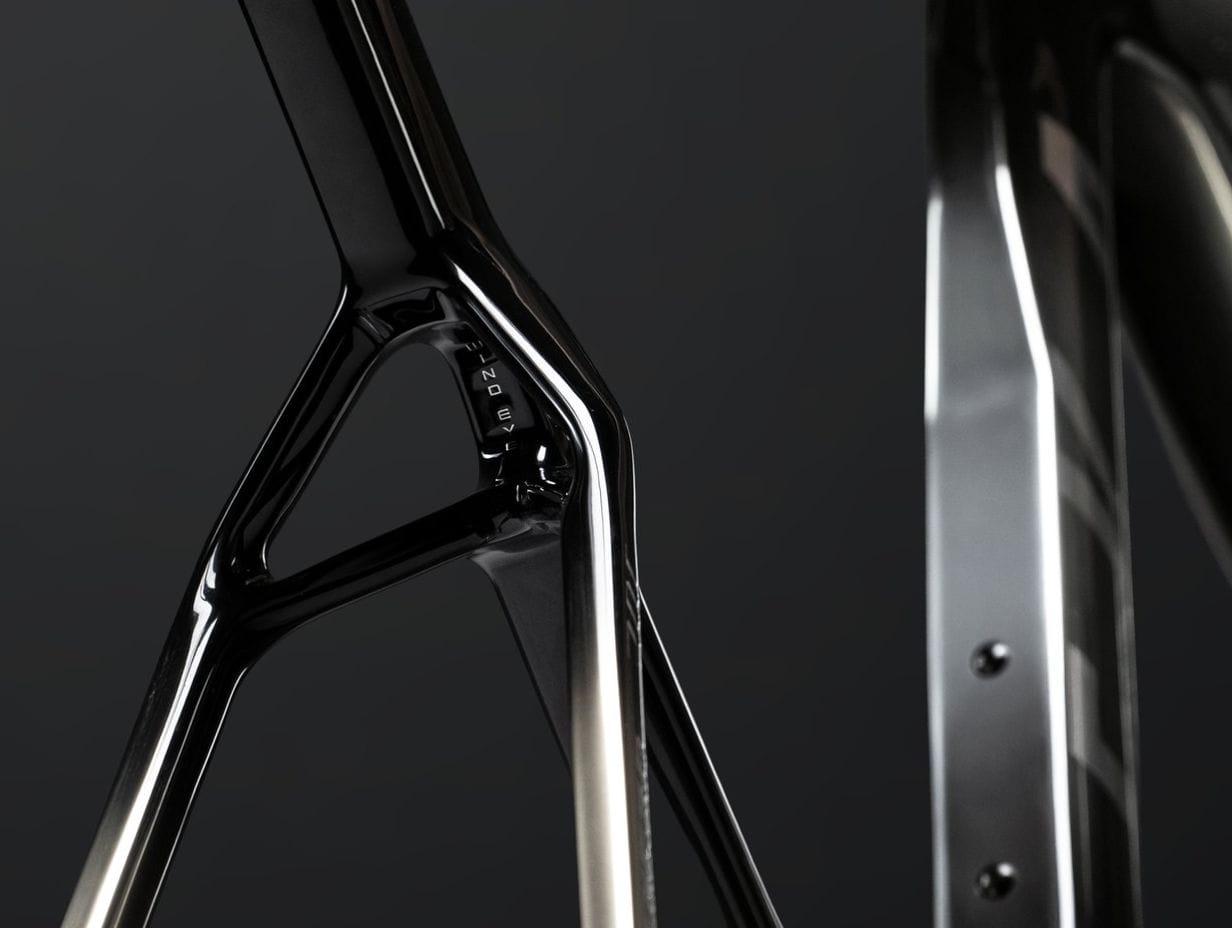
The other distinctive element is called Wind Eye. It’s an open architecture around the seatpost and seat tube area, intended to combine lateral support, vertical compliance and management of airflow between the seat tube and the rear wheel.
Seka claims up to 16 mm of vertical flex at the seatpost. That’s a lot on paper, especially for an aero road bike.
Gladius cockpit: two options, plenty of sizes
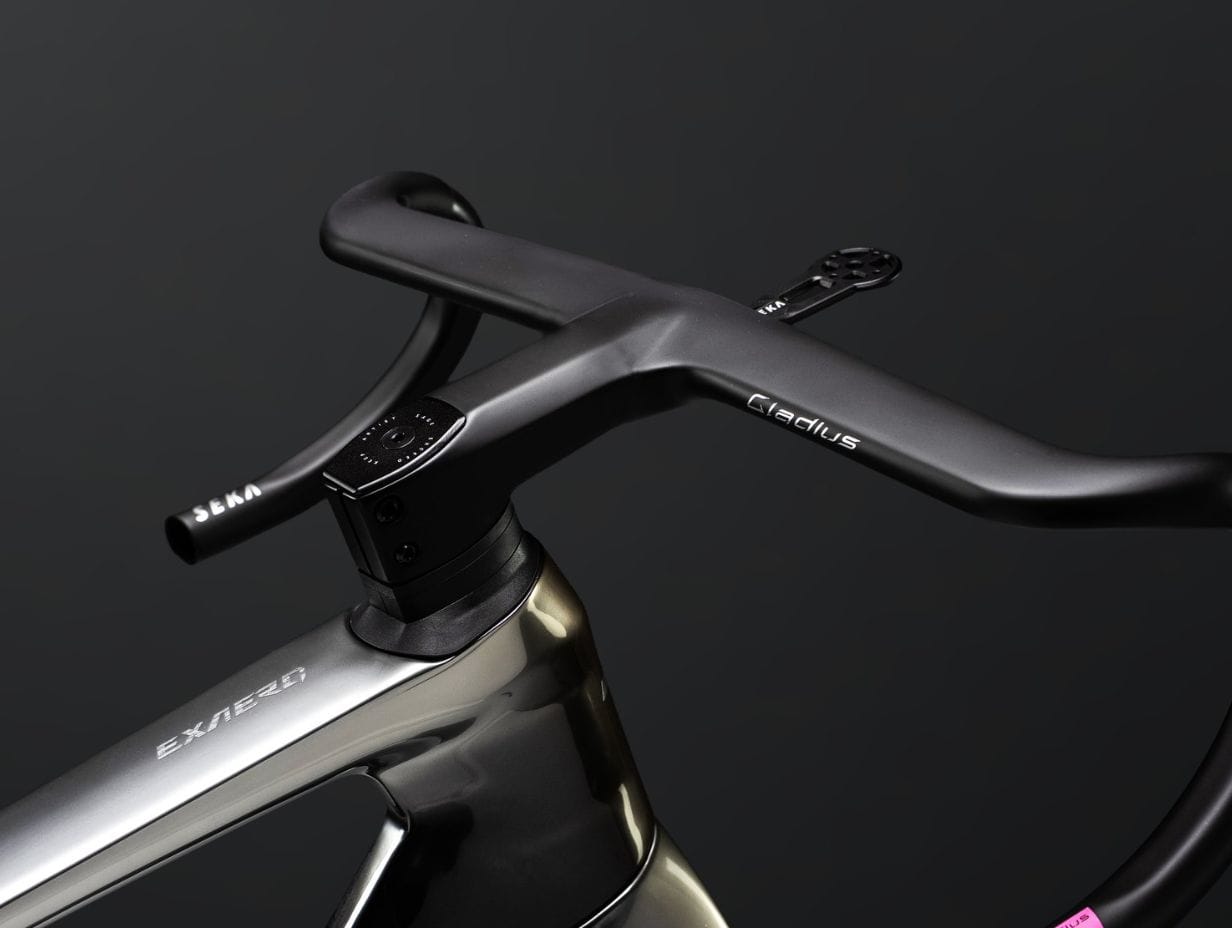
The ExAero receives the integrated Gladius cockpit, offered in standard and ALTA versions. Both are moulded in one piece. The ALTA version adds 25 mm of stack without changing the reach, which lets you raise the position without altering the length.
Seka announces 19 size combinations for these cockpits. In 375 x 100 mm, the standard Gladius weighs about 320 g, versus about 335 g for the ALTA, excluding paint and accessories.
Good news for fit, but integration has its downside. The manual recommends a maximum spacer stack of 40 mm, requires OEM parts in several areas, and specifies that the steerer expander is proprietary. The build therefore needs to be done properly, ideally by a dealer or a mechanic who’s very comfortable with integrated cockpits.
Modern standards, with a few reassuring choices
The ExAero adopts a 68 mm threaded BSA bottom bracket, a welcome choice on a highly integrated bike. Axles are 12 x 100 mm at the front and 12 x 142 mm at the rear. Braking accepts 140 or 160 mm rotors.
The frame is UDH-compatible, using SRAM’s Universal Derailleur Hanger. This standard is now very interesting for parts availability and drivetrain evolution.
Tyre clearance is stated at 32 mm maximum, with an important caveat: the actual tyre width after mounting and inflation must be taken into account, with at least 4 mm of space on each side between tyre and frame. In other words, a generous 32 mm on a wide rim can quickly become borderline.
The total structural limit is given as 109 kg, rider and equipment included.
Our view on the Seka ExAero
The ExAero arrives with a solid spec sheet and real design coherence. Seka doesn’t just claim a faster aero frame: the brand details the role of the cockpit, bottles, seatpost and geometry in the overall behaviour.
The price remains unknown for now. But Seka isn’t a cheap Asian brand: in our opinion, expect at least €3,000 for the frameset.






Reviews
There are no reviews yet.