The new Eddy Merckx 525R lands with a clear brief: not simply to make the frame faster, but to encourage the rider into a more efficient position. It is an interesting angle, because on the road as well as in fast gravel, gains never come from the bike alone.
With Eddy Merckx and Ridley under the same parent company, the technical kinship with the Ridley Noah Fast is hard to ignore. The 525R follows that very aero, very race logic, but pivots around a subtler point: the rider’s actual position on the bike.
🚀 In brief:
New Eddy Merckx performance road bike, strongly focused on aerodynamics and rider position.
High-modulus carbon frame claimed at 952 g in size M and a 9% drag reduction compared with the previous model.
Progressive geometry with a steeper seat angle, longer reach and lower bottom bracket.
On paper, the package looks solid, with a high-modulus carbon frame claimed at 952 g in size M, a 9% drag reduction compared with the previous model and a starting price set at €6,499 for a complete bike.
A geometry designed to open the hip angle
Eddy Merckx’s pitch starts from a common aerodynamic observation: the bike accounts for only a limited share of drag, while the rider’s position carries much more weight. The brand cites around 20% for the bike and 80% for the rider.
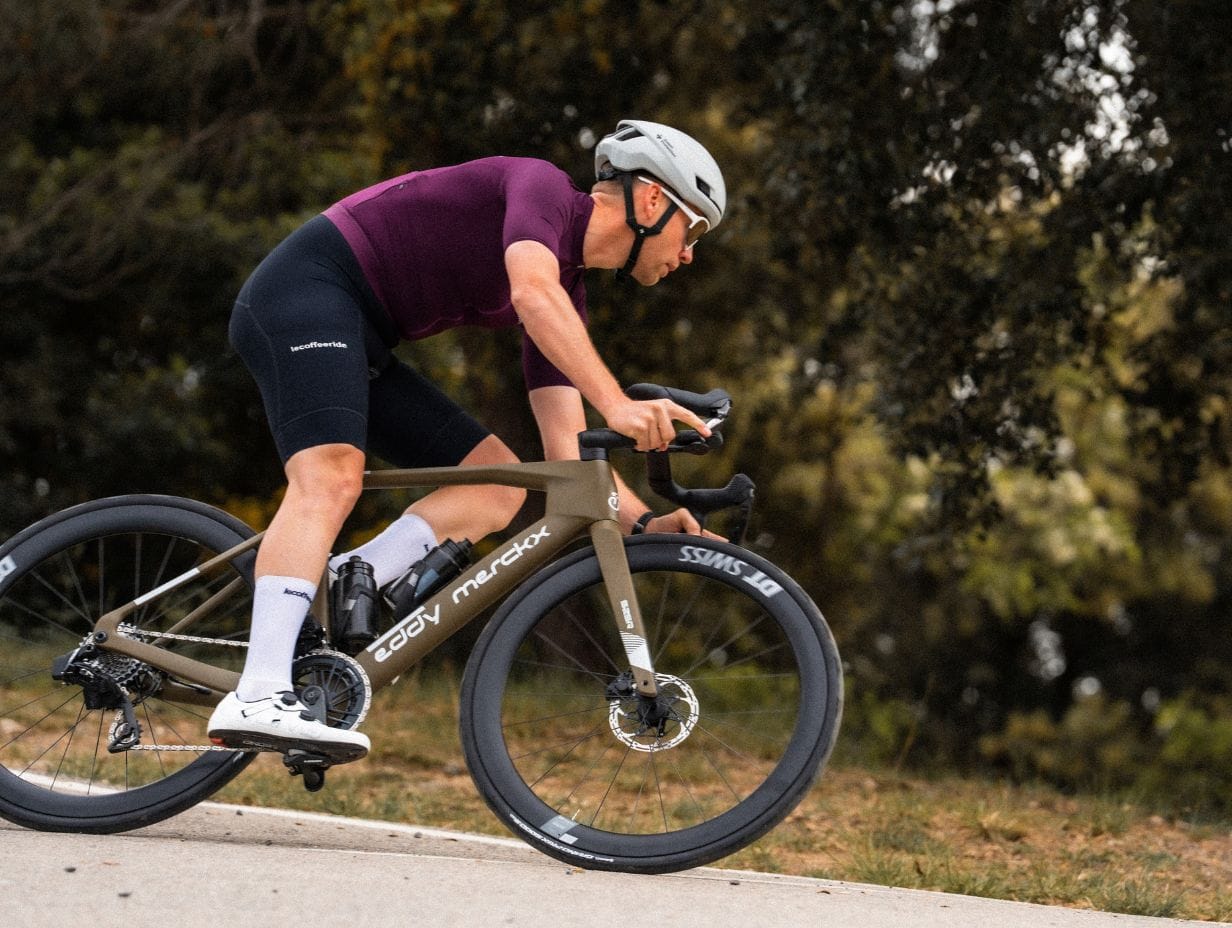
The goal of the 525R is therefore to enable a more forward, more compact and more sustainable position. To do so, Eddy Merckx introduces a progressive geometry with a seat tube angle that gets steeper as sizes increase. It is the opposite of what you often see on more traditional geometries.
The benefit is tangible: limiting saddle setback relative to the bottom bracket, opening the hip angle and saving taller riders from compensating with a saddle slammed forward and an extra-long stem.
More reach, but not to stretch the rider needlessly
The 525R also adopts a longer reach. Taken alone, that number could be intimidating: you might picture a more demanding, more stretched, less accessible bike. But you need to read it alongside the steeper seat angle.
By moving the hips forward, you mechanically reduce the effective distance to the handlebar. The longer reach therefore serves to rebalance the whole, keeping sensible stem lengths and predictable handling. On paper, it is a cleaner approach than a bodged set-up with a saddle on its stops and an oversized stem.
Eddy Merckx adds a lower bottom bracket intended to drop the centre of gravity and improve high-speed stability. Again, the idea fits a modern race bike well: go fast, but without making the bike twitchy for the wrong reasons.
An aero frame through and through, without forgetting the bottles
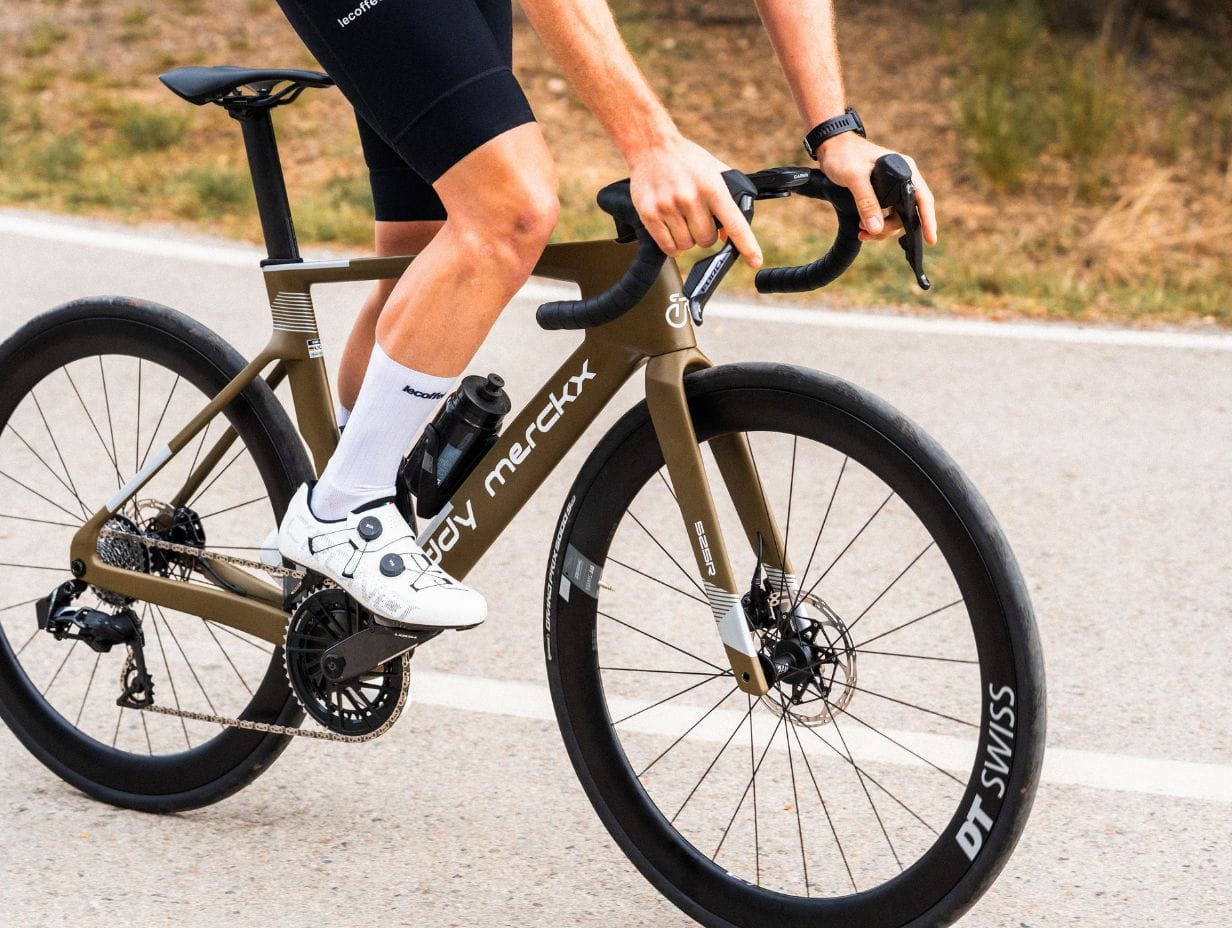
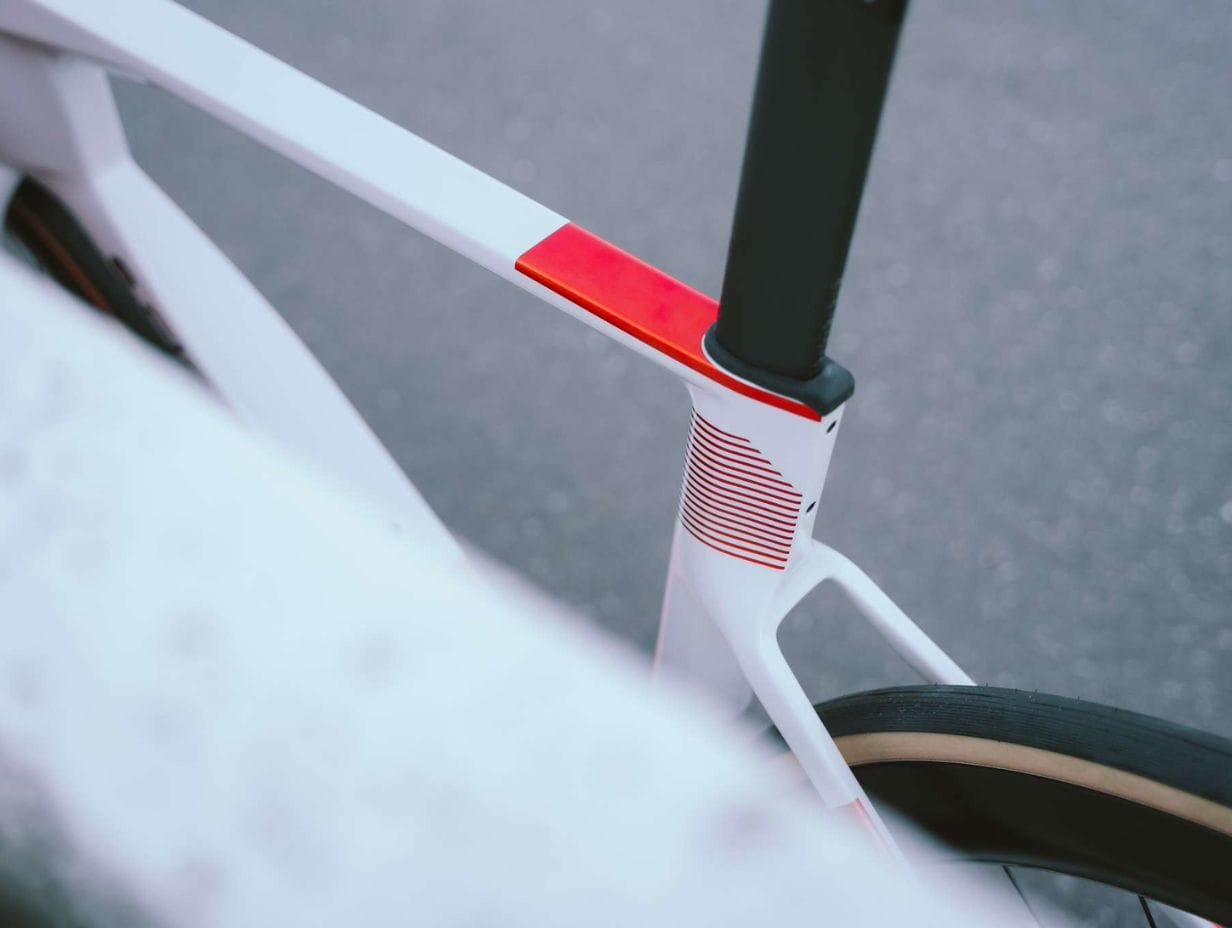
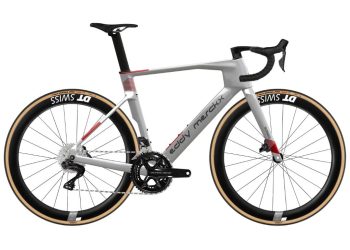
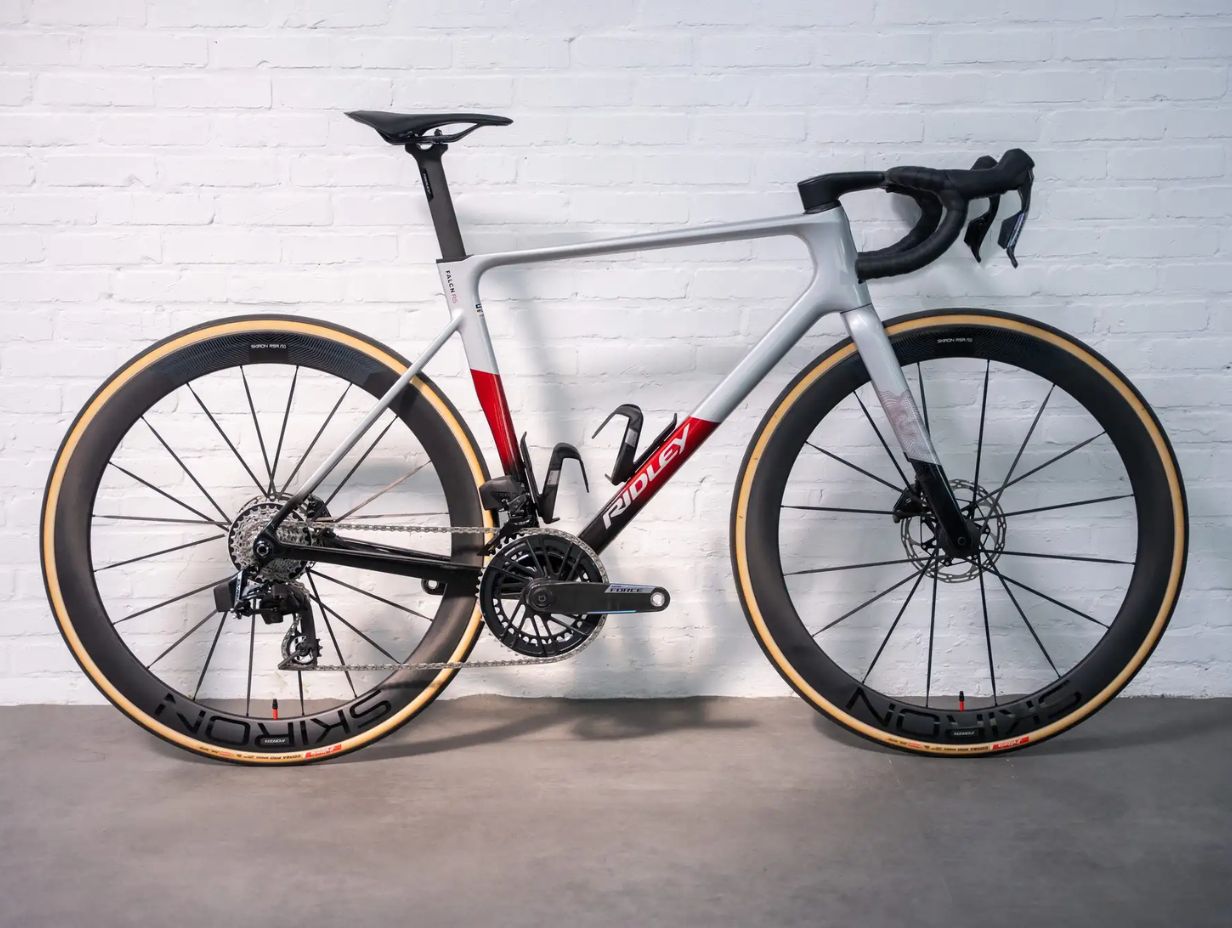
The 525R remains an aerodynamic bike in the classic sense. The deep head tube is shaped within UCI regulations, the down tube is profiled to work with bottles fitted, and the fork adopts an asymmetrical profile said to improve crosswind stability.
The junction between the fork and down tube also gets a diffuser-like shape to better guide airflow. These are very much in line with current performance-road design: less spectacular than a record weight, but potentially more useful as speed rises.
The frame is claimed at 952 g in size M. It is not presented as a pure ultralight climber, but as a race platform balanced between aero, stiffness and controlled mass. That matches the positioning: a bike built to ride hard, not to tick a single box on a spec sheet.
Narrow cockpit or more comfort: the choice isn’t trivial
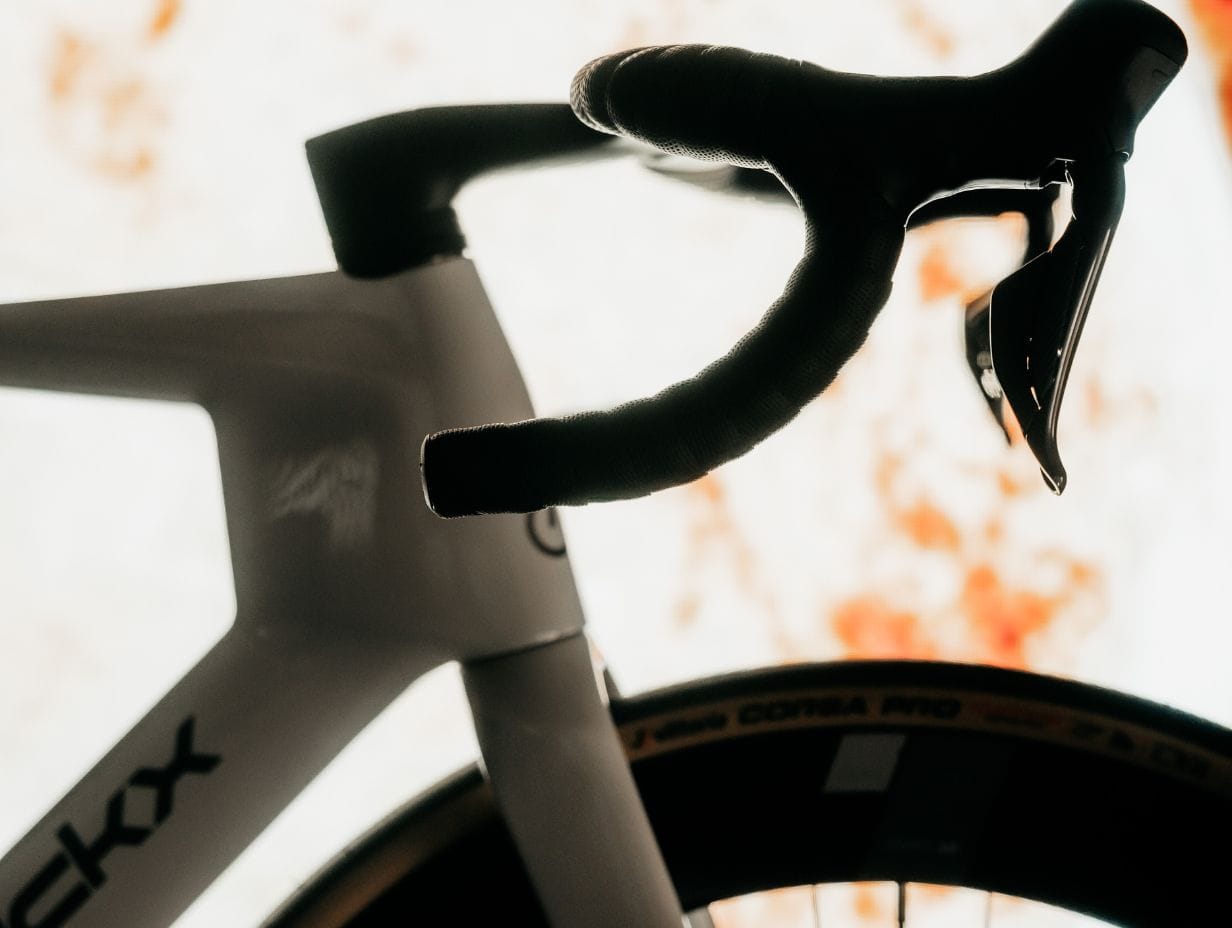
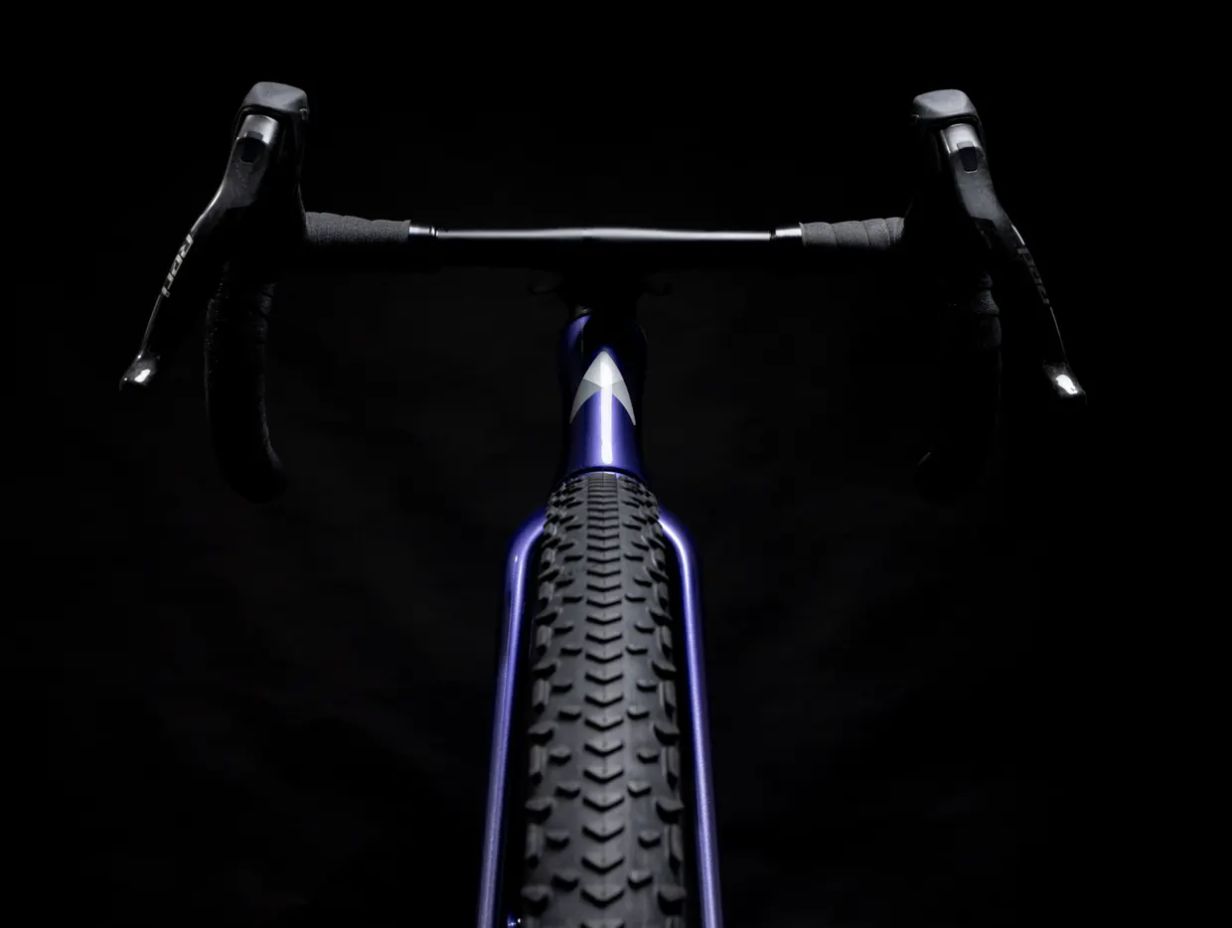
Eddy Merckx highlights several cockpit options, including the Forza Nimbus Pro in 360/400 mm, compatible with UCI rules. A narrow handlebar can help reduce frontal area, but it will not suit everyone.
This is one of the key points of this 525R: the brand talks about a fast position without sacrificing comfort, but the result will depend heavily on size, cockpit, stem and saddle setback choices. A very aggressive set-up can be effective for an hour, much less so on a long ride if the rider cannot hold it.
The configurator will allow part of the bike to be tailored to the rider’s preferences.
34 mm clearance: fast road, with a bit of margin
The 525R claims tyre clearance up to 34 mm. For an aero road bike, that is an interesting figure today: wide enough to ride with more comfort, better handle battered tarmac and not limit the bike to billiard-smooth use only.
This does not turn the 525R into an all-road, let alone a gravel bike. Eddy Merckx already has other, more path- and endurance-oriented options, such as the Corsa Pévèle Ti. Here, we are clearly still looking at a performance road bike.
But this 34 mm compatibility gives you some breathing room. On French roads, that is not a detail: a wider, well-chosen and properly inflated tyre can make a fast bike more usable day to day.
UDH, removable front derailleur mount and CeramicSpeed SLT bearings
The 525R adopts a UDH interface for the rear derailleur while remaining compatible with current road drivetrains. It is a logical choice to simplify hanger availability and prepare for drivetrain evolutions.
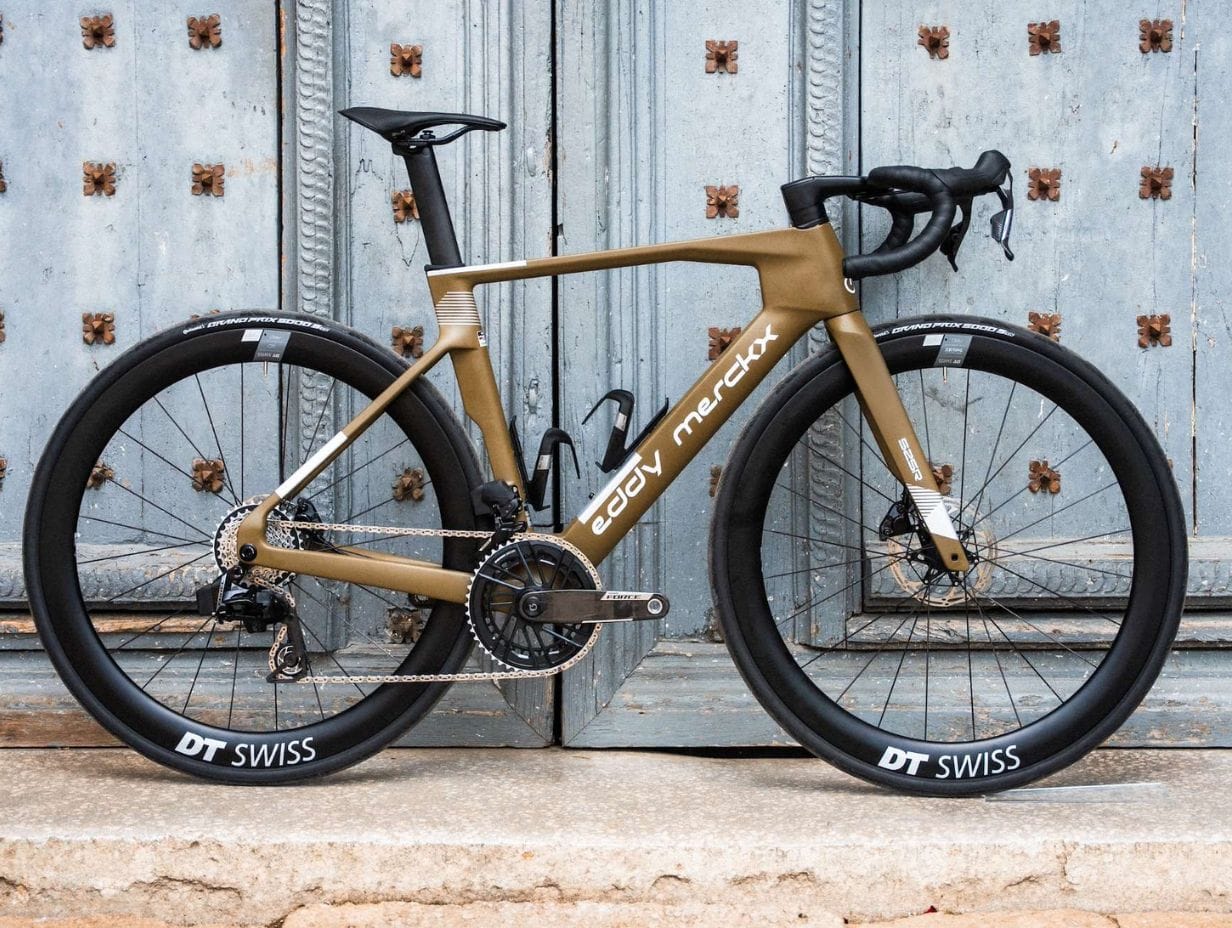
The front derailleur mount is removable, which allows for a cleaner 1x set-up. The entry-level complete bike is also announced from €6,499 with SRAM Force 1×13-speed.
Another notable detail: CeramicSpeed SLT headset bearings, advertised with a lifetime warranty. On a high-end bike, this kind of component can reduce long-term maintenance, especially for those who ride a lot, in the rain or in winter.
Launch Edition: 100 units to mark the launch
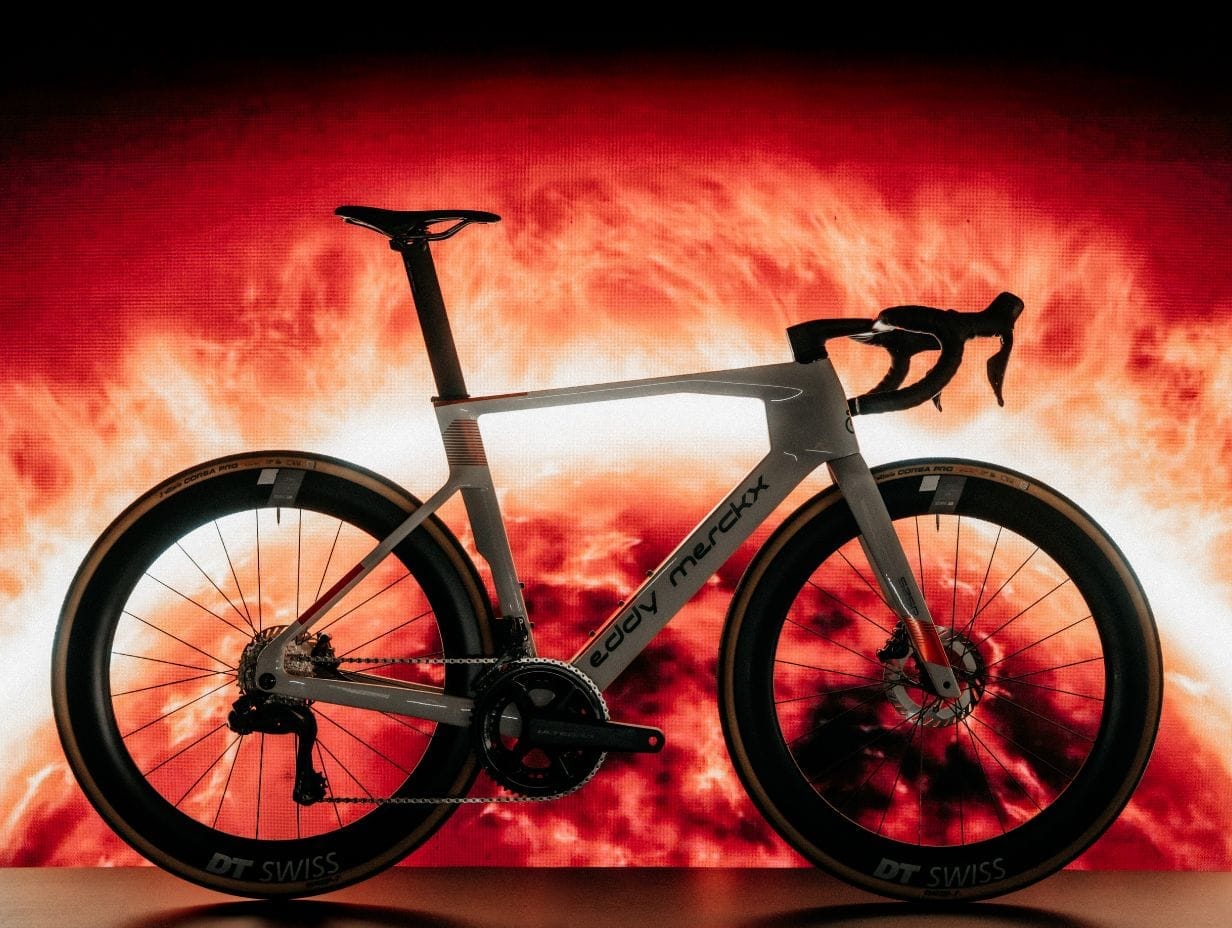
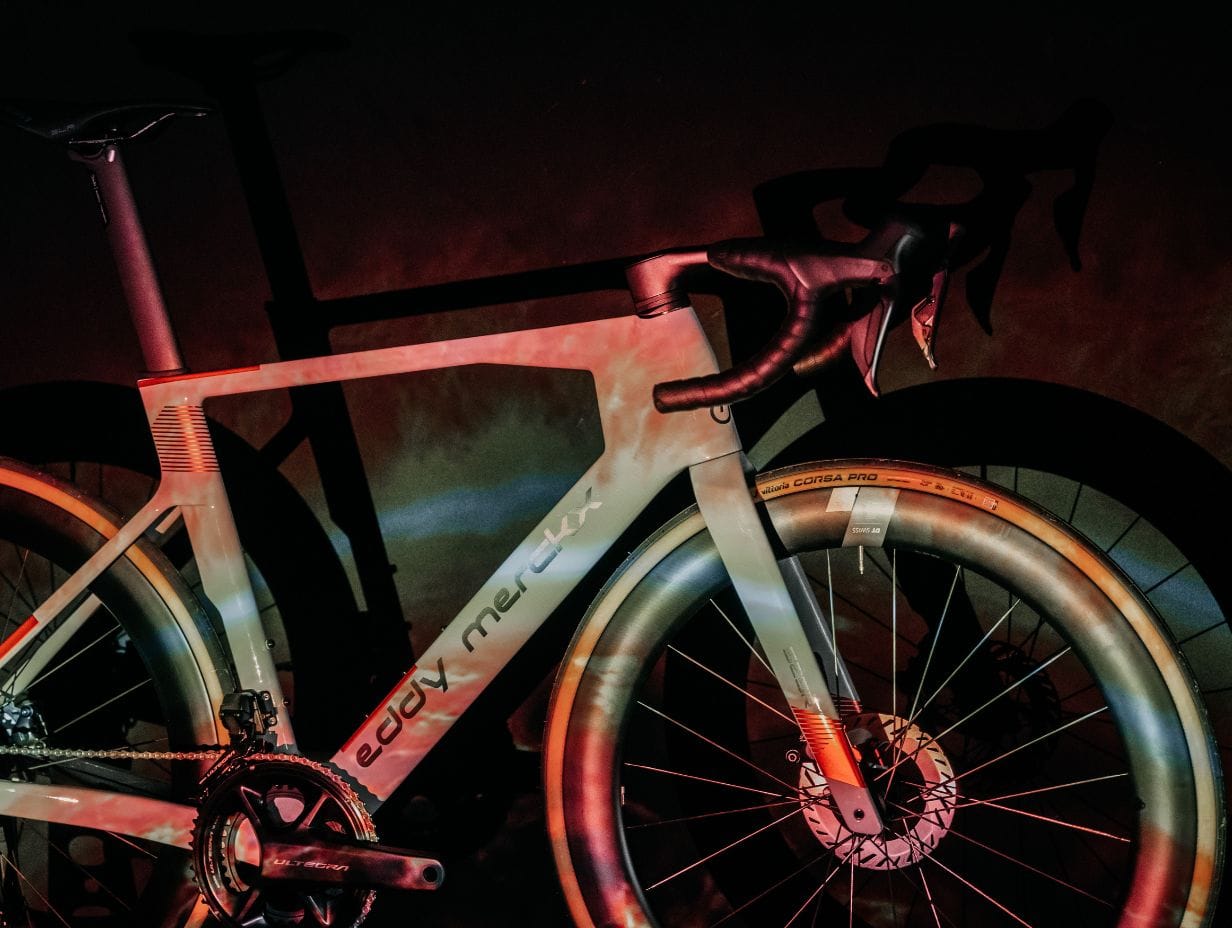
Eddy Merckx is accompanying the launch of the 525R with a Launch Edition limited to 100 units. It gets a raw carbon finish with an iridescent effect, along with a Shimano Ultegra Di2 build, DT Swiss ARC 1600 wheels, a Forza Nimbus Pro Integrated cockpit and CeramicSpeed SLT headset bearings.
Its price is announced at €6,999. Compared with the €6,499 starting price, the gap seems modest.
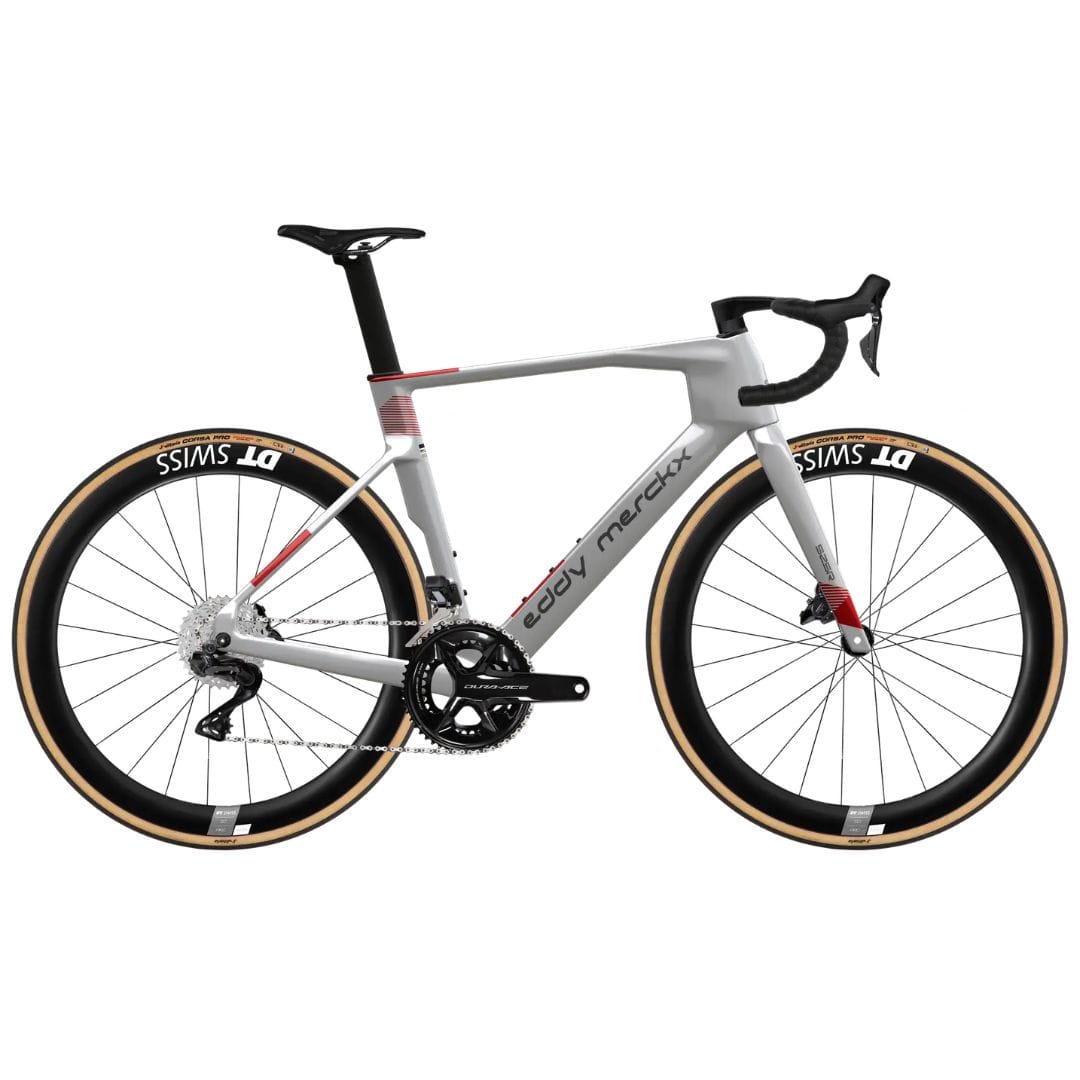
The range can also be configured with SRAM Force, SRAM Red, Shimano Ultegra Di2, Shimano Dura-Ace or Campagnolo Super Record.
Pending a field test, the 525R looks like a serious and well‑thought‑out proposition. Not just another aero bike, but a platform that stands by a strong belief: speed starts with the position you can hold.






Reviews
There are no reviews yet.